
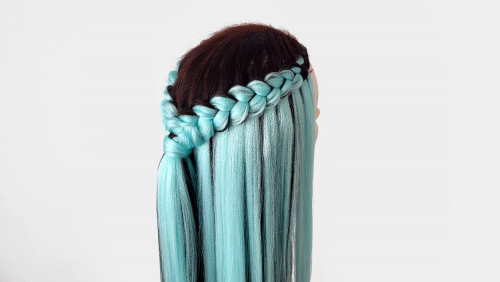
3D Braids: Dimensional Braided Designs With Raised Texture, Sculpted Patterns, and Creative Visual Depth
3D braids are braided styles designed to create visible dimension, depth, and raised texture. Instead of lying flat or looking simple from one angle, 3D braids use structure, layering, loops, volume, or multiple braid elements to make the hairstyle look sculpted and three-dimensional. The result can be bold, artistic, playful, elegant, fantasy-inspired, or highly technical depending on the design.
The term “3D braids” does not refer to only one specific braid technique. It is a broad styling category that may include stacked braids, Dutch braids, pull-through braids, loop braids, infinity braids, 4-strand or 5-strand braids, cage braids, bubble-braid combinations, raised cornrow patterns, and braided designs that visually stand out from the head or hair surface.
3D braids are especially popular in braid tutorials, kids’ creative hairstyles, festival looks, competition styling, fantasy hair, social media content, and professional braid education. They challenge the stylist to think beyond basic braid structure and focus on shape, depth, symmetry, and visual impact. A professional 3D braid should look intentional, balanced, secure, and comfortable without excessive tension or unnecessary pulling.
What Are 3D Braids?
3D braids are braids that create a three-dimensional effect through raised texture, layered construction, or sculpted braid design. The braid may stand above the hair surface, include stacked elements, create loops, or use strand placement that makes the braid look rounded and dimensional.
A simple Dutch braid can look slightly 3D because it sits on top of the hair. A stacked braid creates stronger dimension by placing one braid over another. A pull-through braid creates a full rounded shape. A loop braid creates open curved sections. A 5-strand braid creates a wider woven surface with visible depth.
The defining feature is visual depth. A 3D braid is not just flat patterning. It uses braid shape, spacing, volume, and texture to create a sculpted effect.
3D braids can be created with natural hair only or with extensions for added length, fullness, color contrast, and stronger design visibility.
Why 3D Braids Stand Out
3D braids stand out because they turn braiding into visual architecture. They create hairstyles that are interesting from the front, side, back, and top. The braid design becomes a sculptural element rather than just a way to hold the hair.
This makes 3D braids highly photogenic. Raised sections, loops, woven patterns, and layered braids catch light differently, which makes the style look more detailed in photos and videos.
3D braids are also useful for education because they help students understand braid direction, strand control, tension, spacing, and visual balance. They require more planning than simple braids and help stylists develop technical precision.
Another reason 3D braids remain popular is creativity. They can be adapted for kids, adults, festivals, weddings, fantasy looks, editorial styling, and advanced braid demonstrations.
3D Braids vs. Regular Braids
Regular braids usually focus on a clean woven structure. They may be simple three-strand braids, French braids, Dutch braids, or standard individual braids. They can be beautiful, but they often have a flatter or more traditional appearance.
3D braids focus on dimension. They may use the same basic braid techniques, but the final design is shaped to stand out more visually. The braid may be expanded, stacked, lifted, looped, or layered.
A regular braid can become a 3D braid when the stylist adds volume, depth, layering, or sculptural placement.
The difference is not always the technique. It is the final visual effect: regular braids can be flat and classic; 3D braids are dimensional and visually raised.
3D Braids vs. Dutch Braids
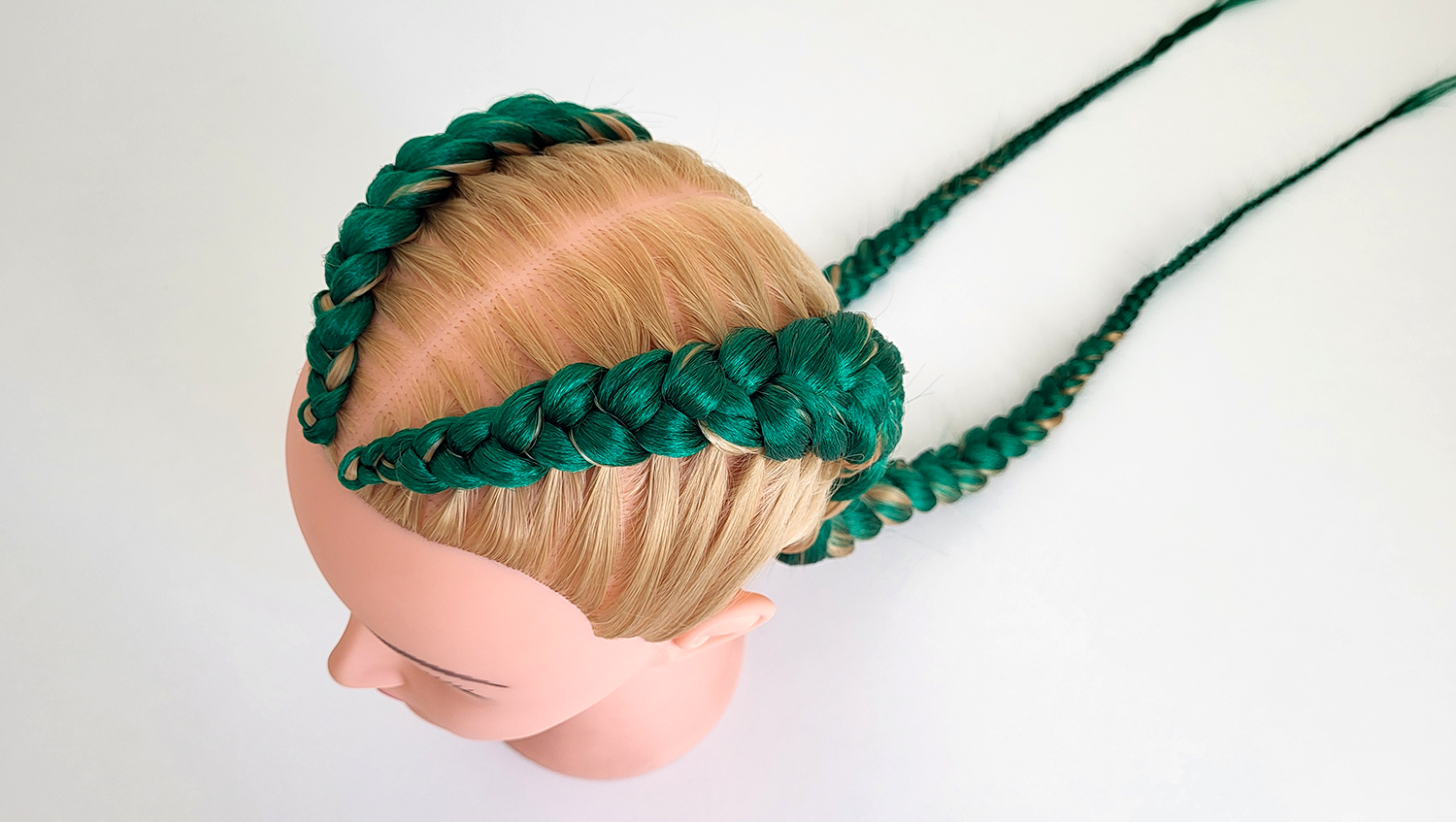
Dutch braids are created with an underhand technique, which makes the braid sit raised on top of the hair. Because of this, Dutch braids are often used as a foundation for 3D braid designs.
However, not every Dutch braid is automatically a full 3D braid. A simple Dutch braid has raised structure, but a 3D braid usually emphasizes extra dimension through expansion, layering, stacking, loops, or design placement.
Dutch braid describes a technique. 3D braid describes a visual category.
A Dutch braid can become a 3D braid when it is widened, combined with another braid, shaped into a raised pattern, or used as part of a sculpted design.
3D Braids vs. Pull-Through Braids
Pull-through braids are faux braids created with ponytail sections and elastics. They often create a strong 3D effect because the sections become rounded and full when expanded.
3D braids can include pull-through braids, but they are not limited to them. A 3D braid may be a true woven braid, a stacked braid, a looped braid, a multi-strand braid, or a cornrow design.
Pull-through braid describes the method. 3D braid describes the dimensional result.
Pull-through braids are beginner-friendly and volume-focused. Other 3D braid techniques may require more advanced hand control and strand placement.
3D Braids vs. Multi-Strand Braids
Multi-strand braids, such as 4-strand, 5-strand, or 6-strand braids, often create a dimensional look because the braid surface is wider and more complex than a basic three-strand braid.
However, 3D braids are not always multi-strand braids. A 3D braid may use only three strands but still look dimensional through placement, expansion, stacking, or looping.
Multi-strand describes the number of strands used. 3D describes the visual depth of the finished style.
A 5-strand braid can be a 3D braid when its woven pattern creates visible raised texture and depth.
Common Types of 3D Braids
Stacked 3D braids place one braid over another for a layered raised effect.
Dutch 3D braids use raised Dutch braid structure with expanded volume.
Pull-through 3D braids use ponytail sections to create a large rounded braid effect.
Loop 3D braids create curved open sections for a decorative dimensional look.
Infinity 3D braids use figure-eight wrapping patterns for visual movement.
Multi-strand 3D braids use four, five, or more strands for wide woven texture.
3D cornrow designs use raised scalp braid patterns with clean geometry.
3D braids with extensions add length, fullness, color, and stronger visual contrast.
3D braids with accessories use beads, cuffs, ribbons, thread, pearls, or hair jewelry to highlight the structure.
Stacked 3D Braids
Stacked 3D braids are created by placing one braid on top of or inside another braid. This layered construction creates strong visual depth and makes the hairstyle look more advanced.
A common version starts with a Dutch braid as the base, then a smaller braid is placed along the center of the larger braid. The smaller braid may be a three-strand braid, fishtail braid, rope braid, or lace braid.
Stacked braids are popular for tutorials, dance hairstyles, kids’ creative looks, photoshoots, and festival styling because they look complex and eye-catching.
A strong stacked 3D braid should look secure and balanced, with the top braid centered and clearly visible.
Dutch 3D Braids
Dutch 3D braids use the raised structure of Dutch braiding to create dimension. The braid sits on top of the hair, making it more visible than a French braid.
To create a stronger 3D effect, the stylist may gently pull the braid sections apart, add extra volume, curve the braid path, or combine it with accent braids. The braid can be placed down the center, to the side, into pigtails, or around the crown.
Dutch 3D braids can look sporty, romantic, festival-ready, or dramatic depending on the finish.
The braid should be raised because of technique, not because of painful tension. A professional Dutch 3D braid should feel comfortable and secure.
Pull-Through 3D Braids
Pull-through 3D braids create one of the most dramatic dimensional effects. The style is made with ponytail sections that are split, pulled through, and expanded to create a full braid-like shape.
Because each section can be widened, pull-through 3D braids often look larger and rounder than traditional braids. This makes them perfect for fine hair, long hair, kids’ styles, mermaid looks, and social media tutorials.
The elastics should be hidden or used intentionally as part of the design. The sections should be expanded evenly so the braid does not look lopsided.
A good pull-through 3D braid should look full, soft, and secure without tight elastic pressure.
Loop 3D Braids
Loop 3D braids create dimension through open curved sections or looped strand placement. The loops may appear along the sides of a braid, inside a braid pattern, or as part of a decorative design.
This style is often used in creative kids’ hairstyles, fantasy braids, festival looks, and advanced braid tutorials. Loops can make the braid look lace-like, airy, and sculptural.
Loop 3D braids require control because the loops must be shaped evenly and secured without collapsing. Product, clips, or small elastics may help hold the design.
A strong loop braid should look intentional and clean, not messy or accidentally loose.
Infinity 3D Braids
Infinity 3D braids use figure-eight wrapping motions to create a woven pattern that resembles the infinity symbol. The repeated wrapping creates movement and dimension.
This style can be used as a small accent braid, a center detail, or part of a larger 3D braid design. It is popular for tutorials because the pattern looks unique and technical.
Infinity braids can be combined with Dutch braids, ponytails, half-up styles, or synthetic hair for color contrast. Bright extension colors can make the infinity pattern easier to see.
A polished infinity 3D braid should have consistent wrapping, clean section control, and visible pattern rhythm.
Multi-Strand 3D Braids
Multi-strand 3D braids use more than three strands to create a wide and dimensional woven effect. Common examples include 4-strand braids, 5-strand braids, and ladder-style variations.
These braids often look complex because more strands create more crossing points and more surface texture. A 5-strand braid can look especially dimensional when the sections are smooth and evenly tensioned.
Multi-strand braids are popular for advanced braid education, bridal styling, fantasy looks, and creative demonstrations.
A strong multi-strand 3D braid requires patience, clean strand separation, and consistent tension.
3D Cornrow Designs
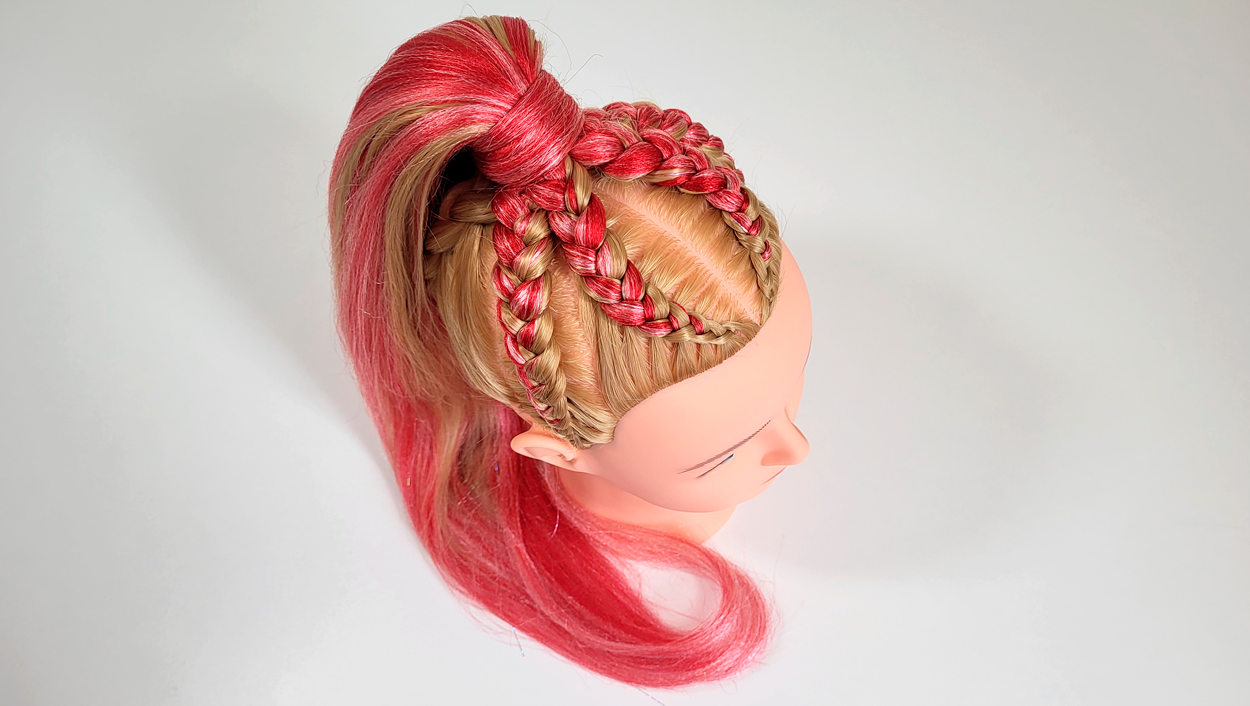
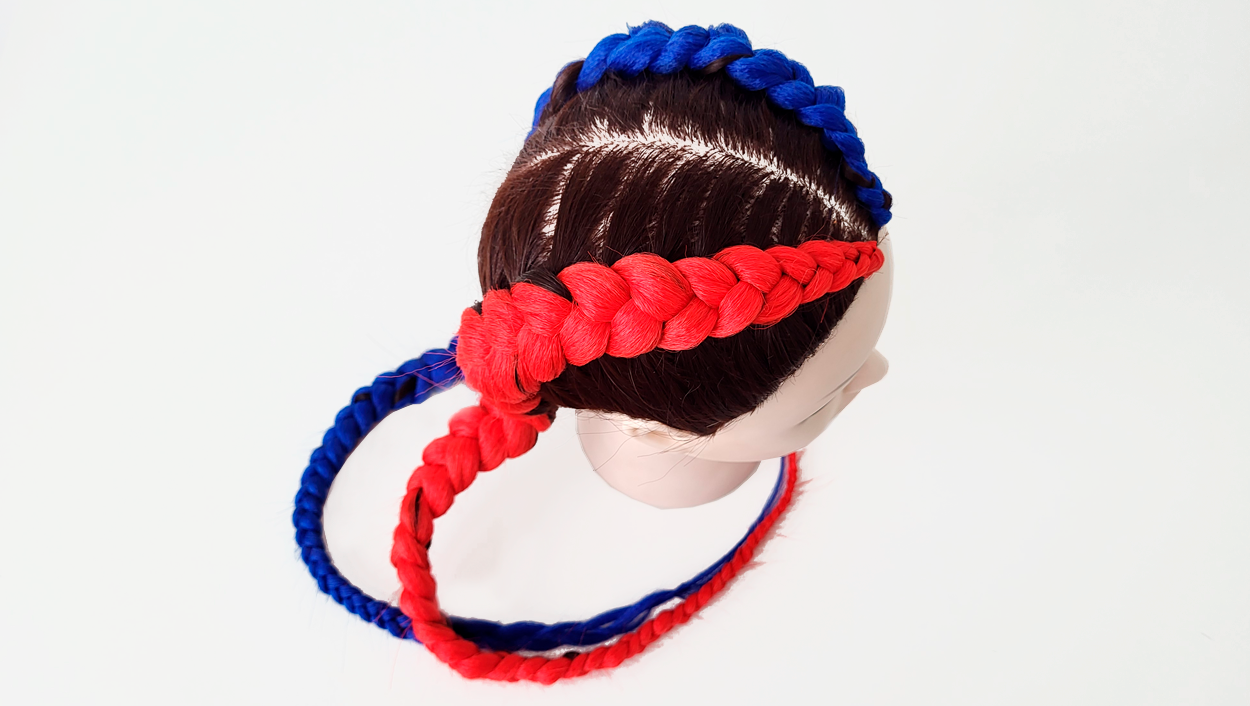
3D cornrow designs use raised scalp braids to create dimensional patterns on the head. The braids may be straight, curved, zigzagged, heart-shaped, star-shaped, or arranged in geometric designs.
Cornrows naturally create raised lines, but the 3D effect becomes stronger when braid size, direction, spacing, and pattern are carefully planned. Stitch details can make the design sharper and more graphic.
3D cornrow designs are popular for kids, men’s styles, festival looks, editorial styling, and creative salon portfolios.
A professional 3D cornrow design should have clean parts, balanced braid size, and comfortable tension.
3D Braids with Extensions
Extensions can make 3D braids more dramatic by adding length, thickness, color, and structure. Synthetic braiding hair, clip-ins, colored strands, ponytail extensions, or textured extension hair may be used depending on the design.
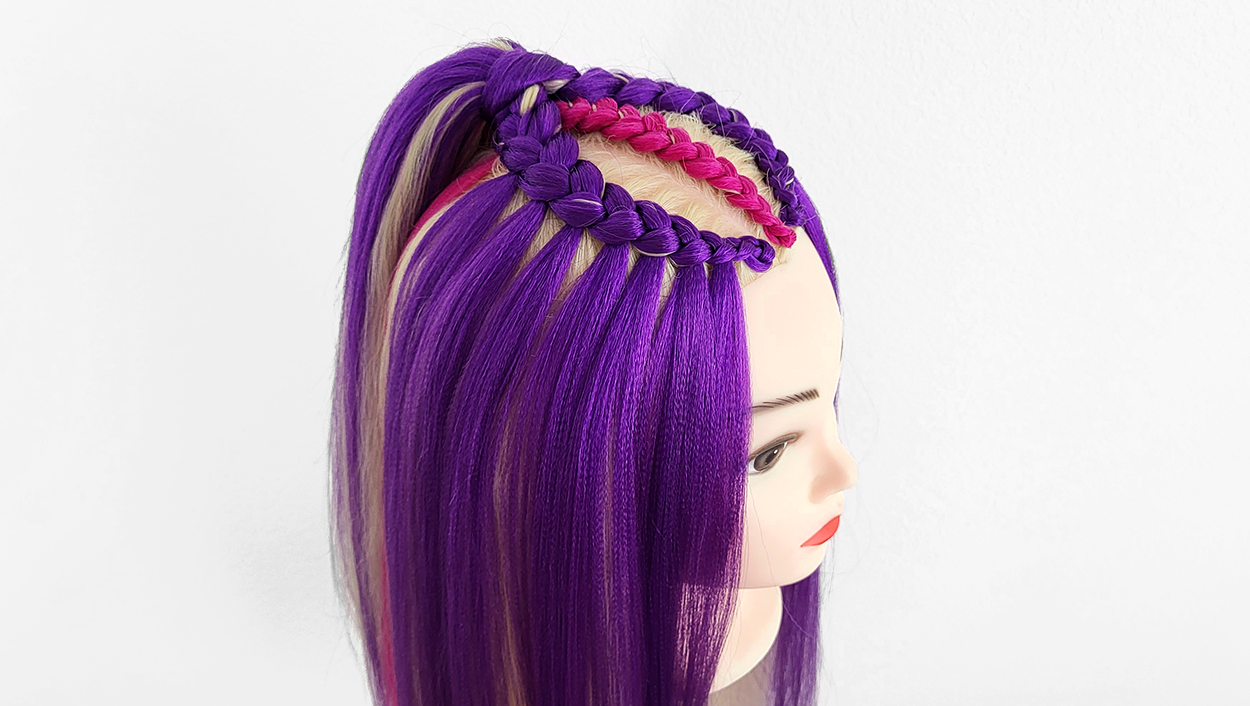
Extensions are especially useful when the natural hair is too short or fine to create a bold 3D effect. They can also help create contrast, such as pink synthetic hair inside a dark natural braid.
The added hair should be lightweight and balanced. Too much extension hair can create pulling, especially in raised or layered designs.
A professional 3D braid with extensions should look full and dimensional while remaining comfortable.
3D Braids with Color
Color can make 3D braids easier to see and more visually striking. Highlights, balayage, ombré, vivid colors, pastel shades, or contrasting extension hair can reveal the braid pattern more clearly.
Bright colors like pink, purple, blue, green, orange, red, and neon shades can make a 3D braid look more playful, festival-ready, or fantasy-inspired. Natural colors like caramel, copper, blonde, and auburn can create softer dimension.
Color placement matters. Accent strands can highlight loops, stacked sections, or infinity patterns. Full-color extensions can make the entire design more dramatic.
A strong color plan should support the braid structure and make the 3D effect more readable.
3D Braids with Accessories
Accessories can highlight the sculpted shape of 3D braids. Cuffs, beads, rings, thread, ribbons, pearls, shells, clips, charms, and hair jewelry can all be used.
For kids, colorful elastics, bows, beads, and ribbons can make the style playful. For bridal or formal looks, pearls, crystal pins, and delicate hair jewelry can make the braid elegant. For festivals, shells, cuffs, glitter, and bright thread can add energy.
Accessories should be placed where they support the structure instead of hiding it. Heavy pieces should be avoided if they pull on raised sections.
The best accessories make the braid more dimensional without making the style uncomfortable.
3D Braids for Protective Styling
Some 3D braids can be low-manipulation or protective when installed correctly. Cornrow-based 3D designs, Dutch braid styles, and extension braid patterns may keep the hair organized and reduce daily styling.
However, many 3D braids are decorative short-term styles rather than long-term protective styles. Loops, pull-through sections, and expanded braid elements may be designed for one day, an event, or a tutorial.
The style should not be too tight. Raised texture should come from technique and shaping, not from pulling the scalp.
A healthy 3D braid style should feel secure, comfortable, and easy to remove.
3D Braids for Kids
3D braids are very popular for kids because they look fun, creative, and magical. They can include hearts, stars, loops, stacked braids, pull-through sections, colorful elastics, beads, ribbons, or bright extension accents.
Kids’ 3D braids work well for birthdays, school events, dance, holidays, photoshoots, costume days, and creative everyday hairstyles.
Comfort is the priority. Children’s scalps can be sensitive, so the braids should not be tight. Heavy extensions and heavy accessories should usually be avoided.
A good kids’ 3D braid should be cute, secure, gentle, and easy to remove.
3D Braids for Adults
For adults, 3D braids can look artistic, romantic, festival-ready, bridal, editorial, sporty, or fantasy-inspired. A stacked braid can feel polished and technical. A pull-through braid can feel voluminous and dramatic. A 5-strand braid can feel elegant and advanced.
Adults often choose 3D braids for weddings, proms, festivals, concerts, photoshoots, content creation, competitions, and special events.
The best adult version depends on hair length, density, occasion, outfit, desired volume, and comfort.
A polished adult 3D braid should look intentional and balanced, not overly complicated or heavy.
3D Braids for Short Hair
3D braids can work on short hair when the design is adapted to the available length. Short hair may support small Dutch accent braids, mini stacked sections, pull-through half-up braids, or raised cornrow patterns.
Extensions can help create a longer or fuller 3D effect. Clip-ins, colored pieces, or synthetic braiding hair may be used depending on the design.
Short layers may need product, pins, or small elastics to hold the shape. The stylist should avoid pulling the hair too tightly to force a design.
A short-hair 3D braid should focus on secure structure, comfort, and readable dimension.
3D Braids for Long Hair
Long hair is ideal for 3D braids because length allows the design to continue and develop. The style can include stacked braids, pull-through braids, multi-strand braids, looped sections, half-up designs, or long dramatic braid tails.
Long hair also shows texture clearly, especially when highlighted or color-blended. The stylist can expand sections, curve the braid, or combine techniques for stronger visual impact.
The main challenge with long hair is control. The hair should be detangled and sectioned carefully so the braid does not become uneven.
A strong long-hair 3D braid should look full, smooth, secure, and comfortable.
Parting and Design Planning
Parting and design planning are essential for 3D braids. The stylist should decide where the braid begins, how the braid travels, where the volume will sit, and which technique will create the dimensional effect.
Symmetry matters in many 3D designs. If the sections are uneven, the raised effect may look accidental rather than intentional. For freestyle designs, the pattern should still feel balanced from every angle.
The design should match the client’s hair length, density, texture, and comfort level. Not every 3D braid works on every head of hair.
A professional 3D braid begins with a clear visual plan before braiding starts.
Tension and Scalp Comfort
Tension control is important in 3D braids because raised designs can sometimes tempt stylists to pull too tightly. The braid should look dimensional because of technique, not because the scalp is stretched.
The hairline, temples, crown, and nape should be protected. Looped sections, stacked braids, and extension pieces should not create painful pulling.
If elastics are used, they should be snag-free and not overly tight. If pins are used, they should support the design without pressing into the scalp.
A professional 3D braid should feel secure and comfortable from the first moment.
Professional Technique Details
A professional 3D braid service begins with choosing the technique: stacked braid, Dutch braid, pull-through braid, loop braid, infinity braid, multi-strand braid, cornrow design, or mixed method.
The hair should be prepared according to texture and desired finish. Smooth designs may need smoothing cream or gel. Voluminous designs may need mousse, texture spray, or light teasing. Extension designs need careful color and weight planning.
The stylist creates the braid structure, shapes the dimensional elements, balances the volume, and secures the finish. Accessories or color accents may be added last.
A polished 3D braid should have clean sectioning, visible dimension, secure hold, and comfortable tension.
Maintenance and Wear
Many 3D braids are short-term styles, often worn for one day, a special event, or content creation. Some cornrow-based 3D designs may last longer depending on the braid size, hair texture, and care.
To maintain the style, the wearer should avoid pulling on loops, stacked sections, or expanded braid pieces. A light finishing spray can help control flyaways.
At night, a satin or silk scarf or pillowcase can reduce friction, but highly sculpted 3D styles may need refreshing the next day.
Removal should be gentle. Elastics, pins, and accessories should be taken out carefully before the braid is undone from the ends upward.
If the style feels tight, heavy, or uncomfortable, it should be loosened or removed.
Styling Options
3D braids can be styled in many ways. They can be worn as stacked braids, pull-through braids, loop braids, infinity braids, Dutch braids, multi-strand braids, raised cornrow designs, half-up braids, ponytail braids, side braids, crown braids, or festival braids.
They can be paired with curls, waves, colored extensions, synthetic hair, beads, cuffs, ribbons, pearls, shells, glitter, charms, and hair jewelry.
For kids, 3D braids can be playful and bright. For adults, they can be romantic, editorial, bridal, festival-ready, or dramatic.
The best styling choice depends on hair length, texture, occasion, comfort, and desired visual impact.
3D Braids in Modern Beauty Culture
3D braids remain popular because they show the artistic side of braiding. They appear in braid tutorials, kids’ hairstyle content, festival beauty, bridal styling, fantasy looks, competition work, social media videos, and professional braid education.
The style continues to evolve through stacked braid techniques, colorful synthetic hair, pull-through volume, looped patterns, infinity designs, multi-strand braids, and sculptural cornrow patterns.
For stylists, 3D braids require more than basic braiding. They require planning, strand control, sectioning, balance, tension awareness, and finishing skill.
The style stays relevant because it is creative, photogenic, educational, and highly customizable.
Why 3D Braids Matter
3D braids matter because they expand what braid design can be. They turn hair into shape, texture, architecture, and visual storytelling.
For clients, 3D braids offer creativity, volume, beauty, and a memorable finished look. For stylists, they build technical control, design thinking, and advanced braid confidence.
When done well, 3D braids look dimensional, secure, balanced, and intentional. They prove that braiding can be practical, artistic, playful, and technically advanced at the same time.