
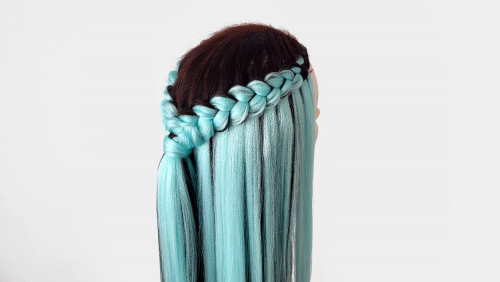
DNA Braids: Spiral Braid Structure With Helix-Inspired Shape, Dimension, and Modern Detail
DNA braids are decorative braid styles designed to resemble the spiral structure of a DNA double helix. The look is built around curved strand movement, controlled crossing, and a twisted visual pattern that appears to wrap around itself. Unlike a basic three-strand braid, a DNA braid is valued for its sculptural shape and its clear spiral effect.
This braid style is popular in creative hairstyling because it looks technical, unusual, and highly visual. It can be used as an accent braid, a center braid, a festival detail, a kids’ creative style, or part of a larger braided hairstyle. The braid may be created with natural hair only or with added synthetic hair for color, contrast, length, and stronger definition.
DNA braids are not usually chosen as the most basic everyday protective style. They are more often used when the goal is design, texture, and visual interest. The braid can look futuristic, playful, editorial, educational, or high-fashion depending on placement, size, color, and finish.
What Are DNA Braids?
DNA braids are braid designs that imitate the twisted ladder-like appearance of DNA. The style usually includes a central structure with strands crossing around it in a repeated spiral rhythm. From a distance, the braid can look like a rope braid, infinity braid, or ladder braid, but the defining feature is the helix-inspired movement.
The braid may be created using multiple sections of hair. Some versions use two main anchor sections with smaller strands crossing between them. Other versions use a modified three-strand or four-strand pattern to create the spiral effect. The exact technique may vary by stylist, but the final look should show a repeated twist that resembles a DNA helix.
DNA braids can be tight and graphic or soft and expanded. They can be placed down the center of the head, along one side, through a ponytail, or as a decorative braid inside loose hair. The style is especially striking when the braid has enough length to show several spiral repeats.
Why DNA Braids Stand Out
DNA braids stand out because they look dimensional. The braid does not read as a flat woven pattern. Instead, it appears to rotate, creating depth and movement along the length of the hair.
The style also feels modern because the name connects braiding with science, geometry, and visual structure. This makes it appealing for social media tutorials, salon portfolios, kids’ creative hairstyling, and editorial beauty content.
Another reason DNA braids stand out is the strong pattern repeat. A clean DNA braid has rhythm. The twists should look even, the sections should stay controlled, and the helix shape should be visible from top to bottom.
When color is added, the effect becomes even stronger. Two contrasting shades can make the spiral more noticeable, while ombré or highlight pieces can create movement through the braid.
DNA Braids vs. Rope Braids
DNA braids are sometimes confused with rope braids because both can have a twisted appearance. The difference is in the visual structure.
A rope braid is usually made by twisting two sections separately and then wrapping them around each other. The result looks like a cord or rope. It is simple, clean, and spiral-like.
A DNA braid is more decorative and often more complex. It aims to create the look of a double helix, with a more visible crossing pattern. Some versions may include small strands moving between larger sections, creating a ladder-like or helix-like effect.
Rope braids are usually easier and faster. DNA braids require more control and are often used when the stylist wants a more unusual design.
Both styles are beautiful, but DNA braids are more graphic and concept-driven.
DNA Braids vs. Infinity Braids
DNA braids and infinity braids can also look related because both involve repeating strand movement around a central structure. Infinity braids often use one small strand that wraps in a figure-eight pattern around two larger sections. This creates a woven infinity-symbol effect.
DNA braids are focused on the helix appearance. The braid should look like it twists around itself in a spiral, not just wraps in a flat figure-eight. Some stylists may use infinity braid mechanics to create a DNA-inspired result, but the final visual goal is different.
Infinity braids usually look flatter and more woven. DNA braids often look more dimensional and sculptural.
In salon language, reference photos are important because the terms can overlap. One client may call a spiral infinity braid a DNA braid, while another may expect a more ladder-like helix design.
Common Types of DNA Braids
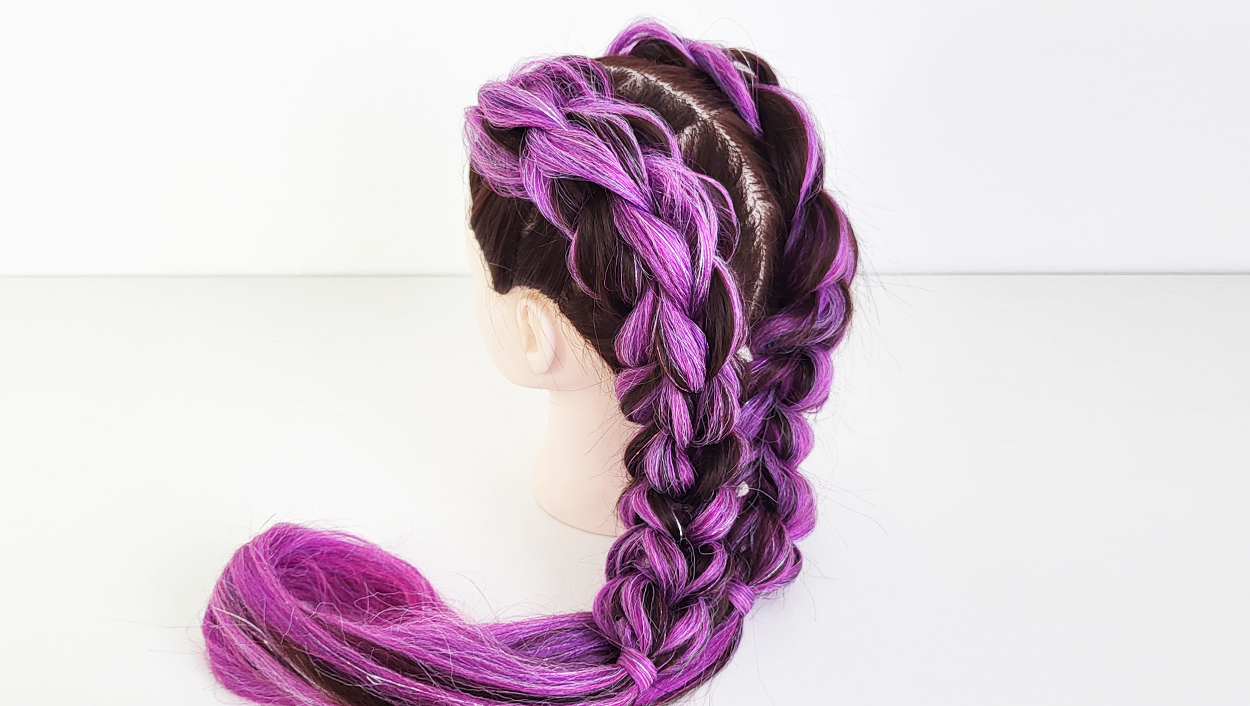
A classic DNA braid is usually worn as one visible braid down the center, side, or back of the head. It shows the helix pattern clearly along the length.
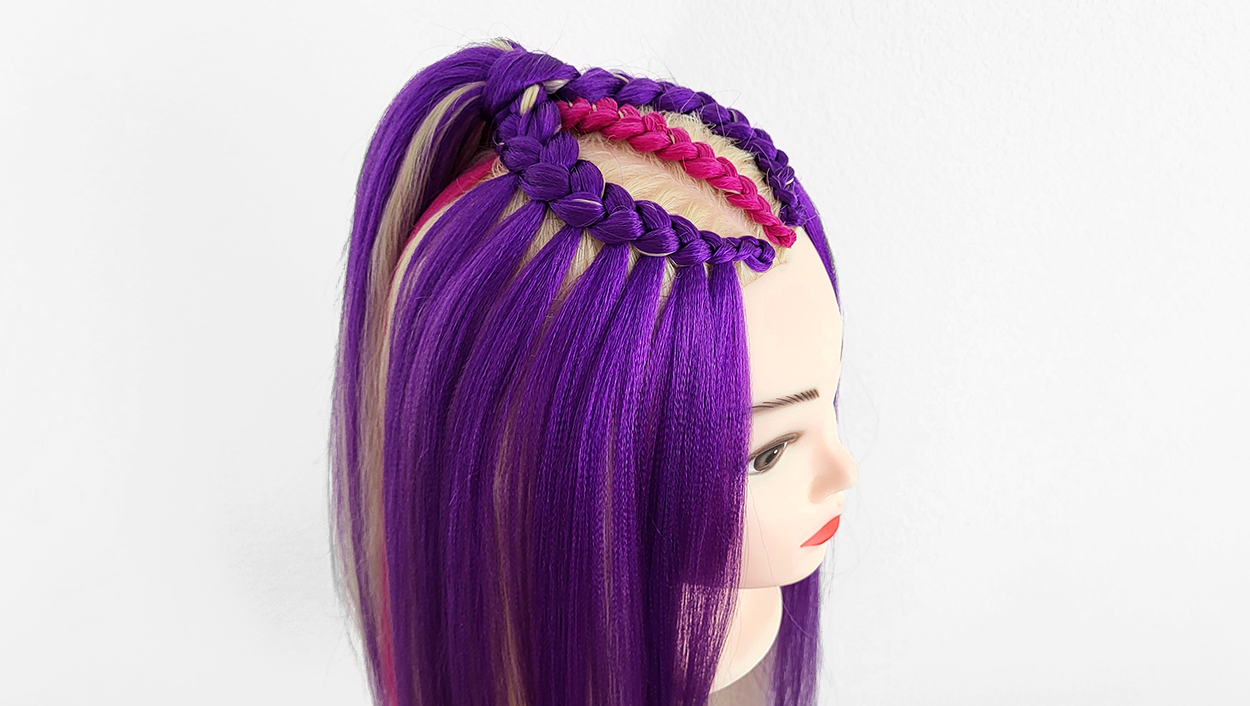
A DNA accent braid is a smaller decorative braid added to loose hair, ponytails, buns, or half-up styles. This version adds detail without taking over the whole hairstyle.
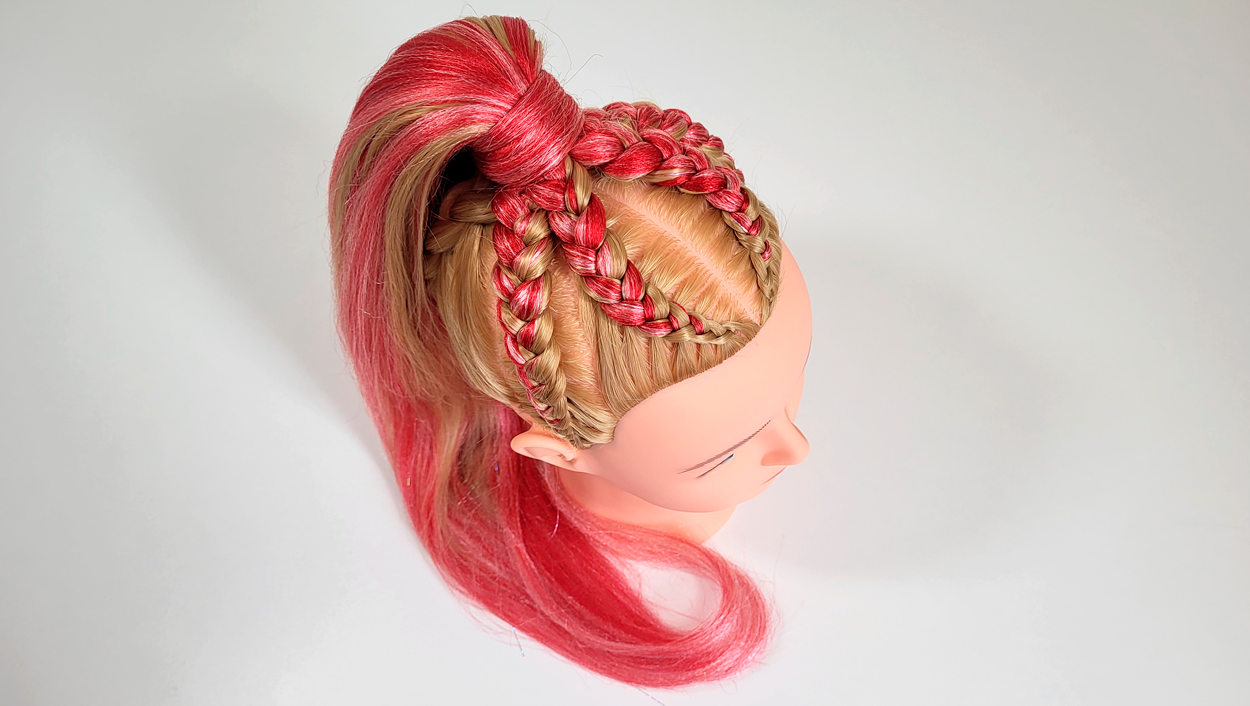
A DNA ponytail braid is created through the length of a ponytail. The smooth ponytail base makes the spiral braid stand out.
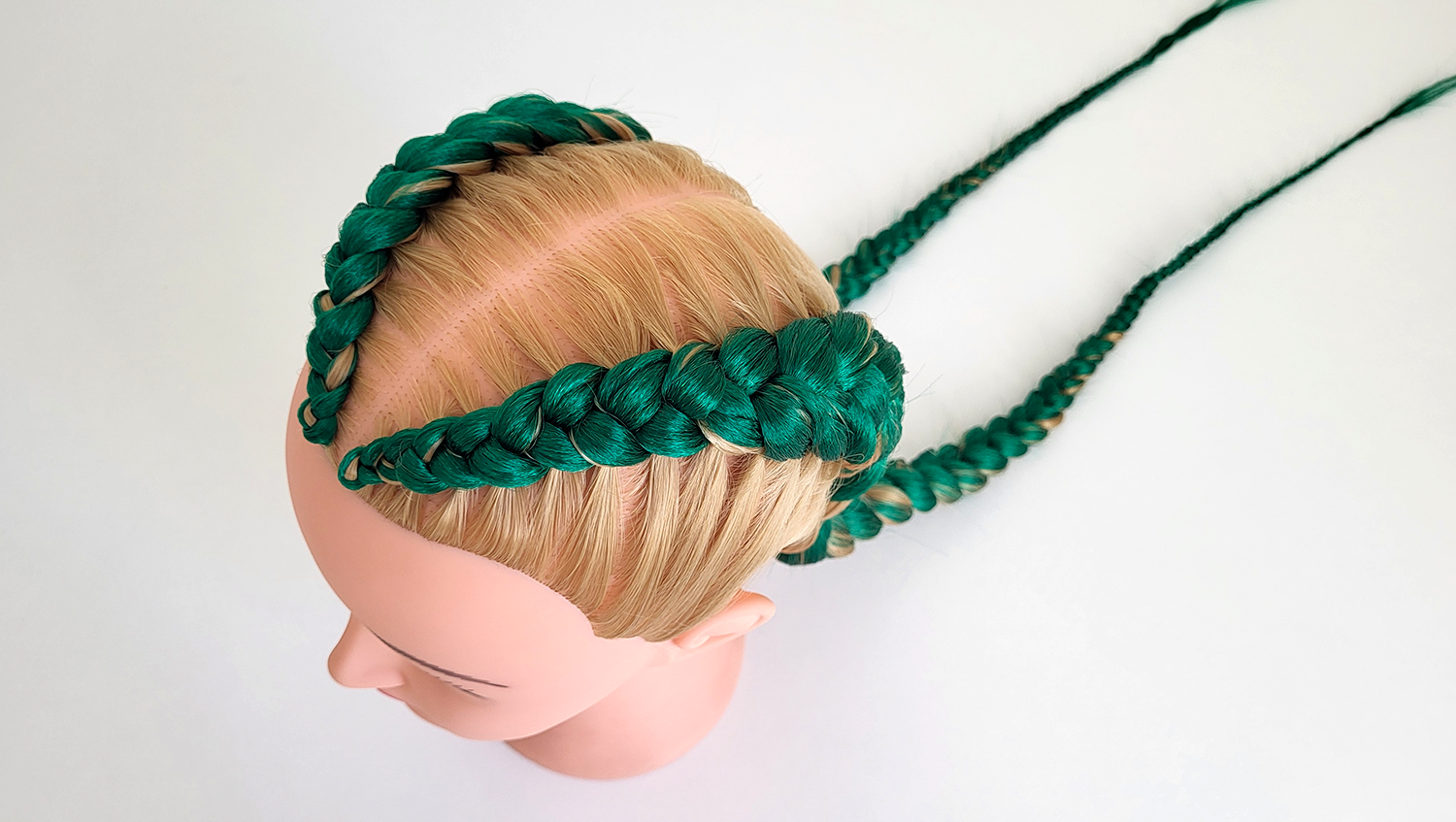
A double DNA braid uses two matching DNA braids, often placed on each side of the head or running parallel down the back.
A DNA braid with extensions uses added hair to increase length, thickness, or color contrast.
A colorful DNA braid uses two or more shades to highlight the twist pattern and make the helix effect more visible.
A kids’ DNA braid is usually simplified, comfortable, and playful, often paired with colorful elastics, ribbons, or beads.
DNA Braids with Natural Hair
DNA braids can be created with natural hair only if the hair has enough length and smoothness to show the pattern. Medium to long hair usually works best because the helix effect needs space to repeat.
Straight or stretched hair shows the pattern most clearly. Wavy hair can create a softer finish. Curly or coily hair may need stretching, smoothing, or section control if the goal is a sharp visible pattern. The style can also be created on textured hair with a softer, more organic finish.
Natural-hair DNA braids are usually short-term styles. They may be worn for a day, an event, a photoshoot, or a tutorial. Because the braid is decorative and detailed, it may not last as long as simpler protective braid styles.
The braid should feel secure but not tight. Since the style often depends on detailed strand control, tension must be even and gentle.
DNA Braids with Extensions
Extensions can make DNA braids more dramatic and easier to see. Synthetic braiding hair can add length, thickness, and color contrast. Clip-in extensions may also be used for temporary styling when the client wants more volume.
Color is especially useful in DNA braids. Using two different shades can make the spiral structure more visible. For example, blonde and brown, pink and black, purple and silver, or copper and dark brown can create a stronger helix effect.
Extensions can also help when the natural hair is too short or too fine to create a strong pattern. Added hair gives the stylist more material to shape and control.
The amount of added hair should be balanced. If the braid becomes too bulky, the helix pattern can lose definition. If the extension is too slippery, the braid may loosen quickly.
DNA Braids for Color Effects
DNA braids are excellent for color effects because the twisting structure displays contrast beautifully. When different colors wrap around each other, the braid can look more three-dimensional.
A two-tone DNA braid is one of the strongest options. One color can form the outer movement while another color supports the center or opposite side. This helps the viewer see the spiral clearly.
Ombré hair can create a softer effect. The color changes gradually through the braid, making the pattern look more fluid. Highlighted hair can add small flashes of brightness through each twist.
Bright fashion colors can make DNA braids feel futuristic or festival-ready. Neon, pastel, metallic, or high-contrast shades can turn the braid into a statement detail.
Because the color can come from extension hair, the client can experiment without chemical processing.
DNA Braids for Kids
DNA braids can be a fun style for kids, especially for school events, birthdays, themed days, performances, photoshoots, or creative hairstyle challenges. The name also makes the style feel educational and playful.
For children, the braid should be comfortable and age-appropriate. A simple DNA accent braid may be better than a full complex style if the child has a sensitive scalp or shorter attention span.
Colorful elastics, ribbons, small clips, or beads can make the style more playful. However, accessories should stay lightweight and should not pull on the braid.
A kids’ DNA braid should be secure enough for movement but gentle enough for daily comfort. If the style pulls at the scalp or feels too tight, it should be loosened.
DNA Braids for Adults
For adults, DNA braids can look creative, sleek, futuristic, editorial, or festival-ready. The style works well when the client wants a braid that feels different from classic French, Dutch, fishtail, or rope braids.
A single DNA braid through a ponytail can look polished and modern. A side DNA braid can create a softer decorative detail. A DNA braid with bold color can work for content creation, events, beauty shoots, or festival looks.
Adults may also use DNA braids as part of a larger hairstyle. The braid can be combined with loose waves, a high ponytail, a braided bun, accent cornrows, or half-up styling.
The best adult version depends on hair length, texture, occasion, and desired level of visual impact.
DNA Braids for Editorial and Creative Styling
DNA braids are strong for editorial work because they carry a clear concept. The style immediately suggests structure, science, movement, and design. This makes it useful for themed photoshoots, beauty campaigns, futuristic styling, avant-garde hair, and social media tutorials.
In editorial styling, the braid can be exaggerated. It may be oversized, colored, placed in a sculptural ponytail, combined with metallic accessories, or used as the main feature of the look.
The braid can also be paired with sleek hair for contrast. A smooth base makes the spiral braid look more technical. Loose texture around the braid makes it feel softer and more wearable.
The key is clarity. If the braid is meant to represent a DNA helix, the spiral pattern should be visible and intentional.
Professional Technique Details
A professional DNA braid starts with clean sectioning. The stylist should decide the braid placement, size, strand balance, and final direction before starting. The braid needs enough length to show the repeating helix.
The hair should be detangled and controlled. Smooth hair makes the pattern easier to see. Depending on texture, the stylist may use light gel, mousse, cream, or texture spray to create grip without making the hair stiff.
Section size matters. If the strands are too uneven, the braid may lose its spiral rhythm. If the sections are too large, the braid may look bulky. If they are too small, the pattern may become difficult to read.
Tension should remain consistent. A DNA braid often loses shape when some sections are pulled tighter than others. The stylist must keep the strand movement steady from top to bottom.
The finish should be clean. The braid end can be secured with a small elastic, wrapped with hair, decorated with ribbon, or connected into another style.
Maintenance and Wear
DNA braids are usually short-term decorative styles. They are often worn for one day, an event, a tutorial, or a photoshoot. Because the braid pattern is detailed, it may loosen or lose definition with heavy movement or sleep.
To preserve the style, the wearer should avoid excessive touching, brushing, or pulling on the braid. A light finishing spray may help hold the shape, depending on hair type.
If worn overnight, a satin or silk scarf or pillowcase can reduce friction, but the braid may still need refreshing the next day.
Removal should be gentle. The braid should be loosened from the ends upward. If extensions, elastics, ribbons, or accessories are used, they should be removed carefully to avoid snagging.
The style should not cause scalp pain. If the braid feels tight or heavy, it should be adjusted.
Styling Options
DNA braids can be styled in many ways. A single center DNA braid creates a strong focal point. A side DNA braid adds detail to loose hair. A DNA ponytail braid makes the style sleek and modern. A double DNA braid creates symmetry and visual rhythm.
The braid can also be combined with curls, waves, buns, cornrows, Dutch braids, fishtails, or bubble ponytails. It can be used as an accent inside a festival style or as the main braid in a clean editorial look.
Accessories can enhance the style. Metallic thread, small cuffs, ribbon, pearls, clips, or colored elastics can highlight the spiral pattern. Accessories should not hide the braid structure.
The best styling choice depends on hair length, texture, comfort, and the desired mood.
DNA Braids in Modern Beauty Culture
DNA braids are part of the modern trend toward concept-based braid design. Many clients and stylists want hairstyles that are not only pretty but also visually memorable. DNA braids fit that trend because they combine beauty with geometry and storytelling.
The style is popular in tutorials because the braid-building process is interesting to watch. The repeated strand movement creates a satisfying transformation from loose hair into a spiral structure.
In salon and content work, DNA braids show technical creativity. The stylist must understand sectioning, tension, pattern rhythm, and finish. A clean DNA braid looks intentional and advanced even when used as a small accent.
This style also shows how braiding continues to evolve. Traditional techniques can inspire new shapes, names, and visual concepts.
Why DNA Braids Matter
DNA braids matter because they show how hair can become structure, pattern, and concept. The braid is not only decorative; it is inspired by a recognizable natural form.
For clients, DNA braids offer a unique, creative, and modern braid option. For stylists, they offer a way to demonstrate precision, imagination, and advanced strand control.
When done well, DNA braids look dimensional, balanced, and intentional. They prove that braid artistry can be technical, playful, and visually intelligent at the same time.