
Dragon Braids: Raised Braid Texture With Fantasy Shape, Volume, and Fierce Detail
Dragon braids are bold, raised braid styles designed to create a strong, sculptural effect along the head or through the length of the hair. The name comes from the visual similarity to dragon scales, ridges, or fantasy-inspired spines. The braid often sits high on the surface of the hair, creating dimension, volume, and a dramatic silhouette.
In modern hairstyling, dragon braids are not one single traditional braid category. The term usually describes a visual effect created with Dutch braids, pull-through braids, bubble braids, lace braids, faux braid techniques, or expanded three-dimensional braid patterns. The finished look should feel raised, textured, and powerful.
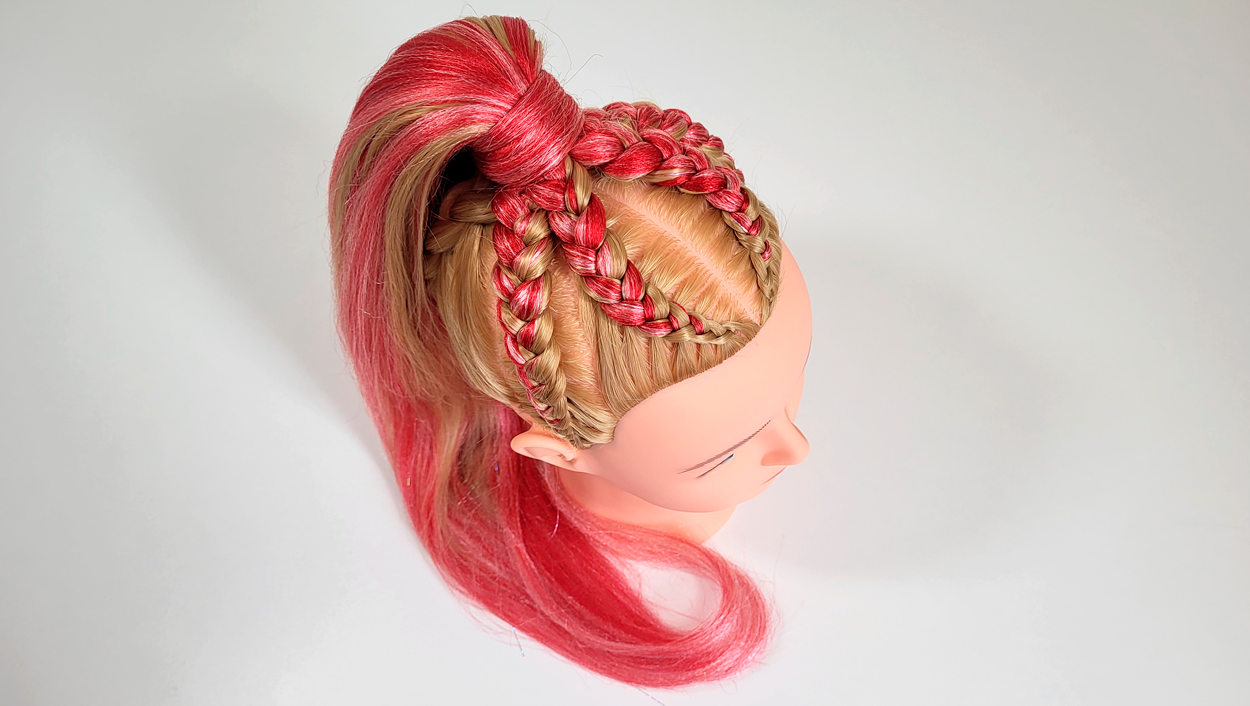
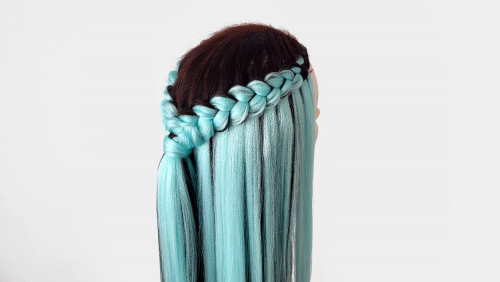
Dragon braids can be worn as one center braid, two parallel braids, a braided mohawk, a ponytail braid, a half-up detail, or a full fantasy-inspired style. They can be sleek and polished, soft and romantic, edgy and festival-ready, or playful and creative depending on technique, size, texture, and accessories.
What Are Dragon Braids?
Dragon braids are braid styles that create a raised, segmented, scale-like look. The braid usually has strong volume and visible texture, making it stand out from flatter braid styles such as classic French braids or simple three-strand braids.
A common version is created with a Dutch braid. Because Dutch braids are braided underhand, the braid sits on top of the hair instead of blending into it. When the braid is gently expanded, the sections can look fuller and more dimensional, creating a dragon-like ridge.
Another popular version uses a pull-through braid technique. This method creates a series of connected ponytail sections that are pulled apart to form large rounded loops. The result can look very full and sculptural, especially on long hair or with extensions.
The defining feature is the visual shape. Dragon braids should look bold, raised, and textured, with a sense of movement down the head or through the braid length.
Why Dragon Braids Stand Out
Dragon braids stand out because they create height. While many braids lie close to the scalp or hang flat, dragon braids are designed to rise above the hair surface. This makes the style more dramatic and easier to see from different angles.
The style also has strong texture. Expanded braid loops can resemble scales, armor, or a fantasy creature’s spine. This makes dragon braids especially popular for creative hairstyling, costumes, festivals, photoshoots, kids’ events, and social media tutorials.
Dragon braids are also versatile. They can look fierce and edgy with a tight center ridge, or soft and romantic when loosened and paired with curls. They can be made clean and sleek for a polished finish or intentionally textured for a fantasy-inspired look.
The style is highly visual, which is why it photographs and films well. The raised shape creates shadows and dimension that make the braid pattern clear on camera.
Dragon Braids vs. Dutch Braids
Dragon braids are often based on Dutch braids, but they are not exactly the same. A Dutch braid is a specific technique where the outer strands are crossed under the center strand, creating a braid that sits on top of the hair.
A dragon braid is more about the final appearance. It may use a Dutch braid technique, but the braid is usually expanded, shaped, or styled to look more dramatic and scale-like.
A simple Dutch braid can be clean and classic. A dragon braid usually has more volume, more height, and a stronger visual identity. It may also include multiple sections, elastics, extensions, or accessories to create a more sculptural effect.
In short, Dutch braiding is often the technique. Dragon braid is the fantasy-inspired result.
Dragon Braids vs. Pull-Through Braids
Dragon braids can also be created with pull-through braid techniques. A pull-through braid is not a true braid in the traditional sense because it usually uses ponytail sections and elastics rather than woven strands. However, it creates a braid-like appearance.
Pull-through dragon braids are popular because they can create very large, rounded sections. The stylist makes a series of ponytails, splits and pulls sections through each other, then expands the loops. The result can look like a thick raised spine down the head or ponytail.
This method is useful for clients who want maximum volume. It also works well on hair that is difficult to braid traditionally, as long as the elastics are placed comfortably and safely.
Dutch dragon braids look more woven. Pull-through dragon braids look more rounded and bubble-like. Both can create a strong dragon-inspired effect.
Common Types of Dragon Braids
A classic dragon braid is usually one large raised braid down the center of the head. It may begin at the front hairline and continue toward the nape or through a ponytail.
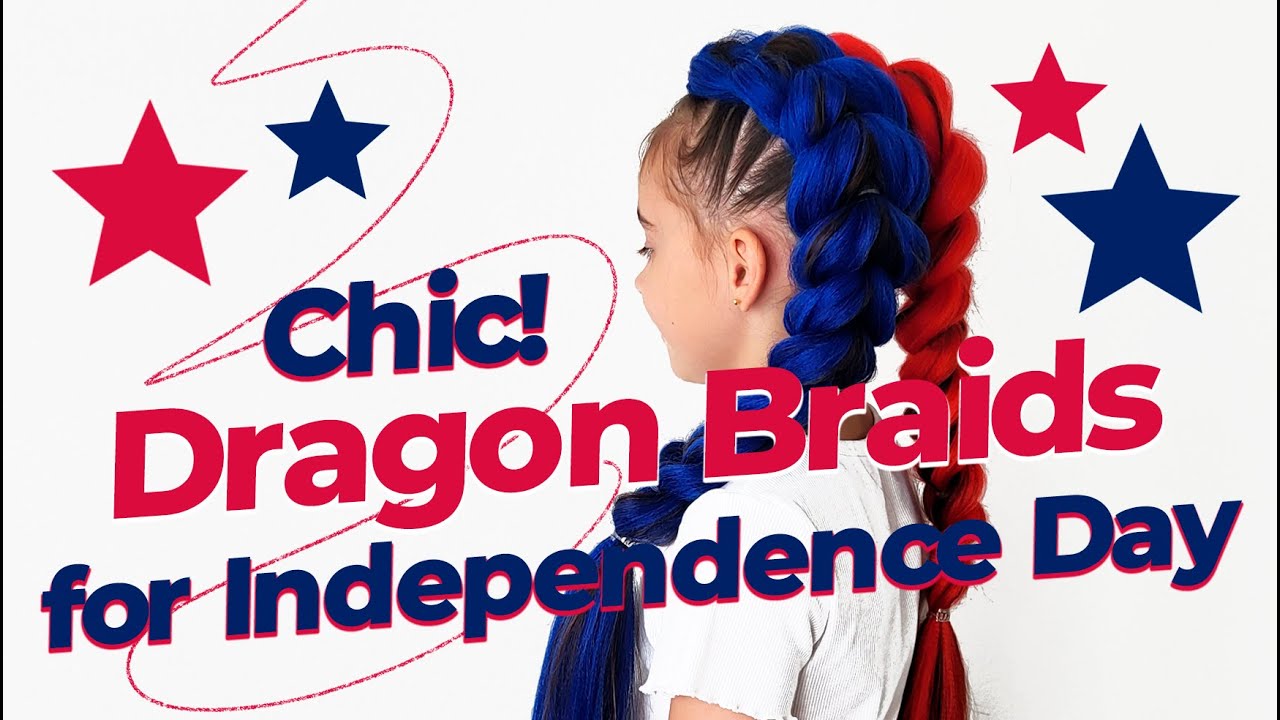
A dragon braid mohawk uses a raised center braid with smoother or tighter sides. This creates height and a bold silhouette without shaving the hair.
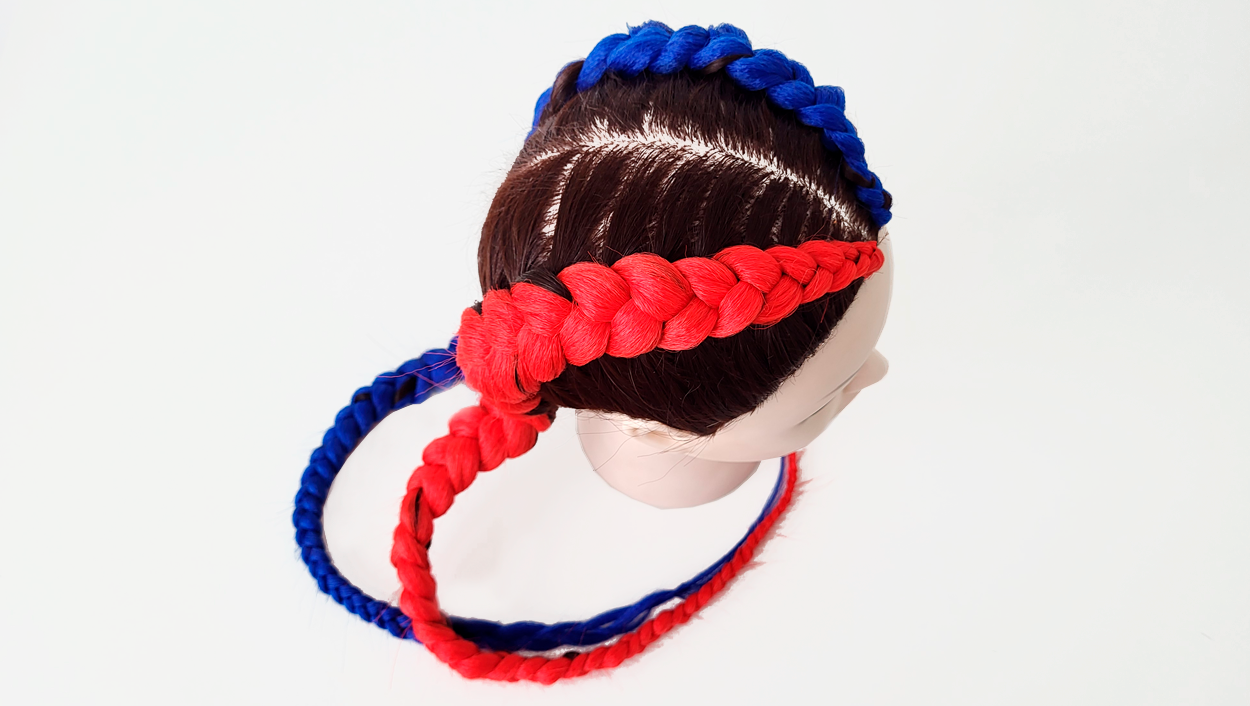
Double dragon braids use two raised braids running parallel from front to back. This style can look sporty, playful, or fantasy-inspired depending on finish.
A pull-through dragon braid uses elastics and expanded sections to create a large segmented braid effect.
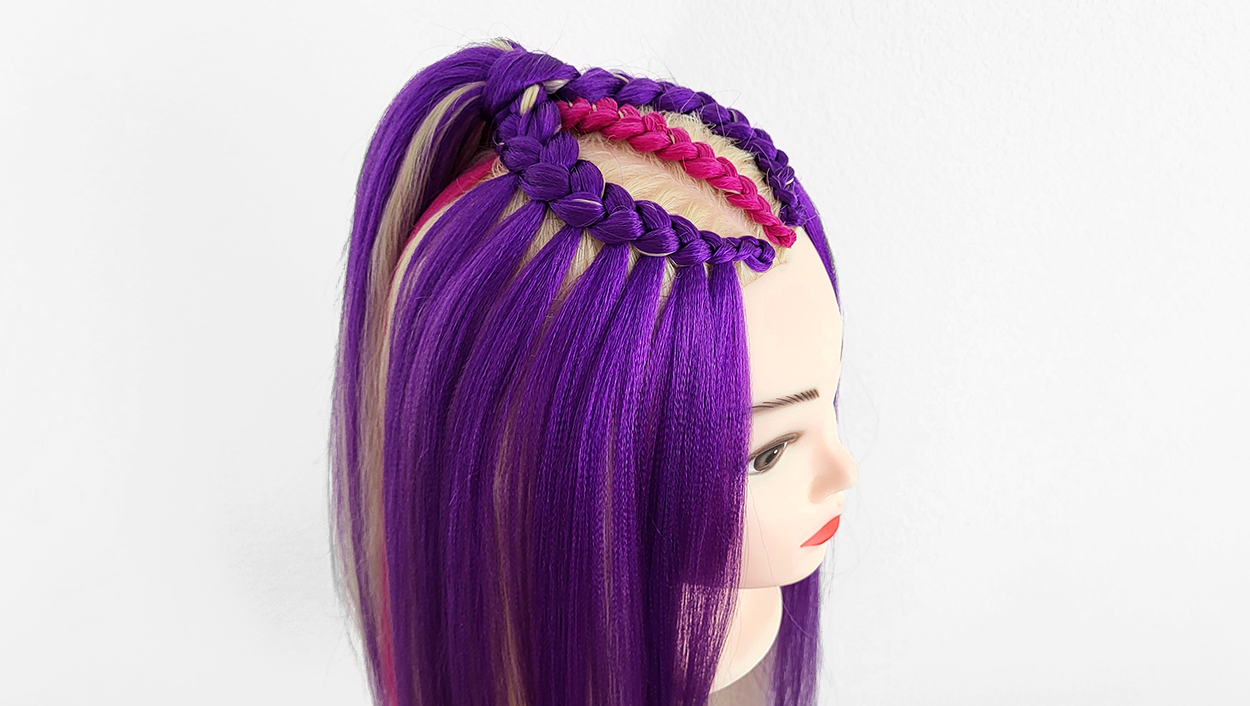
A half-up dragon braid uses only the top section of the hair while the rest remains loose. This version works well with curls, waves, or long hair.
A dragon ponytail braid begins with a ponytail and continues into a raised textured braid through the length.
A dragon braid with extensions adds length, thickness, color, or dramatic volume.
Dragon Braids with Natural Hair
Dragon braids can be created with natural hair only if the hair has enough length and density to support the shape. Medium to long hair usually works best because the raised sections need space to build dimension.
Straight hair can create a clean and graphic dragon braid. Wavy hair adds softness and movement. Curly hair creates volume and texture. Coily or highly textured hair can also be styled into dragon braids with proper sectioning, stretching, or texture-specific technique.
Natural-hair dragon braids are usually short-term styles. They may be worn for a day, an event, a photoshoot, or a creative hairstyle moment. Depending on the technique, the style may last longer if the braid is secure and the hair is protected at night.
The braid should not feel painfully tight. Dragon braids depend on shape and expansion, not harsh pulling.
Dragon Braids with Extensions
Extensions can make dragon braids more dramatic. Added hair can increase length, thickness, and color contrast, helping the raised braid look fuller and more defined.
Synthetic braiding hair can be fed into a Dutch braid to create a longer and stronger braid shape. Clip-in extensions can be used for temporary fullness in half-up or ponytail versions. Ponytail extensions can also support a dragon braid through the length.
Color can make the style more powerful. Black, platinum, copper, burgundy, silver, pink, purple, blue, green, or ombré shades can all change the final mood. High-contrast color can help each raised section stand out.
The amount of added hair should be controlled. Too much hair can make the braid heavy and uncomfortable. A good dragon braid should look bold but still feel wearable.
Dragon Braids for Kids
Dragon braids are popular for kids because the style feels playful, magical, and fun. The name itself makes the hairstyle exciting, especially for birthdays, school events, themed days, dance, performances, photoshoots, or creative weekend styling.
Kids’ dragon braids can be created as one center braid, two dragon braids, a half-up dragon braid, or a ponytail version. Colorful elastics, bows, ribbons, glitter parts, small clips, or lightweight beads can make the style more expressive.
Comfort is the priority. Children’s scalps can be sensitive, so the braid should not be too tight. If elastics are used, they should be gentle and not wrapped too tightly around the hair.
A kids’ dragon braid should look cute and creative while staying comfortable enough for movement, sleep, and play.
Dragon Braids for Adults
For adults, dragon braids can look edgy, sporty, editorial, festival-ready, or romantic. A sleek center dragon braid can create a strong high-fashion look. A pull-through dragon braid can create volume for a dramatic event style. A half-up dragon braid with waves can feel softer and more wearable.
Adults may choose dragon braids for festivals, workouts, photoshoots, vacations, themed events, beauty content, or creative salon styling. The look is especially strong for clients who want a braid that feels different from everyday French or Dutch braids.
A dragon braid can also work as a statement ponytail. When the braid continues through the ponytail length, it creates a powerful silhouette that looks polished and modern.
The best adult version depends on hair length, density, comfort, occasion, and desired level of drama.
Dragon Braids for Men
Dragon braids can also be used in men’s hairstyling, especially with longer hair or undercut styles. A raised center braid can create a warrior-inspired or mohawk-like effect. Smaller side braids can be added for more detail.
Men’s dragon braids may be combined with fades, shaved sides, long top sections, ponytails, or Viking-inspired styling. The look can be rugged, athletic, fantasy-inspired, or editorial.
Hair length matters. Shorter hair may need a tighter Dutch braid or small scalp-braid version. Longer hair can support a fuller dragon braid or ponytail braid.
The style should be secure but not painful. A strong masculine look should still protect the scalp and hairline.
Dragon Braids for Festivals and Events
Dragon braids are ideal for festivals and events because they create instant visual impact. The raised braid keeps hair controlled while still looking bold and expressive.
Festival versions may include colored extensions, glitter, rings, cuffs, thread, ribbons, or metallic details. A dragon braid mohawk can create an edgy look. A double dragon braid can look playful and strong. A half-up dragon braid can keep the face open while leaving length loose.
For events, the style should be built to last through movement. The braid should be secured properly, but it should not feel tight or heavy. Accessories should be smooth and lightweight so they do not snag the hair.
A good event dragon braid should photograph well, hold its shape, and stay comfortable.
Dragon Braids for Editorial Styling
Dragon braids work well in editorial hairstyling because they create a clear shape. The braid can become the main design element of the entire look. It can suggest fantasy, armor, strength, futurism, or high-fashion texture.
Editorial versions can be oversized, sleek, wet-look, metallic, colorful, or sculptural. The braid may be paired with dramatic makeup, strong clothing shapes, or fantasy styling.
In creative beauty work, the dragon braid does not have to follow everyday wear rules. It can be exaggerated for visual impact. However, the technical foundation still matters. The braid should look intentional and controlled.
A successful editorial dragon braid has a strong silhouette and a readable pattern.
Professional Technique Details
A professional dragon braid starts with planning the main line of the style. The stylist should decide whether the braid will run down the center, along one side, into a ponytail, or through a half-up section.
Preparation depends on hair texture. Smooth hair may need grip from texture spray or mousse. Curly hair may need frizz control. Coily hair may need stretching or a product base that supports section control. Fine hair may need volume support.
If the style is built with a Dutch braid, the stylist should keep the braid centered and consistent. After braiding, the outer edges can be gently expanded to create the raised dragon shape.
If the style is built with a pull-through method, the ponytail sections should be even and the elastics should not be too tight. Each loop should be pulled out gradually to create balanced volume.
The final style should be checked from the front, side, top, and back because dragon braids rely heavily on silhouette.
Tension, Volume, and Shape
Dragon braids require balance between tension and expansion. The braid needs enough tension to hold, but enough softness to be shaped. If the braid is too tight, it may look flat and feel uncomfortable. If it is too loose, it may collapse.
Volume should be built gradually. Pulling the braid apart too aggressively can weaken the structure. The stylist should expand each section evenly so the braid looks intentional from top to bottom.
The centerline is important. A dragon braid that drifts off-center may look uneven unless asymmetry is part of the design. The braid should follow the planned path clearly.
Shape is what makes the braid recognizable. The raised sections should look rhythmic, dimensional, and balanced.
Maintenance and Wear
Dragon braids are usually short-term styles. They are often worn for one day, an event, a photoshoot, or a festival. Some tighter Dutch versions may last a few days with proper care.
At night, the style can be protected with a satin or silk scarf or pillowcase, but expanded sections may flatten during sleep. The braid may need refreshing the next day.
The wearer should avoid excessive touching, brushing, or pulling on the braid. If accessories are used, they should be checked to make sure they are not snagging the hair.
Removal should be gentle. If elastics are used in a pull-through braid, they should be removed carefully or cut without cutting the natural hair. If extensions are used, they should be taken out slowly.
The style should not cause pain, bumps, or scalp tightness. If it does, it should be loosened.
Styling Options
Dragon braids can be styled in many ways. A single center braid creates a bold spine effect. Double dragon braids create symmetry and movement. A dragon braid ponytail feels sleek and powerful. A half-up dragon braid adds detail while keeping the rest of the hair loose.
The style can be combined with curls, waves, bubble sections, fishtail ends, rope twists, cornrows, undercut effects, or braided buns. Extensions can add length and color. Accessories can add shine, edge, or fantasy detail.
Metal cuffs can make the braid feel stronger. Ribbons can make it softer. Glitter can make it festival-ready. Colored extensions can make it more dramatic.
The best styling choice depends on the client’s hair, comfort, occasion, and desired mood.
Dragon Braids in Modern Beauty Culture
Dragon braids are part of the modern trend toward fantasy-inspired and highly visual hairstyling. The style is popular in tutorials, festival looks, kids’ creative styles, cosplay, editorial beauty, and social media content because the transformation is easy to see.
The braid also reflects a broader shift in braid culture: clients want styles with names, stories, and strong visual identities. Dragon braids feel memorable because the name matches the shape.
In professional styling, dragon braids show control over volume and structure. The stylist must understand braid direction, expansion, sectioning, and silhouette. A strong dragon braid should look bold without becoming messy or uncomfortable.
The style continues to evolve through color, extensions, accessories, and hybrid braid techniques.
Why Dragon Braids Matter
Dragon braids matter because they show how braiding can become fantasy, sculpture, and statement styling. The technique turns hair into a raised pattern with movement and personality.
For clients, dragon braids offer confidence, drama, and creative self-expression. For stylists, they offer a way to demonstrate shape control, texture building, and visual design.
When done well, dragon braids look powerful, balanced, comfortable, and intentional. They prove that a braid can be more than a woven style — it can become a full character, mood, and beauty statement.