
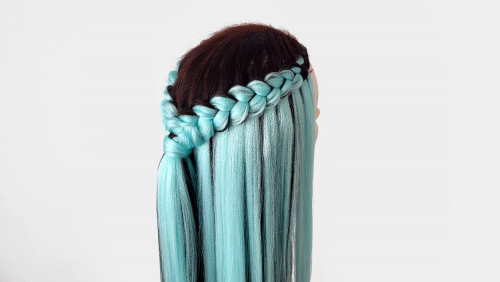
Goddess Braids: Oversized Scalp Braiding With Regal Shape, Protective Strength, and Polished Beauty Impact
Goddess braids are large, raised scalp braids that create a bold, elegant, and protective hairstyle. They are usually built with an oversized cornrow technique, where the hair is braided close to the scalp in thick, visible rows or curved patterns. The finished look is sculpted, polished, and often described as regal because the braid shape has strong presence and clean definition.
This style is different from small cornrows or box braids because goddess braids use fewer, larger braid sections. The braids may move straight back, curve around the head, form a crown, lead into a bun, gather into a ponytail, or create a full updo. The size and direction of the braids give the style its signature power.
Goddess braids can be created with natural hair only or with added extension hair for more length, thickness, and durability. They are popular as protective styles, formal hairstyles, vacation looks, kids’ styles, natural hair updos, and elegant everyday braid options. When done correctly, they protect the hair while giving the client a clean, statement-making finish.
What Are Goddess Braids?
Goddess braids are oversized cornrow-style braids braided close to the scalp. The stylist divides the hair into large sections and braids each section with a raised, structured pattern. The braids are usually thicker than regular cornrows and are often styled in graceful, curved, or symmetrical designs.
The braid can be created with the client’s natural hair or with synthetic braiding hair added for fullness. Extension hair is commonly used when the client wants a larger braid body, longer ends, or a more sculptural shape.
The style may include two large braids, four to six braids, a crown braid, a side-swept design, a braided bun, or an updo. Some goddess braid styles are simple and minimal, while others are highly decorative with curls, beads, cuffs, rings, thread, or hair jewelry.
The defining feature is size and placement. Goddess braids are large, close-to-scalp braids designed to look bold, smooth, and elegant.
Why Goddess Braids Stand Out
Goddess braids stand out because they create immediate visual impact. The braids are larger than standard cornrows, so the pattern is easy to see from every angle. This gives the hairstyle a strong shape without needing dozens of small braids.
The style is also elegant. Curved parting, clean braid direction, and smooth finishing can make goddess braids look formal, bridal, professional, or red-carpet ready. At the same time, simple straight-back goddess braids can feel practical and easy to wear.
Another reason goddess braids remain popular is comfort and efficiency. Because the sections are larger, installation can be faster than smaller braid styles. The style can also feel lighter when the extension amount is controlled properly.
Goddess braids offer a balance of beauty and function: they protect the hair, keep it organized, and create a polished style with very little daily manipulation.
Goddess Braids vs. Cornrows
Goddess braids and cornrows are closely related, but they are not exactly the same. Cornrows are close-to-scalp braids that can be small, medium, or large and can be arranged in many patterns. Goddess braids are usually larger, thicker, and more sculptural.
A regular cornrow style may include many narrow rows. A goddess braid style usually includes fewer braids with more volume and a more dramatic shape. The braid lines are meant to be visible and bold.
Cornrows can be simple, athletic, cultural, creative, or protective. Goddess braids often lean more elegant, formal, and statement-focused, although they can also be casual and practical.
The technique foundation is similar, but the scale and styling mood are different. Cornrows are the broader technique. Goddess braids are a large-format, elevated version of scalp braiding.
Goddess Braids vs. Ghana Braids
Goddess braids and Ghana braids can look similar because both often use large scalp braids and added hair. The difference is usually in the braid build and style identity.
Ghana braids are often created with a gradual feed-in method, where extension hair is added little by little so the braid starts small and becomes fuller. This creates a sculpted raised braid with a smooth build.
Goddess braids may also use added hair, but the main focus is the large, regal braid shape and the overall design. They can be done as oversized cornrows, crown braids, side braids, or braided updos.
In salon language, the terms can overlap. A large feed-in cornrow style may be described as Ghana braids or goddess braids depending on the stylist, region, and reference photo. The best way to avoid confusion is to confirm braid size, parting, length, and desired finish.
Goddess Braids vs. Goddess Box Braids
Goddess braids and goddess box braids are different styles. Goddess braids are large scalp braids attached to the head. They usually follow cornrow-based patterns and may end in a bun, ponytail, or braided length.
Goddess box braids are individual box braids with loose curly or wavy pieces added throughout the style or at the ends. They hang freely from the scalp and usually have box, square, or rectangular parting.
Goddess braids are defined by oversized scalp braid structure. Goddess box braids are defined by individual braids with curl texture.
Both styles can look soft, feminine, and protective, but the construction is different. Goddess braids are sculpted along the scalp. Goddess box braids move as individual hanging braids.
Common Types of Goddess Braids
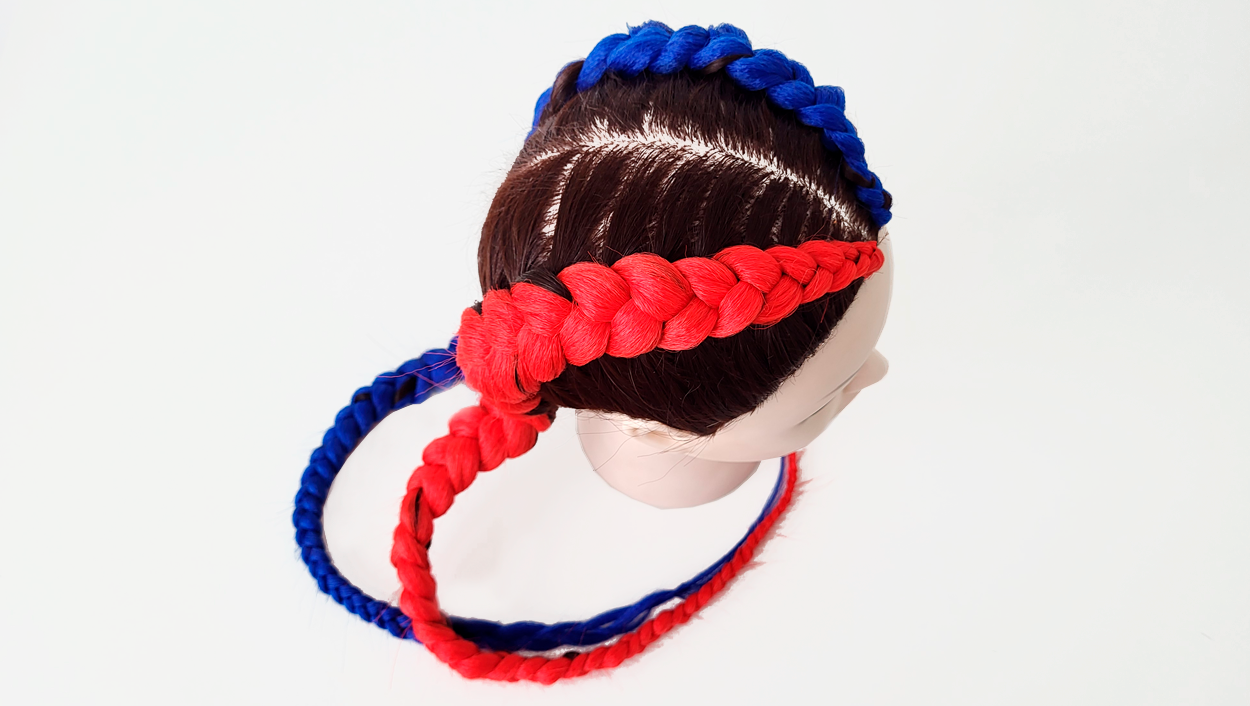
Classic goddess braids usually include two to six large braids moving straight back or in curved patterns.
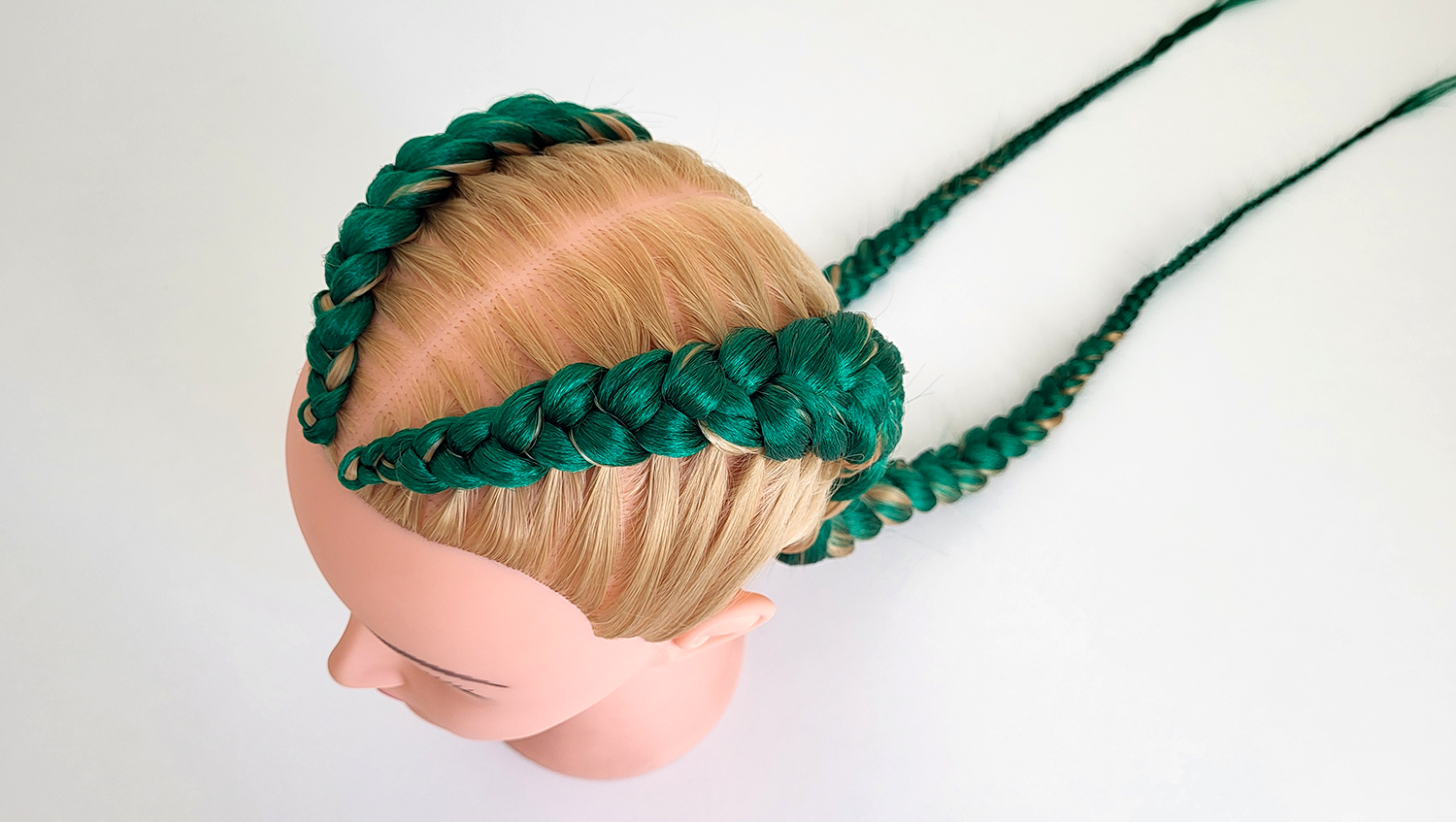
Two goddess braids create a clean, balanced look with one large braid on each side of the head.
Goddess braid crowns wrap around the head to create a halo or regal crown effect.
Goddess braid updos direct the braids into a bun, roll, or sculpted shape.
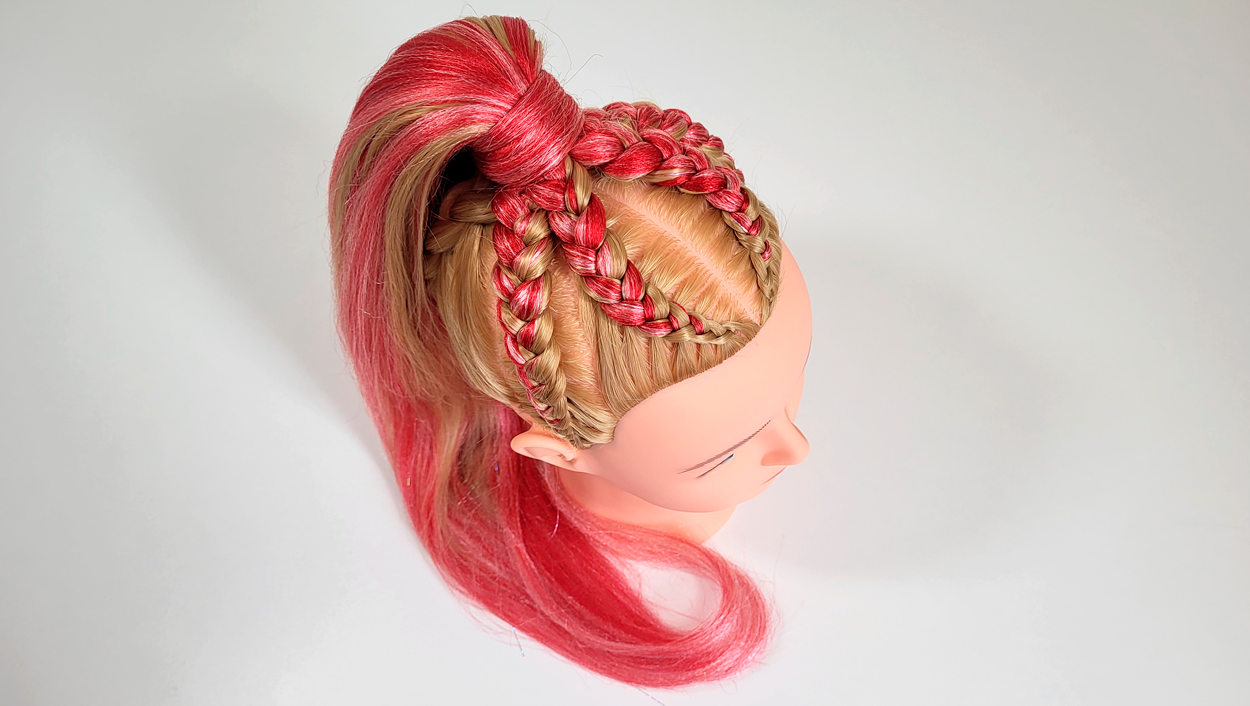
Goddess ponytail braids gather large braids toward one ponytail point.
Side-swept goddess braids move diagonally or toward one side for a softer, more dramatic silhouette.
Goddess braids with curls include loose curly pieces or curly ends for a romantic finish.
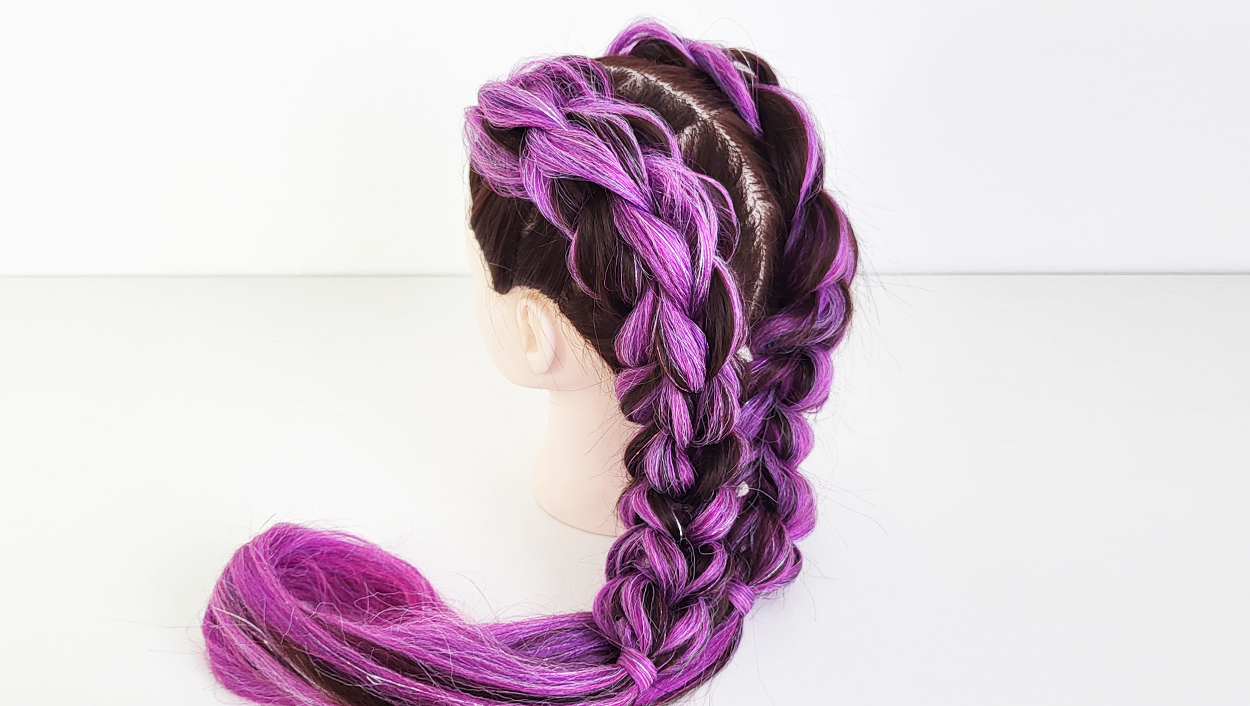
Goddess braids with extensions add volume, length, color, and stronger braid shape.
Two Goddess Braids
Two goddess braids are one of the most popular versions of the style. The hair is usually divided into two large sections with a center part, then each side is braided from the front toward the nape or down the length.
This style is clean, symmetrical, and practical. It works for everyday wear, workouts, vacation styling, protective hair routines, and simple polished looks. It can be done with natural hair or with added braiding hair for longer and fuller braids.
Two goddess braids can look sleek when the parting is sharp and the hair is smoothed. They can also look softer when the braids are slightly expanded or finished with curled ends.
The tension should be even on both sides. A good two-goddess-braid style should feel secure without pulling at the hairline or temples.
Goddess Braid Crowns
A goddess braid crown wraps around the head in a circular or halo-like pattern. This version is elegant, timeless, and often used for formal events, bridal styling, natural hair updos, and polished protective looks.
The braid may be one continuous large braid around the head or multiple braids connected into a crown shape. The ends are usually tucked and pinned to create a seamless finish.
Goddess braid crowns are popular because they frame the face and keep the hair lifted away from the neck. They can look romantic, regal, minimalist, or dramatic depending on braid size and finishing.
Clean parting and gentle edge work are important because the braid often sits close to the hairline. The style should not pull around the forehead, temples, or nape.
Goddess Braid Updos
Goddess braid updos use large scalp braids to create a lifted, polished shape. The braids may move upward from the nape, curve along the sides, or gather into a bun at the crown or back of the head.
This style is useful for weddings, work, formal events, natural hair styling, protective styling, and elegant everyday looks. It keeps the ends tucked away and reduces daily manipulation.
A goddess braid updo can be simple with a few large braids or more detailed with curved parts, stitch accents, accessories, or curls. The final shape should look balanced from the front, side, and back.
The updo must be pinned securely but gently. Pins should not scratch the scalp or create tension at the roots.
Goddess Braids with Natural Hair
Goddess braids can be created with natural hair only, especially when the hair has enough length and density to form large raised braids. This version can feel lighter and more natural than extension-based styles.
Natural-hair goddess braids work well on curly, coily, kinky, and textured hair because the texture helps the braid hold. They can also be done on straight or wavy hair, although the style may need more product or pinning to stay secure.
Before braiding, the hair should be clean, detangled, moisturized, and sectioned. Some clients prefer stretched hair for a smoother finish, while others prefer a more textured natural look.
A natural goddess braid should feel comfortable and controlled. The braid should not be forced into a tight shape just to appear sleek.
Goddess Braids with Extensions
Extensions are commonly used in goddess braids to create larger braid size, longer length, and a more dramatic finish. Synthetic braiding hair is often added to increase volume and help the braid hold its shape.
The extension hair may be added from the beginning or fed in gradually, depending on the desired look. A gradual feed-in approach can create a smoother start, while a fuller start can create a bolder braid body.
The amount of added hair should be balanced with the client’s natural hair density and scalp comfort. Too much extension hair can make the style heavy, especially in large braids or updos.
A professional goddess braid with extensions should look full and smooth while still feeling lightweight enough to wear comfortably.
Goddess Braids with Curls
Goddess braids with curls combine large structured braids with loose curly texture. Curls may be added at the ends, along the braid, around the face, or in a bun or ponytail finish.
This version softens the style and makes it feel more romantic, bridal, boho, or vacation-ready. Curly pieces can be made with human hair, synthetic curls, water wave hair, or pre-curled extensions.
The curls should be placed intentionally. Too many loose pieces can hide the braid structure, while a few curls can add movement and softness without overwhelming the design.
Curly goddess braids require more maintenance than fully braided styles. The loose curls may need mousse, light misting, finger detangling, and night protection.
Goddess Braids with Color
Color can make goddess braids more expressive. Natural black and brown shades create a classic finish. Honey blonde, caramel, copper, auburn, and burgundy add warmth. Platinum, silver, gray, or white can create a more editorial effect.
Bright colors such as pink, purple, blue, green, red, orange, or pastel tones can create a festival or creative beauty look. Ombré braiding hair can make the braid length more dimensional.
Color can be used throughout the full style or only as accents. A few colored strands inside the braid can create subtle movement. Full-color extensions create a stronger statement.
The color should support the shape of the braid. A well-placed color blend can make the raised braid pattern more visible and polished.
Goddess Braids with Accessories
Accessories can elevate goddess braids. Gold cuffs, silver rings, beads, cowrie shells, pearls, flowers, thread, ribbons, charms, and hair jewelry can all be used depending on the style mood.
For formal looks, pearls, flowers, and delicate pins can make the braids feel elegant. For cultural or boho-inspired styling, beads and cowrie shells can add movement and detail. For festival or editorial looks, cuffs, rings, and metallic thread can make the style more dramatic.
Accessories should be lightweight and smooth. Heavy pieces can pull on large braids, especially near the hairline or in updos. Sharp accessories can snag the hair.
A good accessory plan enhances the braid shape without hiding the clean structure.
Goddess Braids for Protective Styling
Goddess braids can function as a protective style when installed correctly. They keep the hair organized, reduce daily manipulation, and can protect the ends when the braid ends are tucked into an updo or blended into extensions.
The style can be especially useful for clients who want a protective look without sitting for very small braids. Larger sections can reduce installation time while still offering control and coverage.
However, goddess braids are protective only when tension and weight are managed properly. Large braids should not mean heavy braids. Tight roots, heavy synthetic hair, and harsh pulling around the hairline can cause breakage.
A healthy goddess braid style should feel comfortable from the first day. Pain, bumps, headaches, or burning are signs that the style is too tight or too heavy.
Goddess Braids for Kids
Goddess braids can be adapted for kids when the style is gentle, lightweight, and age-appropriate. Kids’ versions may include two large braids, a simple crown, ponytail braids, braided buns, beads, bows, ribbons, or colorful elastics.
Because children’s scalps can be sensitive, the braids should not be tight. Extensions should be used lightly or avoided when not needed. Shorter styles may be more practical for school, sleep, and play.
Kids’ goddess braids can look neat and beautiful without being heavy or complicated. The goal should be comfort, easy maintenance, and safe removal.
A good children’s goddess braid style should stay secure through daily movement while protecting the hairline and scalp.
Goddess Braids for Adults
For adults, goddess braids can look elegant, powerful, minimal, glamorous, professional, or creative. A crown braid can feel formal and refined. A high braided bun can feel polished. Two long goddess braids can feel sporty and clean. A curved side design can feel modern and feminine.
Adults often choose goddess braids for work, events, vacations, weddings, protective styling, birthdays, photoshoots, and everyday low-maintenance beauty.
The style can be customized with braid size, parting, length, curl detail, color, and accessories. It can be understated in natural shades or dramatic with long extensions and metallic accents.
The best adult version depends on lifestyle, scalp comfort, hair density, face shape, and desired level of drama.
Goddess Braids for Men
Goddess braid concepts can also be adapted for men’s hairstyling, especially through large scalp braids, raised cornrow patterns, braided top sections, and long braid finishes.
Men’s versions may be more minimal, athletic, or editorial depending on the design. The style can be paired with fades, undercuts, long top sections, or braided ponytails.
Large raised braids can create a strong silhouette on men’s hair, especially when the parting is clean and the braid direction is intentional. Accessories may be used lightly, such as cuffs or thread.
The same comfort rules apply. The braid should not pull at the hairline, scalp, or nape. Strong styling should come from technique, not excessive tension.
Goddess Braids for Short Hair
Goddess braids can be created on short hair if the hair is long enough to grip safely. Short natural hair may need smaller starting sections, product for hold, or added extension hair to create the finished braid length.
The stylist should not force very short hair into tight braids. If the hair is too short, the style may slip or create tension at the roots. A consultation helps determine whether the hair can support the style safely.
Extensions can create the appearance of long goddess braids even when the client’s natural hair is shorter. However, the extension weight must be carefully controlled.
A safe short-hair goddess braid should protect the natural hair and avoid harsh pulling.
Goddess Braids for Long Hair
Long hair gives goddess braids more styling flexibility. The hair can be braided into large straight-back braids, crown shapes, buns, ponytails, or sculpted updos.
Long natural hair requires careful detangling and section control before braiding. The stylist must keep the strands smooth and fully incorporated so the braid does not become bulky or uneven.
If extensions are added, the stylist should consider the total weight of the natural hair plus the added hair. Long hair already carries weight, so extra hair should be added only when needed.
A good long-hair goddess braid style should feel secure, balanced, and comfortable while showing the full beauty of the braid shape.
Parting and Design Planning
Parting is one of the most important parts of goddess braids. Because the braids are large and visible, the parting must support the full design. Straight parts create a classic look. Curved parts create elegance and movement. Diagonal parts create asymmetry. Circular parts create crowns and updos.
The parting should match the client’s head shape, hair density, and desired style. Larger sections need enough hair to support the braid. Smaller sections may not create the oversized goddess braid effect.
For updos and ponytails, the braid direction should flow toward the final gathering point. For crown styles, the curve should frame the face and head evenly.
A strong goddess braid style begins with a clear design map before braiding starts.
Tension and Scalp Comfort
Tension control is essential in goddess braids. Large braids can look smooth and sculpted without being painfully tight. The scalp should not feel sore during or after installation.
The hairline, temples, crown, and nape should be treated carefully. These areas can become stressed if the braid is pulled too tightly or if too much extension hair is added.
The braid should feel secure but flexible. The client should be able to move their head comfortably. If the style causes headaches, bumps, burning, or sharp pulling, it should be adjusted.
A professional goddess braid style protects the scalp as much as it shapes the hair.
Professional Technique Details
A professional goddess braid service begins with consultation. The stylist should discuss braid size, design, extension use, length, curl detail, color, accessories, wear time, scalp sensitivity, and maintenance.
The hair should be cleansed, detangled, moisturized, and sectioned carefully. Product choice depends on hair texture and desired finish. Gel may create a sleek look, while cream or mousse may create a softer natural finish.
The stylist braids close to the scalp while keeping the braid large and even. If extensions are added, they should blend smoothly and not create lumps or heavy roots. The braid direction should follow the planned parting.
A polished goddess braid should look smooth, raised, balanced, and comfortable from every angle.
Maintenance and Wear
Goddess braids can last several days to a few weeks depending on braid size, hair texture, product use, extension weight, lifestyle, and how the style is finished. Smaller or more secured versions may last longer, while loose curly versions may need more maintenance.
At night, the style should be protected with a satin or silk scarf, bonnet, or pillowcase. This helps reduce frizz and preserve the braid shape.
The scalp should stay clean and comfortable. Lightweight scalp mist or light oil may be used when needed, but heavy product buildup should be avoided.
If the style includes curls, the curls may need refreshing with mousse, mist, or finger detangling.
If the style becomes painful, loose, itchy, heavy, or matted at the base, it should be refreshed or removed.
Takedown and Hair Health
Goddess braids should be removed gently. The braid should be undone from the ends upward. If extension hair is used, the wearer may cut below the natural hair length, but only after clearly identifying where the real hair ends.
Product buildup near the scalp should be softened and separated carefully. Pulling through buildup can cause breakage. Shed hair should be separated before washing.
After takedown, the hair should be cleansed, conditioned, detangled, and moisturized. If the scalp feels tender or the hairline looks stressed, the hair should rest before another tension-based style.
A protective style is only successful when the hair remains healthy after removal.
Styling Options
Goddess braids can be styled in many ways. They can be worn as two large braids, straight-back braids, side-swept braids, crown braids, braided buns, ponytails, pigtails, updos, or curved scalp designs.
The style can be minimal with natural hair only or dramatic with extensions, color, curls, cuffs, beads, shells, pearls, flowers, or thread. A crown braid can look formal. A high braided bun can look elegant. Long goddess braids can look bold and glamorous.
The best styling choice depends on the client’s hair, comfort, occasion, and desired level of polish.
Goddess braids are versatile because they can move between everyday beauty and formal styling with only small changes in finish.
Goddess Braids in Modern Beauty Culture
Goddess braids remain popular because they combine protective styling with sculptural beauty. They are widely used in natural hair care, salon braid services, bridal styling, vacation hair, kids’ styles, editorial looks, and social media tutorials.
The style has staying power because it offers a strong visual result without requiring a full head of small braids. It can be installed faster than many detailed protective styles while still looking intentional and elegant.
For stylists, goddess braids show skill in parting, scalp braiding, extension balance, tension control, and shape design. A clean goddess braid is simple in concept but demanding in execution.
The style continues to evolve through feed-in methods, stitch details, curly finishes, bold color, crown shapes, and accessory styling.
Why Goddess Braids Matter
Goddess braids matter because they show how protective styling can be bold, elegant, and practical at the same time. The oversized braid shape creates beauty and structure while helping protect the natural hair.
For clients, goddess braids offer confidence, comfort, length, polish, and reduced daily styling. For stylists, they require technical control, design planning, scalp awareness, and respect for hair health.
When done well, goddess braids look raised, smooth, balanced, comfortable, and intentional. They prove that a protective braid style can be both powerful and graceful.