
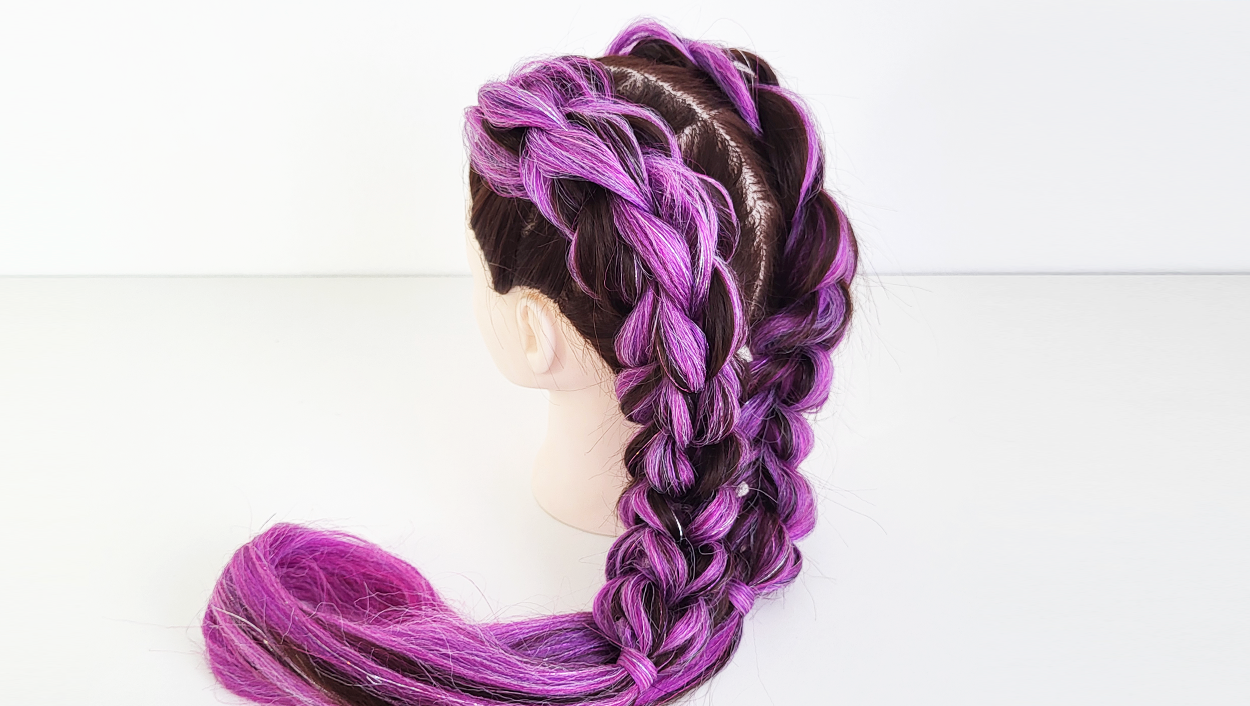
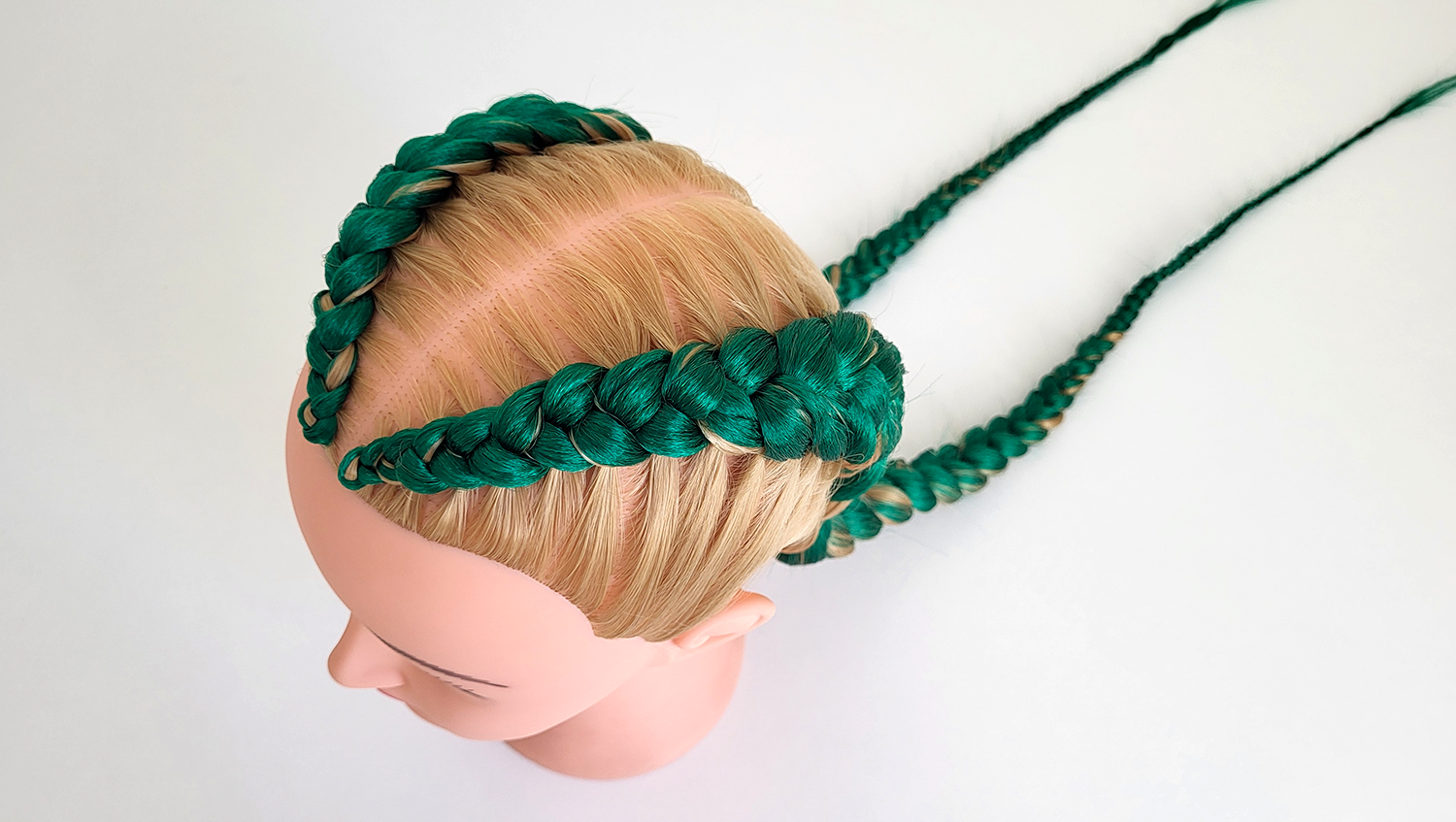
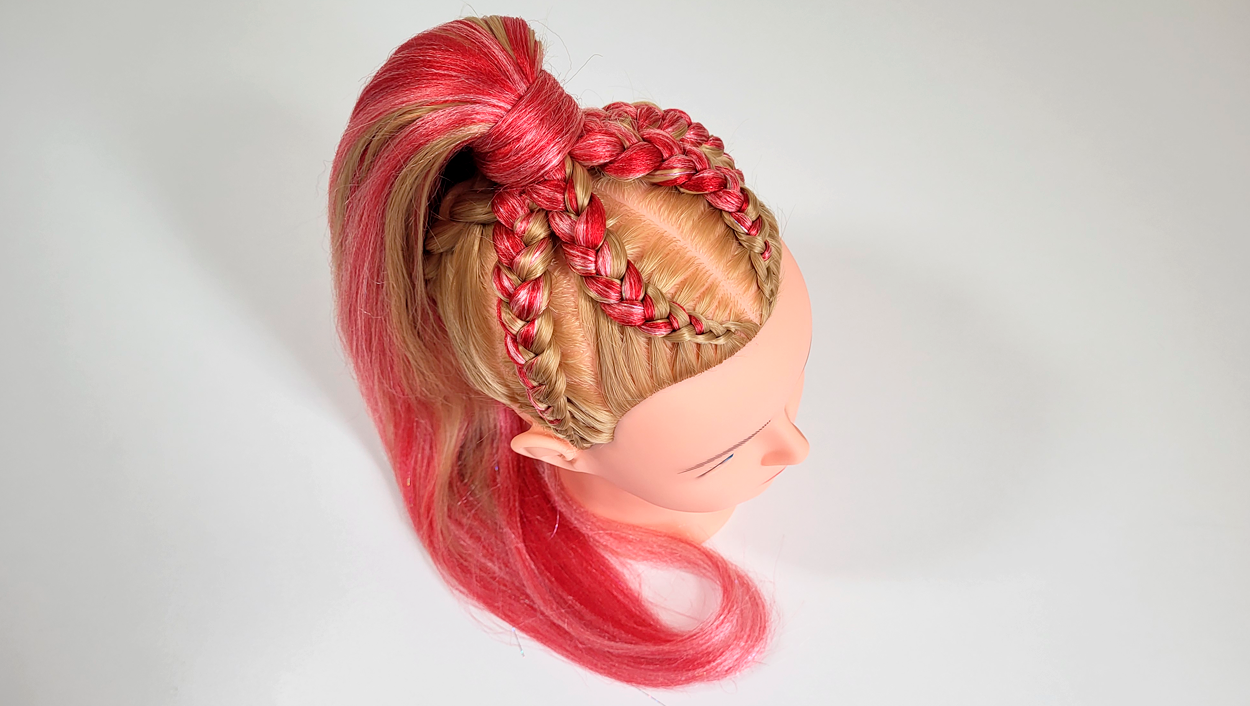
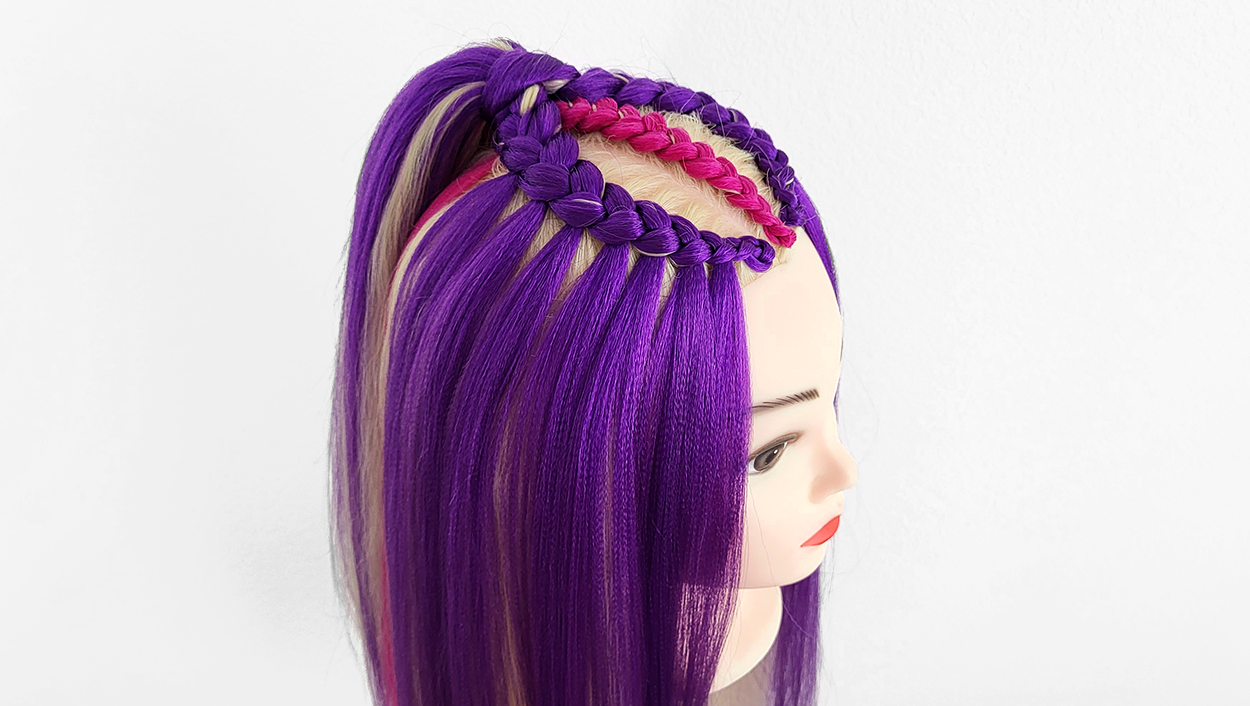
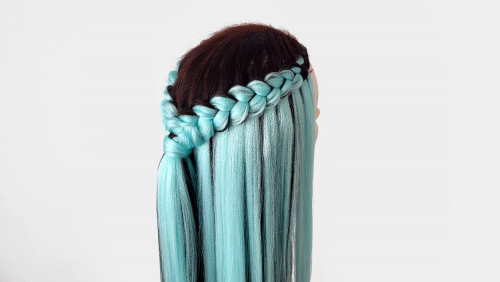
Half-Up Half-Down Braids: Braided Detail With Loose Length, Soft Volume, and Styled Movement
Half-up half-down braids are hairstyles that combine braided structure on the upper part of the head with loose hair through the lower section. The top may be braided, twisted, gathered, lifted, or shaped into a small bun or ponytail, while the rest of the hair remains down. This creates a balanced look that feels styled without fully covering the hair length.
The style is popular because it gives both control and movement. The braided section can keep hair away from the face, add detail around the crown, or create a decorative focal point, while the loose section shows off curls, waves, natural texture, length, or color. This makes half-up half-down braids useful for everyday wear, school, weddings, festivals, vacations, kids’ hairstyles, photo shoots, and salon styling.
Half-up half-down braids can be simple or highly detailed. They may include French braids, Dutch braids, feed-in braids, fishtail braids, waterfall braids, lace braids, cornrow accents, bubble braid details, braided buns, braided ponytails, curls, waves, accessories, or extensions. The final mood depends on the braid type, parting, texture, volume, length, and finish.
What Are Half-Up Half-Down Braids?
Half-up half-down braids are braid-based styles where only the upper portion of the hair is braided or lifted, while the lower portion stays loose. The braided section usually comes from the front, sides, top, or crown area. The loose section can be straight, curled, waved, natural, stretched, or enhanced with extensions.
The braided portion can be small and subtle, such as two side braids pinned at the back. It can also be bold and structured, such as feed-in cornrows leading into a half-up ponytail with long curls underneath.
The defining feature is the split between styled structure and loose movement. The top gives shape and control, while the bottom keeps softness and length visible.
This style is not one single braid technique. It is a styling category that can be created with many different braid methods.
Why Half-Up Half-Down Braids Stand Out
Half-up half-down braids stand out because they create a polished look without feeling too formal or restrictive. A full updo can hide the hair length, and fully loose hair can fall into the face or lose shape. This style sits between the two. It gives enough structure to look intentional while keeping the hair soft and flowing.
The style is also flattering because it can lift the crown, frame the face, and add volume without pulling all the hair away. The braid detail draws attention to the top and sides, while the loose length adds movement around the shoulders and back.
Half-up half-down braids also work well in photos and videos. The braid creates visible texture near the face or crown, and the loose hair adds dimension, shine, and movement.
This combination makes the style adaptable for casual, romantic, glamorous, sporty, boho, bridal, and festival-inspired looks.
Half-Up Half-Down Braids vs. Half-Up Braids
Half-up half-down braids and half-up braids are closely related. In many cases, the terms describe the same styling idea. Both include a braided or gathered top section with loose hair left down.
The phrase “half-up half-down” simply makes the structure clearer. It emphasizes that the hairstyle has two visible parts: an upper styled section and a lower loose section.
In salon language, a client asking for half-up braids may want a small braid detail with loose hair. A client asking for half-up half-down braids may expect a more complete style with the top section intentionally lifted, braided, or gathered.
The best way to define the final look is through the braid type, placement, curl texture, volume, and whether the top section ends in a ponytail, bun, or pinned braid.
Half-Up Half-Down Braids vs. Full Braided Styles
Half-up half-down braids are different from full braided styles because they leave a large portion of the hair loose. Full braided styles may include box braids, cornrows, knotless braids, feed-in braids, or full-head Dutch braids where most or all of the hair is braided.
Half-up half-down braids keep the lower section free. This allows the wearer to show hair length, curls, waves, color, or natural texture. The result usually feels softer and more movement-focused.
Full braided styles often last longer and provide more complete control. Half-up half-down braids are usually more styling-focused and may be worn for one day, an event, or a short period.
The choice depends on the goal. Full braids offer stronger structure. Half-up half-down braids offer structure with visible loose hair.
Common Types of Half-Up Half-Down Braids
Half-up French braids create a smooth, classic top section while the lower hair stays loose.
Half-up Dutch braids create raised braid detail with stronger visual texture.
Half-up feed-in braids use added hair in the top section for length, color, or fuller braid shape.
Half-up fishtail braids create fine woven detail for romantic or boho styling.
Half-up waterfall braids allow sections of hair to fall through the braid into the loose length.
Half-up braided crowns wrap braid detail around the head like a partial halo.
Half-up braided ponytails gather the braided top section into a ponytail while the bottom stays down.
Half-up braided buns or top knots combine braid detail with a small bun and loose lower hair.
Half-up cornrow designs use scalp braids on the top section with curls, waves, or loose braids underneath.
Half-Up Half-Down French Braids
Half-up half-down French braids create a smooth, classic look. The stylist works with the top or side sections, crossing strands over the center while adding hair as the braid moves. The lower section remains loose.
This version can be soft and elegant or clean and practical. A single French braid through the crown can create a polished center detail. Two French braids from the front can meet at the back and blend into waves or curls.
The loose hair can be styled straight, curled, waved, or left natural. Smooth loose hair makes the style feel sleek. Soft waves make it romantic. Defined curls make it more glamorous.
A polished half-up half-down French braid should feel balanced, smooth, and comfortable without pulling the crown too tightly.
Half-Up Half-Down Dutch Braids
Half-up half-down Dutch braids create a more visible braided pattern. Because the strands cross under the center, the braid sits raised on top of the hair. This makes the top section more dimensional and easier to see.
Two Dutch braids can move from the front hairline toward the back and end in a half-up ponytail, bun, or pinned detail. A single Dutch braid through the crown can create a bold center braid while the rest of the hair remains down.
This style is popular for casual wear, gym looks, festivals, school, concerts, and creative beauty content. It can be sleek and sporty or softened with waves and expanded braid edges.
The braid should be secure but not tight. The raised look should come from technique, not excessive tension.
Half-Up Half-Down Feed-In Braids
Half-up half-down feed-in braids use a gradual extension technique in the upper braided section. The stylist starts with natural hair, then feeds in small pieces of braiding hair to create longer, fuller, or more colorful braids.
This style can create a strong top design while leaving the bottom loose, curled, or waved. The feed-in braids may move straight back, curve toward a ponytail, form a crown, or create a creative cornrow pattern.
Feed-in technique works well when the client wants a smooth start without bulky roots. It can also add temporary color without dyeing the natural hair.
The amount of extension hair should be balanced carefully. Because the top section is lifted, heavy braids can pull at the crown or hairline if too much hair is added.
Half-Up Half-Down Cornrow Braids
Half-up half-down cornrow braids use close-to-scalp braids on the upper portion of the head while the lower section stays loose or is styled separately. This version can look clean, edgy, protective, or high-fashion depending on the pattern.
The top section may include straight-back cornrows, curved braids, stitch braids, zigzag parts, heart parts, or small creative designs. The bottom section may be loose natural hair, curls, waves, straight hair, extensions, or individual braids.
This style is especially popular for clients who want scalp design without braiding the entire head. It creates a strong visual detail from the front and top while keeping length and movement in the back.
The parting must be clean and the tension controlled, especially around the hairline.
Half-Up Half-Down Fishtail Braids
Half-up half-down fishtail braids create a delicate woven texture. The braid is made by crossing small outer pieces from one side to the other, creating a narrow, detailed pattern.
This version is popular for weddings, beach looks, date nights, engagement photos, festivals, and boho styling. A small fishtail braid can be placed along the side and pinned at the back. A larger fishtail braid can become the main focal point through the crown.
Fishtail braids look especially beautiful with waves or curls because the loose texture supports the softness of the braid. Highlights and balayage can also make the fishtail pattern more visible.
The braid should be gently expanded for fullness if the desired look is romantic rather than tight and structured.
Half-Up Half-Down Waterfall Braids
Half-up half-down waterfall braids are soft, flowing, and decorative. In this technique, some strands are dropped through the braid so they fall into the loose hair below. This creates a cascading effect that works beautifully with curls and waves.
Waterfall braids are often used for weddings, prom, kids’ styles, photoshoots, and romantic everyday looks. They can move across the back of the head, around one side, or as a double waterfall design.
The loose section is an important part of the style. The dropped strands should blend smoothly into the lower hair and not look separated or messy.
This style works especially well on highlighted, multi-tone, or curled hair because the falling strands show movement and dimension.
Half-Up Half-Down Braided Ponytail
A half-up half-down braided ponytail gathers the top section into a ponytail after braiding, while the lower section remains down. The braids may lead into the ponytail from the front, sides, or crown.
This style creates height and shape while still keeping loose length visible. It can be sporty, youthful, glamorous, or festival-inspired depending on the finish.
The ponytail may be sleek, curly, wavy, braided, wrapped with hair, or decorated with accessories. The lower section can match the ponytail texture or contrast with it.
The ponytail base should not be too tight. Since the top section is pulled upward or backward, the stylist must protect the hairline and crown from unnecessary tension.
Half-Up Half-Down Braided Bun
A half-up half-down braided bun combines braid detail with a small bun, top knot, or twisted knot on the upper section. The lower section remains loose.
This style can feel playful, romantic, or editorial depending on the size and placement of the bun. A braided top knot with waves underneath can look modern and casual. A braided bun with curls can look soft and feminine. Two braided mini buns can create a festival or kids’ style.
The bun should be secure but not heavy. If the top section is overloaded with extensions, the bun can pull at the scalp.
A well-balanced braided bun should look intentional from the front, side, and back while still allowing the lower hair to move naturally.
Half-Up Half-Down Braids with Natural Hair
Half-up half-down braids can be created with natural hair only. This version is lightweight and comfortable. It works on straight, wavy, curly, coily, kinky, relaxed, and transitioning hair when prepared properly.
Straight hair gives a smooth finish. Wavy hair adds softness. Curly hair creates fullness and movement. Coily or kinky hair can create beautiful texture, especially when paired with defined curls, twist-outs, braid-outs, or stretched natural length.
Before styling, the hair should be detangled and prepared according to texture. The stylist may use leave-in conditioner, mousse, gel, styling cream, curl cream, light oil, or texture spray depending on the desired finish.
Natural-hair versions are usually short-term styles, but they can be refreshed or restyled depending on the braid type and hair texture.
Half-Up Half-Down Braids with Extensions
Extensions can add length, volume, color, and stronger shape to half-up half-down braids. Clip-ins, synthetic braiding hair, ponytail extensions, curly pieces, wefts, or colored strands may be used depending on the style.
Extensions are especially helpful when the client wants fuller loose hair, long curls, dramatic feed-in braids, or temporary color. They can also help shorter hair achieve a longer half-up half-down look.
The extension texture should match the style goal. Loose waves should blend with loose waves. Curly extensions should support the curl pattern. Braiding hair should be lightweight enough for the scalp.
The top section should not carry too much weight. Heavy added hair can cause pulling, especially when the braids are gathered into a ponytail or bun.
Half-Up Half-Down Braids with Curls
Curls are one of the most popular finishes for half-up half-down braids. The braided top gives control, while curls add softness, volume, and movement through the lower section.
This style works beautifully for weddings, prom, birthdays, vacations, photoshoots, kids’ events, and everyday glam. Loose curls create a romantic effect. Defined curls create more drama. Natural curls create texture and fullness. Water wave or deep wave extensions can make the style look fuller and more dimensional.
The curls should feel connected to the braid design. If the top is sleek and the bottom is curly, the transition should look intentional. If the top is soft and expanded, the curls can look more relaxed.
A good curly half-up half-down braid style should look balanced from every angle.
Half-Up Half-Down Braids with Waves
Waves give half-up half-down braids a softer, effortless finish. Beach waves, loose waves, brushed waves, or natural waves can all work with braided top sections.
This pairing is common for boho looks, bridal styling, engagement photos, beach vacations, festival hair, and casual beauty content. Waves create movement without making the style look too formal.
The braid can be placed across the crown, along the sides, or into a half-up ponytail. The waves underneath help the style feel relaxed and wearable.
Texture spray or light mousse can help waves hold while keeping the hair touchable. The goal is softness, not stiffness.
Half-Up Half-Down Braids with Color
Color can make half-up half-down braids more expressive. The braided section pulls different tones together, while the loose section shows the full color movement.
Highlights, balayage, ombré, money pieces, vivid fashion color, and colored extensions can all make the braid pattern stand out. Blonde highlights can brighten the braid. Copper and caramel tones create warmth. Pink, purple, blue, green, silver, or pastel extensions can make the style festival-ready or fantasy-inspired.
Color can be placed subtly in the top braid or boldly through the entire lower length. Face-framing color pieces can draw attention to the front of the style.
The best color placement supports the braid shape and does not make the style look random.
Half-Up Half-Down Braids with Accessories
Accessories can completely change the mood of half-up half-down braids. Flowers, pearls, clips, cuffs, beads, rings, ribbons, bows, chains, thread, charms, glitter, and hair jewelry can all be used.
For bridal styling, pearls, flowers, pins, and hair vines create a romantic finish. For kids, bows, colorful elastics, clips, and ribbons make the style playful. For festivals, glitter parts, metallic cuffs, rings, and colored thread create more impact.
Accessories should be placed where they support the design. A few pieces around the braid can highlight the pattern. Heavy accessories near the crown can pull and should be avoided.
The best accessory styling enhances the braid without hiding it.
Half-Up Half-Down Braids for Weddings
Half-up half-down braids are one of the most requested styles for romantic and bridal hair because they allow the wearer to show length, curls, waves, and hair color while still having a detailed braid design.
A braided crown can feel soft and regal. A waterfall braid can feel delicate. A fishtail half-up style can feel bohemian. A braided bun with loose curls can feel polished and modern.
The style can be paired with veils, flowers, pearls, pins, hair vines, or delicate accessories. The braid should support the accessory placement without becoming overcrowded.
For weddings, the style must be secure enough to last through photos, movement, and the event, while still looking soft and natural.
Half-Up Half-Down Braids for Festivals
Half-up half-down braids are perfect for festivals because they keep the front and crown controlled while leaving length and movement visible. This makes the style practical for dancing, heat, wind, and long event days.
Festival versions may include Dutch braids, feed-in braids, cornrow designs, bubble braid details, glitter parts, bright extensions, cuffs, rings, ribbons, shells, or loose waves. A half-up braided ponytail can create height, while loose curls underneath keep the style playful.
This style works well for clients who want an expressive look without fully braiding the entire head.
The key is comfort. Extensions and accessories should be lightweight enough to wear for hours.
Half-Up Half-Down Braids for Kids
Half-up half-down braids are great for kids because they can be cute, practical, and comfortable. The top braid keeps hair away from the face, while the loose lower section keeps the style soft and playful.
Kids’ styles may include small French braids, Dutch braids, heart braids, crown braids, pigtail braids, bubble braid details, bows, ribbons, colorful elastics, beads, or clips.
This style works for school, birthdays, holidays, dance, performances, photoshoots, and everyday wear. It can be quick and simple or detailed for a special occasion.
Children’s scalps can be sensitive, so the braids should not be tight. The style should be easy to remove and comfortable for play, sleep, and daily movement.
Half-Up Half-Down Braids for Adults
For adults, half-up half-down braids can look romantic, polished, casual, elegant, boho, glamorous, sporty, or edgy. A simple side braid pinned at the back can look effortless. Two Dutch braids into a half-up ponytail can feel bold. A waterfall braid with curls can feel soft and feminine. A cornrow half-up design can look modern and high-impact.
Adults often choose this style for weddings, date nights, vacations, work events, concerts, birthdays, photoshoots, festivals, and everyday beauty. It looks styled without requiring a full updo.
The best adult version depends on hair length, texture, outfit, face shape, occasion, and desired finish.
This category is especially useful because it can be made minimal or dramatic with small changes.
Half-Up Half-Down Braids for Short Hair
Half-up half-down braids can work on short hair if the top or side sections are long enough to braid. Small accent braids, braided bangs, mini Dutch braids, side braids, crown details, and pinned braid sections can all create the effect.
Short hair may need styling product, small elastics, pins, or texture spray to keep the braid secure. Extensions can also be added for length or fullness if the style requires more drama.
The loose lower section may be curled, waved, flipped, textured, or left sleek. Even a small braid can make a short haircut feel more styled.
A short-hair half-up half-down braid should focus on smart placement and clean detail rather than oversized braid volume.
Half-Up Half-Down Braids for Long Hair
Long hair gives half-up half-down braids maximum styling potential. The braid can travel across the crown, down the center, into a ponytail, into a bun, or around the head. The loose section can be curled, waved, straightened, crimped, or left natural.
Long hair makes braid patterns more visible and creates a dramatic lower section. A long fishtail half-up braid can look romantic. A crown braid over long waves can look bridal. Feed-in braids with long curls can look festival-ready.
The main challenge is weight. The top section should not be pulled too tightly, and the loose length should be prepared to reduce tangling.
A strong long-hair version should look full, balanced, and comfortable.
Parting and Placement
Parting and placement shape the entire style. A center part creates symmetry. A side part creates softness. A crown section adds lift. Side braids frame the face. A back focal point creates a polished finish.
The braid placement should match the client’s face shape, hair density, and desired mood. Fine hair may need gentle expansion to make the braid appear fuller. Thick hair may need stronger sectioning so the top does not become bulky.
The transition between the top and lower section should look intentional. If the top is braided and gathered, the lower hair should still connect visually through texture, curl, volume, or shape.
A beautiful half-up half-down braid begins with a clear plan before the first section is braided.
Tension and Volume Control
Tension control is essential. The top section should feel secure without pulling the hairline, temples, or crown. Since half-up half-down styles often lift the hair backward or upward, too much tension can create discomfort.
Volume control is just as important. Too much tightness can flatten the crown. Too much looseness can make the braid collapse. The stylist should balance hold with softness.
The braid can be gently expanded after securing to create a fuller, more romantic shape. This works well with Dutch braids, fishtails, and crown braids.
The loose lower section should also be balanced. If the top is highly detailed, the lower section should support the design without looking disconnected.
Professional Technique Details
A professional half-up half-down braid style begins with the design plan. The stylist should decide the braid type, top section size, parting, lower texture, volume level, accessory placement, and final mood.
Hair preparation depends on texture and finish. Sleek looks may need smoothing product. Romantic looks may need curls or waves. Natural styles may need moisture, curl definition, or stretching. Extension-based looks need careful blending and weight control.
The top section is braided, twisted, or gathered first, then secured with pins, elastics, or hidden anchors. The lower hair is styled to match or complement the top section.
The finished style should look cohesive. The top and bottom should not look like two separate hairstyles. A polished result feels connected from root to ends.
Maintenance and Wear
Half-up half-down braids are usually short-term styles. Many versions are worn for one day, while tighter braid designs may last longer depending on hair texture, product use, and activity level.
To preserve the style, the wearer should avoid rough brushing, excessive touching, and pulling on the braid. A light finishing spray can help control flyaways.
Loose curls or waves may need refreshing the next day. A satin or silk pillowcase can reduce friction, but the style may still need touch-ups after sleep.
Accessories should be removed gently before takedown. The braid should be undone from the ends upward to avoid tangling.
The style should not cause headaches or scalp soreness. If it does, it should be loosened.
Styling Options
Half-up half-down braids can be styled in many ways. The top can be braided into French braids, Dutch braids, fishtails, waterfall braids, lace braids, cornrows, rope twists, bubble braid details, braided buns, or braided ponytails.
The lower section can be loose, curled, waved, straight, natural, crimped, twisted, or extension-enhanced. Accessories can make the look romantic, playful, festival-ready, bridal, or editorial.
Pearls and flowers create elegance. Cuffs and rings create edge. Bows and ribbons create sweetness. Glitter and bright color create festival energy.
The best styling choice depends on the event, outfit, hair texture, comfort, and desired visual impact.
Half-Up Half-Down Braids in Modern Beauty Culture
Half-up half-down braids remain popular because they are flexible, flattering, and camera-friendly. They appear in bridal styling, festival hair, kids’ hairstyles, everyday beauty, salon portfolios, social media tutorials, vacation looks, and editorial styling.
The style is easy to adapt. A simple version can be done quickly for daily wear, while a professional version can become a formal event hairstyle with curls, accessories, and detailed braid placement.
For stylists, half-up half-down braids show design awareness. The stylist must understand braid technique, sectioning, face framing, volume, texture finishing, and accessory balance.
The style stays relevant because it can follow many trends while keeping the same basic idea: braid detail on top, movement underneath.
Why Half-Up Half-Down Braids Matter
Half-up half-down braids matter because they make braided styling versatile and approachable. They give clients the beauty of braid detail without hiding the full length or texture of their hair.
For clients, the style offers movement, comfort, softness, and visual interest. For stylists, it creates space to combine braiding, finishing, texture, volume, and design.
When done well, half-up half-down braids look balanced, secure, soft, and intentional. They prove that a hairstyle can be structured and flowing at the same time.