
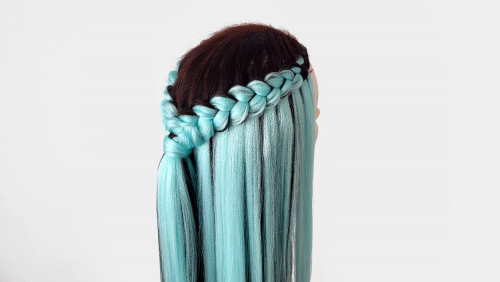
Heart-Shaped Braids: Romantic Braid Design With Curved Parting, Creative Detail, and Sweet Visual Impact
Heart-shaped braids are creative braid styles where the braid pattern, parting, or overall design forms the shape of a heart. The heart may be created with one curved braid, two mirrored braids, cornrows, feed-in braids, stitch braids, box braid parting, or accent braids placed inside a larger hairstyle. The result is playful, romantic, eye-catching, and instantly recognizable.
This style is especially popular for kids’ hairstyles, Valentine’s Day, birthdays, dance events, school picture days, photoshoots, festivals, and creative braiding content. It can also be adapted for adults who want a soft, artistic, or statement braid design. The heart shape can be subtle and small or bold and central depending on the client’s age, hair length, texture, and desired look.
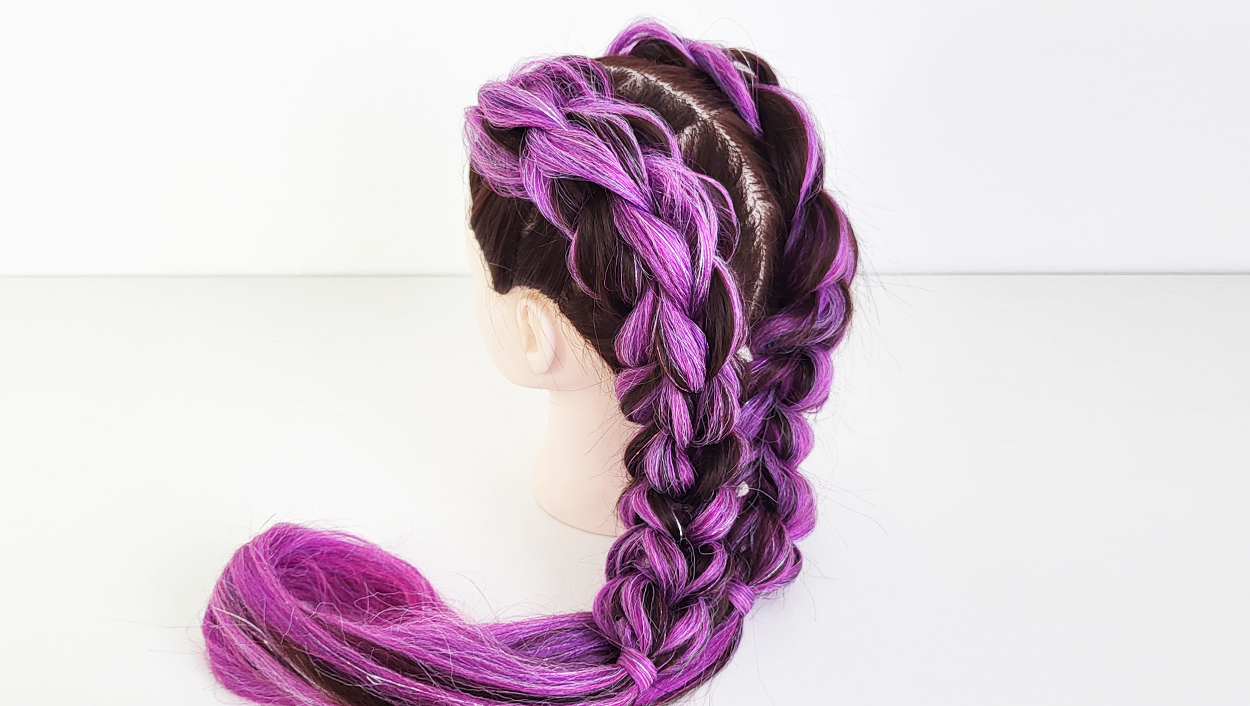
Heart-shaped braids can be created with natural hair only or with added extension hair for stronger definition, length, color, and hold. They can be styled as cornrow hearts, heart-shaped feed-in braids, heart part box braids, braided ponytails, half-up styles, side hearts, double hearts, or full creative scalp designs. The key is clean curved parting, balanced tension, and a heart shape that reads clearly from the intended angle.
What Are Heart-Shaped Braids?
Heart-shaped braids are braid designs that use parting and braid direction to form a heart. The heart may appear as the main feature of the hairstyle or as a smaller decorative accent inside a larger braid pattern.
In many versions, the stylist creates a curved heart-shaped part on the scalp, then braids along the outline. The braid may start at the top curve of the heart, travel around one side, meet the bottom point, and continue into a ponytail or loose braid. Other versions use two braids that mirror each other to create the two rounded sides of the heart.
Heart-shaped braids can be created with cornrows, Dutch braids, French braids, feed-in braids, stitch braids, lace braids, rope twists, or flat twists. They may also appear through parting, where the sections themselves form heart shapes.
The defining feature is the visible heart design. Even if the braid technique changes, the shape should remain clear, balanced, and intentional.
Why Heart-Shaped Braids Stand Out
Heart-shaped braids stand out because they turn braiding into visual design. Instead of simply moving straight back or following a basic part, the braid curves into a recognizable symbol. This makes the style more expressive and memorable.
The heart shape adds emotion to the hairstyle. It can feel sweet, romantic, cute, playful, artistic, or celebratory. For kids, it often feels fun and special. For adults, it can feel creative, feminine, or editorial depending on the finish.
The style is also very photogenic. A clean heart braid looks beautiful from above, from the side, or from the back depending on placement. This makes it popular for social media, tutorials, salon portfolios, and event styling.
Heart-shaped braids also show technical skill. Clean curves, symmetry, and controlled tension are harder than they look. A well-done heart braid demonstrates planning, precision, and braid control.
Heart-Shaped Braids vs. Regular Cornrows
Heart-shaped braids often use cornrow technique, but they are not the same as regular cornrows. Regular cornrows may move straight back, diagonally, or in simple curved lines. Heart-shaped braids use those same close-to-scalp braid skills to create a specific heart design.
The difference is the pattern. A regular cornrow style may focus on rows and spacing. A heart-shaped braid focuses on the outline, curves, and point of the heart.
Heart-shaped braids usually require more planning than straight cornrows. The stylist must map the heart shape before braiding and make sure both sides look balanced.
Cornrows are the technique foundation. Heart-shaped braids are the creative design built from that foundation.
Heart-Shaped Braids vs. Creative Cornrow Designs
Heart-shaped braids are a type of creative cornrow design when the heart is created with scalp braids. Creative cornrow designs can include zigzags, stars, swirls, waves, geometric shapes, names, symbols, and freestyle patterns.
Heart-shaped braids are more specific because the design centers on a heart. They can be simple, such as one heart braid on the side, or complex, with multiple hearts and additional braid patterns.
Creative cornrow designs may look edgy, abstract, or graphic. Heart-shaped braids usually look softer, sweeter, and more romantic, although they can also be bold with color, stitch detail, or long extensions.
Both styles require clean parting and strong braid direction. Heart-shaped braids add the challenge of making a curved symbol look balanced and readable.
Heart-Shaped Braids vs. Heart Parts
Heart-shaped braids and heart parts can overlap, but they are not always the same. A heart-shaped braid uses the braid itself to outline or form a heart. A heart part uses the parting or section shape to create a heart, even if the braid inside the section is simple.
For example, box braids can have heart-shaped parts at the scalp. The individual braid may hang normally, but the parting forms the heart. In cornrow styles, the braid may travel along the heart outline and become the main visual element.
Heart parts are about section shape. Heart-shaped braids are about braid direction and pattern.
Many styles combine both: the part is shaped like a heart, and the braid follows the outline for extra definition.
Common Types of Heart-Shaped Braids
Heart cornrows use close-to-scalp braids to create the heart outline.
Heart-shaped feed-in braids add extension hair gradually to make the heart braid fuller and longer.
Heart-shaped stitch braids use precise segmented parting for a sharper, more graphic design.
Side heart braids place the heart on one side of the head for a playful accent.
Double heart braids use two heart designs, often mirrored or placed on opposite sides.
Heart braid ponytails lead the heart braid into a ponytail for a clean finished style.
Heart-shaped box braid parts use heart-shaped sections as the base for individual braids.
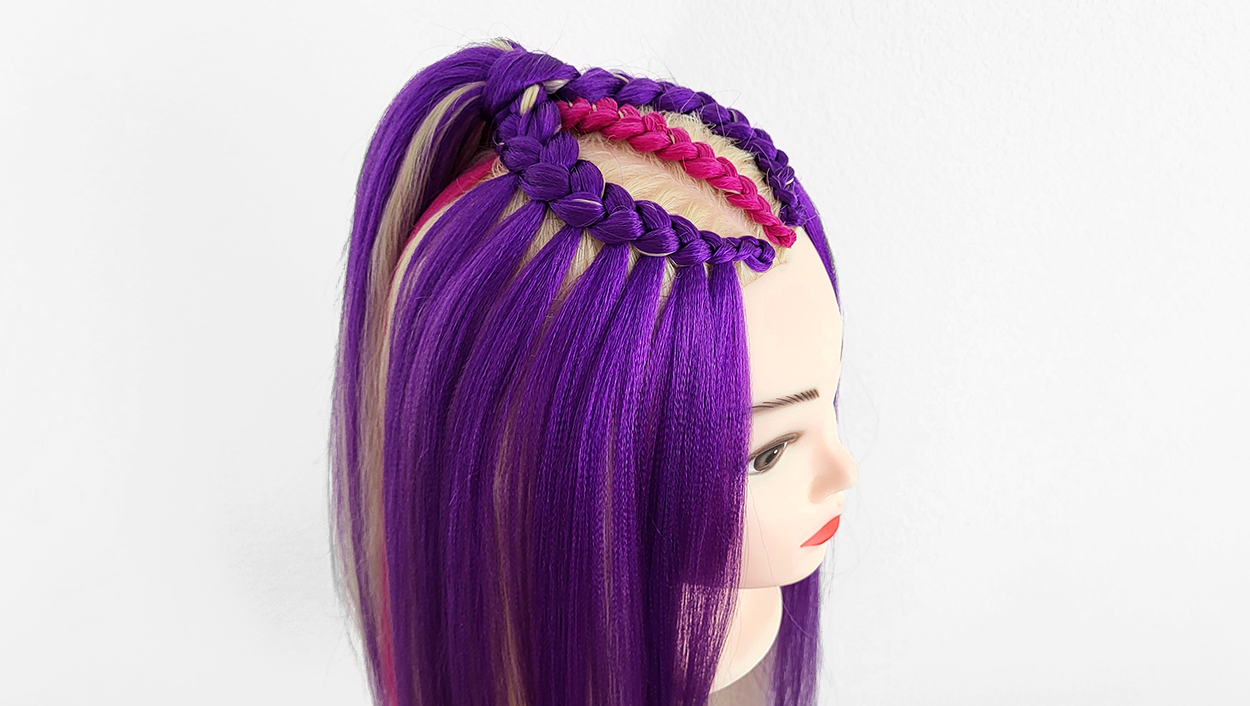
Half-up heart braids use a heart detail on the top or crown while the lower hair stays loose.
Heart braids with beads or color add decorative detail and stronger visual impact.
Heart Cornrows
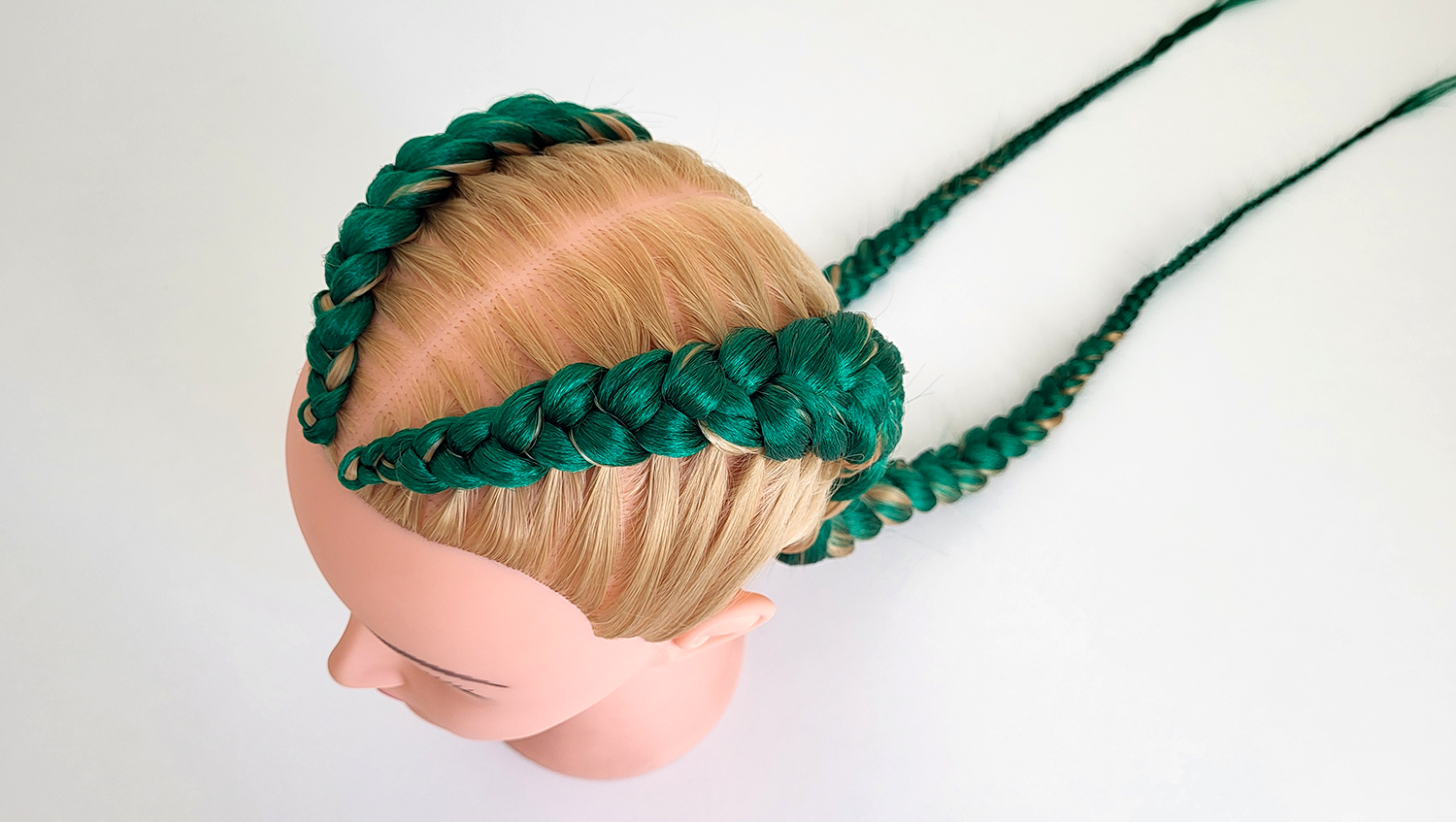
Heart cornrows are one of the most recognizable versions of heart-shaped braids. The stylist creates a heart-shaped part and braids along the curve using cornrow technique. The braid follows the scalp closely and creates a clear heart outline.
This style is especially popular for kids, but it can also be adapted for adults. The heart may be placed on the side, top, back, or crown. It can stand alone or connect into other braids, ponytails, buns, or loose hair.
Clean parting is essential. The heart should have two rounded top curves and a defined lower point. If the parting is uneven, the heart may look distorted.
A good heart cornrow should look smooth, balanced, and comfortable without pulling tightly around the curves.
Heart-Shaped Feed-In Braids
Heart-shaped feed-in braids use extension hair added gradually as the braid follows the heart shape. This creates a smooth start and a fuller braid body. Feed-in technique can make the heart more visible and polished.
The added hair can match the natural hair color or create contrast. Blonde, pink, red, purple, blue, or ombré extension hair can make the heart stand out more clearly. A red or pink heart braid can be especially popular for Valentine’s Day or creative content.
Feed-in heart braids may lead into long braids, a ponytail, pigtails, or a bun. The extension length gives the style more drama and styling options.
The added hair should not make the braid too heavy. Curved designs should stay comfortable, especially near the hairline and temples.
Heart-Shaped Stitch Braids
Heart-shaped stitch braids combine heart design with sharp stitch parting. The stitch detail creates small, precise horizontal or diagonal parting marks along the braid, making the style look cleaner and more graphic.
This version is popular for salon work, social media, and high-definition braid designs because it photographs very well. The heart outline becomes more polished when the stitch sections are even.
Stitch heart braids require strong product control, clean sectioning, and consistent tension. If the stitch lines are uneven, the design can look messy even if the heart shape is correct.
This style can be done with natural hair or feed-in extensions. It works best when the stylist has a clear parting plan before starting.
Side Heart Braids
Side heart braids place the heart design on one side of the head, usually near the temple, above the ear, or toward the side crown. This creates a cute accent without making the whole style overly complex.
Side heart braids are popular for kids’ hairstyles, festival looks, school events, and creative everyday styling. They can be paired with straight-back braids, ponytails, loose curls, box braids, or half-up styles.
The side placement should complement the face shape and hairline. A heart too close to the edge may pull on delicate hair. A heart placed too far back may not be visible from the front.
A side heart braid should look intentional and easy to see from the chosen angle.
Double Heart Braids
Double heart braids use two heart shapes in one hairstyle. The hearts may be mirrored on both sides of the head, stacked one above the other, or placed creatively within a larger braid pattern.
This version is playful and highly visual. It works well for kids, Valentine’s hairstyles, birthdays, photoshoots, dance events, and social media braid content.
Double heart designs require careful symmetry. If the hearts are meant to match, the parting should be balanced in size and placement. If the design is intentionally asymmetrical, the spacing should still look planned.
Because double heart braids involve more curves and parting, the style may take longer than a single heart braid. Comfort should remain a priority.
Heart Braid Ponytails
Heart braid ponytails combine a heart-shaped braid pattern with a ponytail finish. The heart may be placed on the side or top, then connected into a high, mid, or low ponytail.
This style is practical and cute because the heart adds creative detail while the ponytail keeps the hair controlled. It works well for kids, school, dance, birthdays, sports, and special occasions.
The ponytail can be natural, curly, braided, extended, bubble-styled, or wrapped with hair. Beads, bows, ribbons, cuffs, or colorful elastics can also be added.
The ponytail base should not pull too tightly. Since the heart braid may already involve curved tension, the final gathering point should be comfortable.
Heart-Shaped Box Braid Parts
Heart-shaped box braid parts use heart-shaped scalp sections as the base for individual braids. Instead of standard square or triangle parts, one or more sections are shaped into hearts.
This version is popular for creative protective styles because the heart detail is visible at the scalp, especially when the braids are parted or styled half-up. It can be subtle or bold depending on the size and placement of the heart parts.
The individual braids may be regular box braids, knotless braids, boho braids, or goddess box braids. The heart part gives the style a custom look without needing every braid to follow a heart outline.
Clean parting is essential. The heart shape should be smooth enough to read clearly before the braid is installed.
Half-Up Heart Braids
Half-up heart braids combine a heart detail with loose hair underneath. The heart may be placed on the crown, side, or back of the head, while the lower hair remains loose, curled, waved, or natural.
This style is romantic and playful. It works well for photoshoots, birthdays, kids’ events, Valentine’s Day, festival hair, and creative tutorials.
The loose hair adds softness, while the heart braid gives the style a defined focal point. Curls or waves can make the style feel more romantic, while straight hair can make the heart design look cleaner.
A half-up heart braid should connect smoothly into the loose section so the style feels complete.
Heart Braids with Natural Hair
Heart-shaped braids can be created with natural hair only when the hair has enough length and density to support the braid pattern. This version is lightweight and often best for short-term wear.
Natural hair should be detangled and prepared before parting. Depending on the hair texture, the stylist may use water, leave-in conditioner, gel, cream, mousse, or light oil to create smooth control.
Curly, coily, kinky, and textured hair can hold heart cornrows beautifully when sectioned properly. Straight or slippery hair may need more product or pins to keep the curved braid secure.
A natural-hair heart braid should look clean but not overly tight. The heart shape should come from parting and direction, not tension.
Heart Braids with Extensions
Extensions can help heart-shaped braids look fuller, longer, and more defined. Synthetic braiding hair is often used in feed-in heart braids, ponytail styles, and creative cornrow designs.
The extension hair can match the natural hair or create contrast. Colored extensions can make the heart design more visible. Red, pink, blonde, purple, or ombré pieces can add a playful or romantic effect.
Extensions should be added carefully along the curves. Too much added hair can make the braid bulky and distort the heart shape. Too little may not create enough definition.
A professional heart braid with extensions should look smooth, balanced, and comfortable.
Heart Braids with Color
Color can make heart-shaped braids more expressive. Red and pink are popular for romantic, Valentine’s, or playful looks. Blonde, copper, caramel, burgundy, purple, blue, green, or silver can create different moods.
Color can be added through extension hair, colored thread, temporary hair color, beads, ribbons, or accessories. A colored heart braid can stand out against natural hair and make the shape easier to see.
For a subtle look, color can be used only inside the heart braid. For a bold look, the whole braid style can include color accents.
The color should support the heart design. If too many colors are used randomly, the shape may become harder to read.
Heart Braids with Beads and Accessories
Beads and accessories can make heart-shaped braids even more special. Beads, bows, ribbons, cuffs, charms, clips, pearls, flowers, glitter, shells, and thread can all be used depending on the style.
For kids, bows, colorful elastics, beads, and clips are popular. For romantic looks, pearls, flowers, and soft ribbons work well. For festival styles, glitter parts, metallic cuffs, rings, and bright color can add energy.
Accessories should not hide the heart outline. They should highlight the design, not cover the curves.
Heavy accessories should be avoided near small heart braids because they can pull on the scalp or distort the shape.
Heart-Shaped Braids for Protective Styling
Heart-shaped braids can function as a protective or low-manipulation style when installed with proper tension and healthy sectioning. The hair is braided close to the scalp or tucked into extension braids, which can reduce daily styling.
However, creative curved designs can create tension if they are braided too tightly. The hairline, temples, and small curved sections need special care. The heart shape should never require painful pulling.
If extensions are used, the section size should support the added hair. Small heart sections should not carry heavy braid weight.
A protective heart braid style should feel comfortable, keep the hair organized, and be easy to remove without breakage.
Heart-Shaped Braids for Kids
Heart-shaped braids are especially popular for kids because they feel cute, fun, and special. They work well for birthdays, Valentine’s Day, school events, holidays, dance, photoshoots, family celebrations, and everyday creative styling.
Kids’ heart braids may include beads, bows, colorful elastics, ribbons, clips, glitter parts, or pigtails. The design can be simple with one heart or more detailed with double hearts and added braids.
Comfort is the priority. Children’s scalps can be sensitive, so the braid should not be tight around the hairline, temples, or crown. Accessories should be lightweight and smooth.
A good kids’ heart braid style should be cute, secure, gentle, and easy to remove.
Heart-Shaped Braids for Adults
For adults, heart-shaped braids can look playful, romantic, creative, editorial, festival-ready, or soft and feminine. A small side heart can feel subtle and stylish. A large stitch heart braid can feel bold and artistic. A heart braid with curls can feel romantic and event-ready.
Adults may choose heart-shaped braids for Valentine’s Day, festivals, birthdays, concerts, photoshoots, creative content, or special events. The style can also be incorporated into protective braid sets for a custom salon look.
The design should match the client’s personal style. Some adults may prefer a small hidden heart detail, while others may want a bold visible design.
The best adult version depends on comfort, hair density, occasion, and desired visual impact.
Heart-Shaped Braids for Short Hair
Heart-shaped braids can work on short hair if the hair is long enough to grip safely and follow the curved pattern. Small heart cornrows, side hearts, or heart parts may be possible on shorter lengths.
Product can help control shorter pieces. Gel, mousse, or styling cream may keep the braid clean and prevent flyaways.
Extensions can also be added if the natural hair is long enough to support them. However, short hair should not be overloaded with heavy extension hair, especially in curved heart sections.
A short-hair heart braid should focus on clean parting and comfort rather than oversized braid volume.
Heart-Shaped Braids for Long Hair
Long hair gives heart-shaped braids more styling options. The heart braid can continue into a long braid, ponytail, bun, half-up style, or loose curled length.
Long hair should be detangled carefully before parting because curved braid designs can tangle if the sections are not controlled. The stylist should keep the hair smooth while following the heart outline.
The heart can be placed on the side, crown, back, or top of the head. Long hair also allows more decorative finishing, such as curls, waves, ribbons, beads, or extended braid tails.
A strong long-hair heart braid should look clear, balanced, and comfortable.
Parting and Heart Shape Planning
Parting is the most important part of heart-shaped braids. The stylist must create two rounded curves at the top and a clean point at the bottom. The heart should be shaped before braiding begins.
A good heart part should be visible, balanced, and appropriate for the client’s head shape and hair density. The heart can be wide and soft, narrow and sharp, small and subtle, or large and bold.
The stylist should decide where the braid starts, how it curves, where it meets the point, and how it finishes. If the heart connects into other braids, ponytails, or buns, the direction must be planned in advance.
Clean parting turns a creative idea into a readable design.
Tension and Curve Control
Tension control is essential in heart-shaped braids. Curved braids can pull unevenly if the stylist applies too much tension in one area. This can distort the heart shape and cause discomfort.
The braid should be secure but not tight. The curves should be guided by parting and hand direction, not by pulling the hair harshly. The bottom point of the heart should be clean without creating tension at one small spot.
When extensions are used, the added hair should be lightweight and gradual. Bulky feed-in pieces can make the curves look uneven.
A clean heart braid depends on steady hands, smooth sections, and gentle tension.
Professional Technique Details
A professional heart-shaped braid service begins with design planning. The stylist should decide the heart size, placement, braid technique, extension use, color, accessories, and final style.
The hair should be detangled, moisturized, and sectioned. The heart part is created first. The stylist may use a rat-tail comb, clips, gel, or edge control to define the curves.
The braid then follows the heart outline using cornrow, feed-in, stitch, Dutch, French, or lace braid technique. The stylist should keep the braid close enough to the part to make the heart visible.
The finish may connect into a ponytail, braid, bun, loose hair, or another design. A polished heart braid should look clear, balanced, smooth, and comfortable from the intended viewing angle.
Maintenance and Wear
Heart-shaped braids are usually short-term to medium-term styles depending on the technique. A simple natural-hair heart braid may last one day or several days. A feed-in or cornrow heart style may last longer with proper care.
At night, the style should be protected with a satin or silk scarf, bonnet, or pillowcase. This helps reduce frizz and preserve the parting.
The wearer should avoid pulling on the braid or adding heavy accessories after styling. If beads or clips are used, they should be checked to make sure they do not snag the hair.
If the style becomes painful, itchy, loose, frizzy, or uncomfortable, it should be refreshed or removed.
Removal should be gentle. Accessories should be removed first, then the braid should be undone from the ends upward.
Styling Options
Heart-shaped braids can be styled in many ways. They can be worn as side hearts, double hearts, heart cornrows, heart feed-in braids, heart ponytails, heart pigtails, heart buns, half-up heart braids, or heart-part box braids.
They can be combined with curls, waves, beads, bows, ribbons, cuffs, shells, glitter, colored extensions, stitch parts, or creative cornrow patterns. The design can be cute, romantic, playful, bold, or editorial.
For kids, heart braids pair beautifully with beads, bows, and pigtails. For adults, they can be elevated with sleek stitch lines, soft curls, color accents, or minimal accessories.
The best styling choice depends on age, occasion, comfort, hair texture, and desired visual impact.
Heart-Shaped Braids in Modern Beauty Culture
Heart-shaped braids remain popular because they are creative, recognizable, and emotionally expressive. They appear in kids’ hairstyling, Valentine’s looks, salon portfolios, social media tutorials, festival hair, creative cornrow designs, and natural hair styling.
The style is especially loved because it turns a braid into art. A simple heart can make a hairstyle feel custom, thoughtful, and fun.
For stylists, heart-shaped braids show precision. They require parting control, curved braid direction, tension management, and design balance. The style may look cute, but the technique can be advanced.
Heart-shaped braids continue to evolve through stitch details, feed-in methods, color accents, knotless braid parts, curly finishes, and creative mixed patterns.
Why Heart-Shaped Braids Matter
Heart-shaped braids matter because they show how braiding can express personality, celebration, and creativity. They are more than a functional braid pattern; they are a visual design with emotion and meaning.
For clients, heart-shaped braids offer sweetness, beauty, playfulness, and a custom look. For stylists, they build skill in curved parting, braid direction, symmetry, and creative planning.
When done well, heart-shaped braids look clear, balanced, comfortable, and intentional. They prove that braid design can be protective, artistic, and full of personality at the same time.