
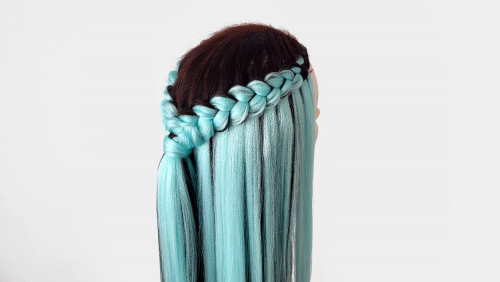
Knotless Braids: Lightweight Protective Braids With Seamless Roots, Natural Movement, and Modern Styling Comfort
Knotless braids are individual protective braids created without the traditional knot at the root. Instead of attaching a full piece of extension hair at the base, the stylist begins with the client’s natural hair and gradually feeds in small pieces of braiding hair as the braid continues. This creates a flatter, softer, and more natural-looking root.
The style became highly popular because it offers the beauty of box braids with less bulk at the scalp. Knotless braids can feel lighter, move more naturally, and place less immediate tension on the roots when installed correctly. They can be worn small, medium, large, jumbo, long, short, waist-length, bob-length, curly-ended, boho, goddess-style, colorful, beaded, or styled into ponytails, buns, and half-up looks.
Knotless braids are still protective only when they are done with proper tension, balanced extension weight, and healthy sectioning. The technique can be gentle and flexible, but the braids should not be overloaded with too much hair or worn too tightly. A professional knotless braid installation should look clean, natural at the root, comfortable, and intentional from scalp to ends.
What Are Knotless Braids?
Knotless braids are individual braids created with a feed-in method. The stylist starts each braid using the client’s natural hair, then adds extension hair gradually in small amounts. This removes the visible knot that traditional box braids often have at the root.
The result is a braid that appears to grow more naturally from the scalp. The base lies flatter, the braid moves more freely, and the overall style can feel less stiff during the first days of wear.
Knotless braids can be installed in square parts, triangle parts, brick-layered parts, diamond parts, or free-flowing section patterns. They can be created in many sizes and lengths depending on the client’s hair density, desired look, scalp comfort, and maintenance routine.
The defining feature is the root. Knotless braids begin with natural hair and build gradually, creating a seamless transition into the extension braid.
Why Knotless Braids Stand Out
Knotless braids stand out because they create a softer and more natural-looking finish than many traditional individual braid styles. The flat root makes the braids look less bulky and more flexible from the scalp.
This flexibility is one of the biggest reasons clients love them. Knotless braids can often be styled sooner after installation because the root area is not as stiff. Ponytails, buns, side parts, and half-up styles may feel easier and more comfortable when the braids are not too heavy.
Knotless braids also photograph beautifully. The parts look clean, the roots look smooth, and the braids fall with natural movement. This makes the style popular for salon portfolios, social media, vacations, everyday protective styling, and beauty content.
Another reason knotless braids remain in demand is customization. They can look minimal and natural, bold and colorful, soft and curly, extra-long and dramatic, or small and detailed.
Knotless Braids vs. Traditional Box Braids
Knotless braids and traditional box braids are closely related, but the root technique is different. Traditional box braids usually begin with extension hair attached at the base, which can create a visible knot or firmer root. Knotless braids begin with the natural hair and add extension hair gradually.
Traditional box braids may feel more secure at the root and can sometimes last longer depending on hair type and installation. However, they may also feel tighter or heavier during the first days if installed with too much tension.
Knotless braids usually feel flatter and more flexible. They can create a more natural look and may reduce the bulky feeling at the scalp. However, because the start is softer, they may require careful maintenance and may show frizz or new growth sooner.
The choice depends on the client’s preference. Traditional box braids create a classic, firm root. Knotless braids create a softer, seamless root.
Knotless Braids vs. Feed-In Braids
Knotless braids and feed-in braids both use gradual extension placement, but they are not the same style category.
Feed-in braids usually refer to scalp braids, cornrows, or stitch braids where extension hair is added as the braid moves along the scalp. The braid stays attached to the head.
Knotless braids are individual braids. Each braid begins at its own section and hangs freely from the scalp. Extension hair is fed into each individual braid after the natural hair start.
The technique idea is similar: gradual extension addition. The structure is different: feed-in braids are usually scalp braids, while knotless braids are individual hanging braids.
Both styles can look clean, lightweight, and natural when installed with healthy tension.
Knotless Braids vs. Micro Braids
Knotless braids can be small, but they are not automatically micro braids. Micro braids are extremely tiny individual braids that require very small sections and a long installation time.
Small knotless braids are individual braids with a knotless root, but they may still be larger than true micro braids. Micro braids focus on very small size. Knotless braids focus on the seamless feed-in root.
Micro braids can offer a very flexible, loose-hair-like appearance, but they may be time-consuming to install and remove. They also require careful tension control because small sections can be delicate.
Knotless braids are more size-flexible. They can be jumbo, large, medium, small, or very small depending on the desired look.
Knotless Braids vs. Boho Knotless Braids
Knotless braids are the base style. Boho knotless braids are a variation that includes loose curly or wavy pieces added throughout the braids or at the ends.
Regular knotless braids are usually fully braided from root to tip or finished with sealed ends. Boho knotless braids mix the clean knotless root with soft curl texture. This creates a more romantic, vacation-ready, and free-flowing look.
Boho knotless braids require more maintenance because the loose curly pieces can frizz, tangle, or dry out depending on the hair used. Regular knotless braids are often easier to maintain because the hair is more contained.
The difference is texture and finish. Knotless braids are clean and structured. Boho knotless braids are softer, curlier, and more decorative.
Common Types of Knotless Braids
Classic knotless braids use a smooth feed-in root with individual braids throughout the head.
Small knotless braids create a detailed, flexible, long-lasting look with more movement.
Medium knotless braids balance installation time, comfort, fullness, and styling versatility.
Large knotless braids create a bold look with fewer sections and faster installation.
Jumbo knotless braids create oversized braid bodies and strong visual impact.
Boho knotless braids include loose curly pieces for softness and movement.
Goddess knotless braids include curls at the ends or throughout the braids for a romantic finish.
Knotless braids with beads add decorative detail at the ends or around the face.
Knotless braids with color use extension shades for highlights, ombré, or fashion-color effects.
Classic Knotless Braids
Classic knotless braids are individual braids with a clean, flat root and a fully braided length. The stylist begins with the natural hair, feeds in extension hair gradually, and continues braiding to the desired length.
This version is polished, versatile, and practical. It can be worn loose, side-parted, middle-parted, half-up, in ponytails, buns, or updos. It works for everyday beauty, vacations, work, school, protective styling, and social media content.
Classic knotless braids can be created in many sizes, but medium is one of the most popular because it balances installation time and flexibility.
A strong classic knotless braid style should look even, smooth, lightweight, and comfortable at the root.
Small Knotless Braids
Small knotless braids are detailed, flexible, and often very versatile. Because the braids are smaller, they move more naturally and can be styled more easily into buns, ponytails, and updos.
This version usually takes longer to install than medium or large knotless braids. It may also require more careful takedown because there are more braids and smaller sections.
Small knotless braids can last well when installed and maintained properly, but the stylist must avoid making the sections too tight. Small parts should not carry excessive extension hair.
A good small knotless braid style should feel light, neat, and easy to move without stressing the scalp.
Medium Knotless Braids
Medium knotless braids are one of the most requested versions of the style. They offer a strong balance between comfort, fullness, installation time, and styling flexibility.
Medium braids are large enough to install faster than small braids but still flexible enough for ponytails, buns, half-up styles, and everyday movement. They can look clean and polished without feeling too bulky.
This size works well for many clients because the weight is usually easier to distribute than with very large braids. It also gives enough braid density for a full-looking finish.
A professional medium knotless braid style should have clean parts, consistent braid size, smooth feed-in transitions, and comfortable roots.
Large Knotless Braids
Large knotless braids use bigger sections and thicker braid bodies. They create a bold look with fewer braids and often take less time to install than small or medium versions.
This version is useful for clients who want a statement style without a long appointment. Large knotless braids can look clean, modern, and dramatic, especially with long length or color.
Because the sections are larger, the braids may not last as long as smaller versions. New growth and root frizz may become more visible sooner.
The stylist must also manage weight. Large parts should support the braid size comfortably, and the hairline should not carry heavy braids.
Jumbo Knotless Braids
Jumbo knotless braids are the oversized version of the style. They use very large sections and thick braids for a dramatic, high-impact look.
Jumbo knotless braids can be beautiful and fast to install, but they require careful planning. The braid should not be too heavy for the natural hair section. A knotless root can feel softer, but jumbo braids can still pull if too much extension hair is added.
This style works well for bold beauty looks, vacations, photoshoots, kids’ styles with shorter lengths, and clients who want a fast protective style.
A strong jumbo knotless braid style should look full and clean while still feeling lightweight enough for daily wear.
Boho Knotless Braids
Boho knotless braids combine the seamless root of knotless braids with loose curly or wavy pieces. The curls may be added throughout the braid length, at the ends, around the face, or in selected sections.
This style is soft, romantic, and very popular for vacations, birthdays, photoshoots, festivals, and glam protective styling. The knotless root keeps the base flat and natural-looking, while the curls add movement and texture.
The curl hair may be synthetic or human hair. Human hair curls usually cost more but can be easier to refresh and maintain. Synthetic curls can look beautiful but may require gentle handling to avoid tangling.
Boho knotless braids need more maintenance than fully braided knotless braids because the loose curls can frizz or knot over time.
Goddess Knotless Braids
Goddess knotless braids are similar to boho knotless braids, but they often have a more polished and intentional curl placement. Curls may be placed at the ends or throughout the braids to create a soft goddess-style finish.
This version feels feminine, romantic, and luxurious. It can be styled in long flowing looks, half-up styles, buns, ponytails, or side-swept designs.
The balance between braid and curl is important. Too many loose curls can hide the braid structure and make maintenance harder. Too few curls may not create the desired goddess effect.
A good goddess knotless braid style should look soft, full, and intentional without becoming too heavy or tangled.
Knotless Braids with Curly Ends
Knotless braids with curly ends keep most of the braid structure contained while adding softness at the bottom. The braid is completed through most of the length, then released into curls or waves.
This version is easier to maintain than boho styles with curls throughout because the loose texture is concentrated at the ends. It still gives movement and a feminine finish.
Curly ends may be created with rods, hot water setting, synthetic curly hair, water wave hair, deep wave hair, or human hair pieces.
The ends should be secured properly so the braid does not unravel too quickly. A clean transition from braid to curl makes the style look polished.
Knotless Braids with Beads
Beads can add beauty, personality, sound, and movement to knotless braids. They are often placed at the ends, around the face, or on selected accent braids.
Clear beads create a classic look. Wooden beads feel natural and earthy. Gold or metallic beads create a polished finish. Bright beads can make the style playful, especially for kids.
The weight of beads should be considered carefully. Heavy beads on long braids can pull on the roots, especially if many are placed near the front.
A good beaded knotless braid style should feel decorative without creating discomfort or excessive weight.
Knotless Braids with Extensions
Most knotless braids use extensions for length, fullness, and consistency. Synthetic braiding hair is commonly used because it is lightweight, affordable, and available in many colors and lengths.
Pre-stretched braiding hair can create smoother, tapered ends. Textured hair can create a softer or more natural finish. Curly extension pieces can be added for boho or goddess versions.
The extension hair should be fed in gradually and evenly. If the added hair is too bulky, the braid may lose its seamless root effect. If too little hair is added, the braid may look thin or uneven.
A professional knotless braid installation should balance root softness, braid fullness, and scalp comfort.
Knotless Braids with Color
Color can make knotless braids more expressive. Since color often comes from extension hair, clients can try a new shade without permanently dyeing their natural hair.
Natural black, brown, and dark brown create a classic finish. Honey blonde, caramel, copper, auburn, and burgundy add warmth. Platinum, silver, gray, and white create a more editorial look.
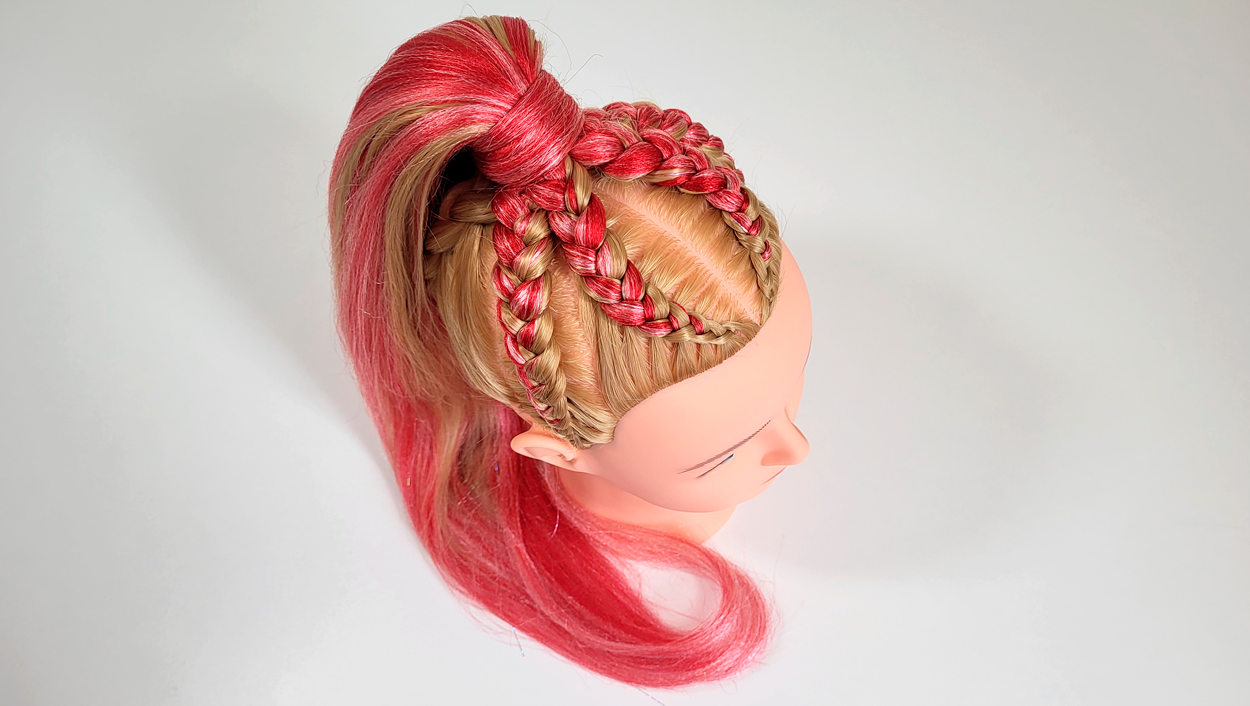
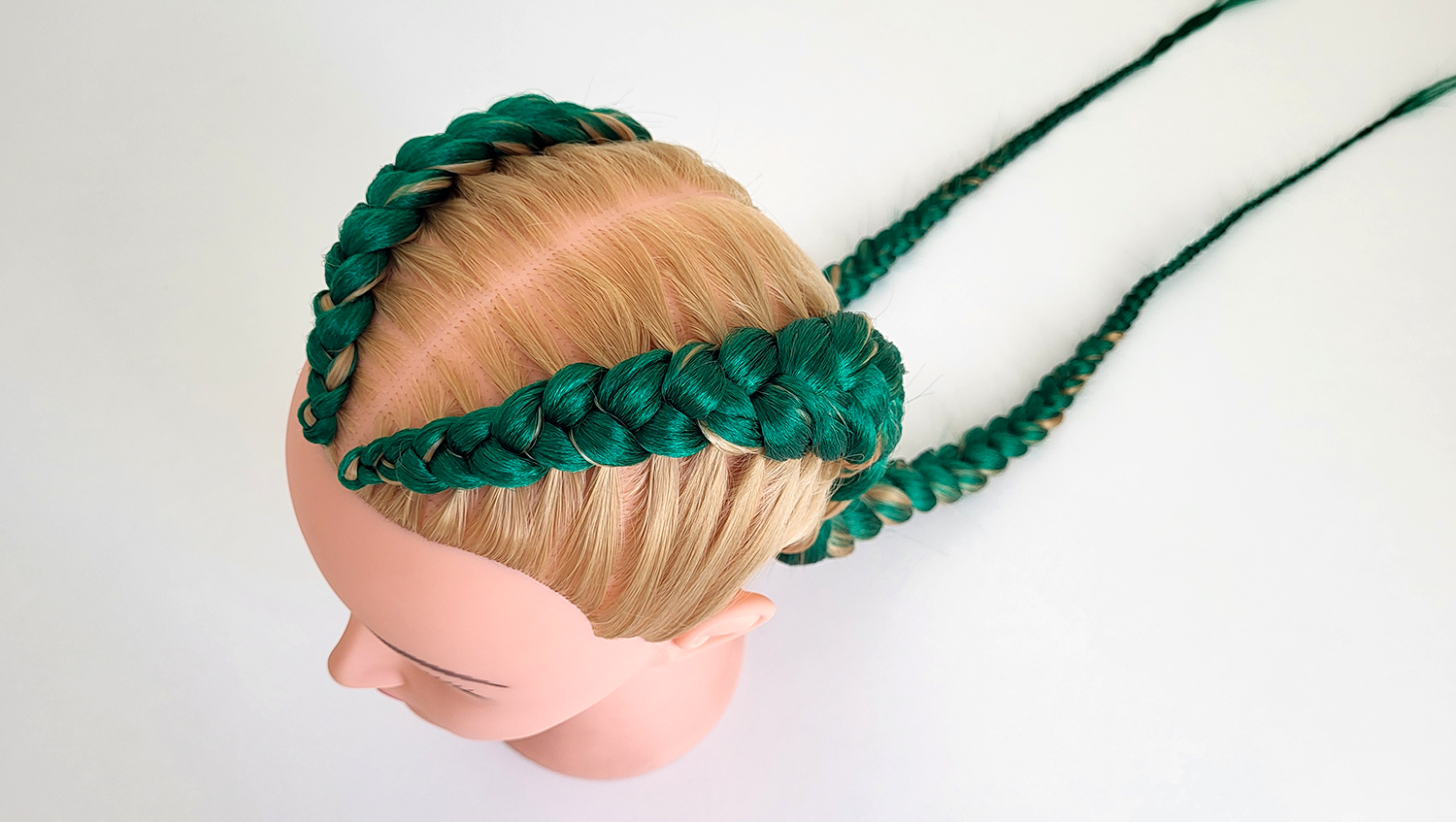
Bright shades such as pink, purple, blue, green, red, orange, and pastel colors can create festival, fantasy, or creative beauty styles. Ombré knotless braids are especially popular because the color transition adds dimension through the braid length.
Color can be used throughout the full head or only in accent braids. Face-framing color pieces can brighten the style and make it feel custom.
Knotless Braids with Accessories
Accessories can personalize knotless braids. Cuffs, beads, rings, thread, cowrie shells, charms, pearls, ribbons, scarves, clips, and hair jewelry can all be used.
Because knotless braids are often chosen for comfort and movement, accessories should not make the style heavy. Lightweight cuffs, smooth beads, and soft thread are usually easier to wear.
Thread or yarn can be wrapped around selected braids for color and texture. Scarves can be used for ponytails, buns, or headwrap-inspired styles.
Accessories should enhance the braids without hiding the clean root work or creating extra tension.
Knotless Braids for Protective Styling
Knotless braids can function as a protective style because the natural hair is braided and tucked into extension hair. This reduces daily manipulation and helps protect the ends.
However, knotless does not automatically mean tension-free. The style still needs proper sectioning, balanced weight, and gentle technique. Too much added hair, tight braiding, or heavy length can still stress the scalp.
The hairline, temples, crown, and nape should be handled carefully. The root should lie flat and comfortable without pain, bumps, burning, or sharp pulling.
A healthy knotless braid style should protect the natural hair during installation, wear, and takedown.
Knotless Braids for Kids
Knotless braids can be a good option for kids when installed gently and with lightweight sections. The flat root can feel more comfortable than bulky traditional knots, but the style must still be age-appropriate.
Kids’ knotless braids may be short, medium-length, beaded, colorful, or styled into ponytails and half-up looks. Very long or heavy braids should usually be avoided for children.
Children’s scalps can be sensitive, so the braids should not be tight. Accessories should be smooth and lightweight. The style should allow the child to sleep, play, and move comfortably.
A good kids’ knotless braid style should be cute, gentle, secure, and easy to remove.
Knotless Braids for Adults
For adults, knotless braids can look natural, polished, glamorous, bohemian, professional, edgy, or vacation-ready. The style works well for protective styling, work, travel, birthdays, photoshoots, events, festivals, and everyday beauty routines.
Adults may choose small knotless braids for flexibility, medium knotless braids for balance, large knotless braids for faster installation, or boho knotless braids for a softer curl finish.
Natural shades create a classic look. Color, curls, beads, and accessories create more personality and visual impact.
The best adult version depends on hair density, scalp comfort, lifestyle, desired wear time, and maintenance habits.
Knotless Braids for Short Hair
Knotless braids can be installed on short natural hair if the hair is long enough to grip safely and begin the braid. The stylist must start gently and avoid forcing very short hair into tight sections.
Short natural hair may need smaller sections, product control, or a slightly different technique to keep the braid secure. If the hair is too short, the style may slip or create tension.
Extensions can create long knotless braids even when the natural hair is short, but the added hair must be lightweight enough for the natural section to support it.
A safe knotless braid installation on short hair should feel secure without painful pulling or excessive extension weight.
Knotless Braids for Long Hair
Long natural hair can be installed into knotless braids, but it requires careful blending. The natural hair must be incorporated smoothly into the braid so it does not stick out or create uneven thickness.
Long hair may take more time to braid because the stylist must control the natural length inside each braid. Detangling and moisture preparation are important before installation.
If extensions are added, the stylist should consider total weight. Long natural hair already adds weight, so extra hair should be used thoughtfully.
A strong knotless braid installation on long hair should look smooth, consistent, and comfortable from root to end.
Parting and Size Planning
Parting is essential in knotless braids because it controls the density, shape, movement, and comfort of the style. Sections may be square, rectangular, triangle-shaped, diamond-shaped, or brick-layered.
Small parts create more braids and more movement but take longer to install. Medium parts create balance and are often the most practical. Large and jumbo parts create a bold look but may show new growth sooner and require careful weight control.
Part size should match braid size and extension amount. A small section should not carry a heavy braid. A large section can support more hair, but the braid should still move comfortably.
A professional knotless braid style begins with clean parting that protects the scalp and supports the final look.
Tension and Scalp Comfort
Tension control is one of the most important parts of knotless braids. The root should be smooth and secure, but not tight. A knotless braid should not cause pain, headaches, bumps, burning, or sharp pulling.
The feed-in technique should build the braid gradually. If too much hair is added too quickly, the braid can become heavy and lose its natural root effect.
The hairline and temples need special care. These areas should use smaller, lighter sections and gentle tension. The crown and nape should also be protected from excessive pulling.
A beautiful knotless braid style should feel comfortable from the first day.
Professional Technique Details
A professional knotless braid service begins with consultation. The stylist should discuss braid size, length, parting pattern, extension color, curl detail, accessories, scalp sensitivity, lifestyle, and wear time.
The natural hair should be clean, detangled, moisturized, and sectioned carefully. Each braid begins with the client’s natural hair. Extension hair is then added gradually in small pieces to build fullness.
The feed-in transition should look smooth. The braid should not have lumps, bulky roots, or uneven thickness. The ends may be sealed, dipped, curled, or finished according to the desired style.
A polished knotless braid installation should look seamless at the root, consistent through the length, and comfortable across the scalp.
Maintenance and Wear
Knotless braids can last several weeks depending on braid size, hair texture, installation method, lifestyle, and maintenance. Small and medium knotless braids may last longer than large and jumbo versions because the sections are smaller and the roots remain neater for longer.
At night, the braids should be protected with a satin or silk scarf, bonnet, or pillowcase. This helps reduce frizz and preserve the parting.
The scalp should stay clean and comfortable. Lightweight scalp mist, braid spray, or light oil can be used when needed. Heavy products should be avoided because they can create buildup.
The wearer should avoid pulling the braids into tight ponytails or buns too often. Repeated tension can stress the roots.
If the style becomes painful, itchy, too heavy, loose, or matted at the roots, it should be refreshed or removed.
Washing Knotless Braids
Knotless braids can be washed carefully, with the main focus on the scalp. A diluted shampoo or gentle scalp cleanser can help remove sweat, oil, and buildup.
The braids should not be scrubbed aggressively because friction can create frizz and loosen the root area. The scalp should be massaged gently, and the roots should be rinsed thoroughly.
Drying is important. Braids can hold water, especially when they are long or thick. The roots and braid lengths should dry fully to avoid odor or scalp discomfort.
After washing, a light mousse or braid spray can help smooth frizz and refresh the style. Heavy oils and creams can make the roots look dull or built up.
Takedown and Hair Health
Takedown should be slow and gentle. The braids should be unraveled from the ends upward. If the braids are long, the wearer may cut below the natural hair length, but only after clearly identifying where the real hair ends.
Product buildup near the roots should be softened and separated carefully. Pulling through buildup can cause breakage. Shed hair should be separated before washing to prevent matting.
After removal, the hair should be cleansed, conditioned, detangled, and moisturized. A deep conditioning treatment may be helpful depending on the hair’s condition.
If the scalp feels tender or the hairline looks stressed, the hair should rest before another extension style.
Styling Options
Knotless braids can be styled in many ways. They can be worn loose, side-parted, middle-parted, half-up, in high ponytails, low ponytails, high buns, low buns, space buns, braided crowns, updos, or scarf-wrapped styles.
Small and medium knotless braids offer the most styling flexibility. Large and jumbo knotless braids create a bolder look but may feel bulkier in updos.
Boho and goddess knotless braids can be styled with curls for a softer finish. Classic knotless braids can be styled sleek and minimal.
Accessories such as cuffs, beads, shells, thread, ribbons, scarves, and hair jewelry can make the style more personal.
Knotless Braids in Modern Beauty Culture
Knotless braids remain popular because they combine protective styling with comfort, movement, and a natural-looking root. They have become a major modern braid category in salons, social media tutorials, vacation styling, kids’ hair, everyday protective routines, and glam beauty looks.
The style continues to evolve through boho curls, goddess finishes, ombré color, extra-long lengths, triangle parts, small detailed braids, and jumbo statement braids.
For stylists, knotless braids require more than simply feeding in hair. They require clean parting, smooth extension control, tension awareness, consistent braid sizing, and respect for scalp health.
The style stays relevant because it feels modern, wearable, and highly customizable.
Why Knotless Braids Matter
Knotless braids matter because they changed the way many clients experience individual braids. They offer the familiar beauty of box braids with a softer root, flatter base, and more natural movement.
For clients, knotless braids offer protection, comfort, length, flexibility, and styling variety. For stylists, they require precision, balance, feed-in control, and healthy tension management.
When done well, knotless braids look seamless, lightweight, clean, and intentional. They prove that protective styling can be beautiful, modern, and comfortable at the same time.