
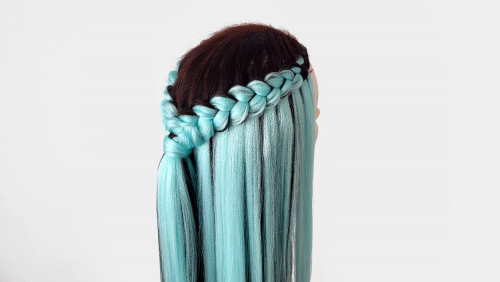
4-Strand Braids: Wider Woven Texture With Clean Detail, Balance, and Creative Styling Control
4-strand braids are decorative braids created by weaving four separate sections of hair into one pattern. Compared with a classic three-strand braid, a 4-strand braid looks wider, flatter, and more detailed. The extra section creates a more complex woven effect while still remaining more approachable than a 5-strand braid.
This braid is often used when the stylist wants a braid that feels familiar but more elevated. It can be worn as one main braid, a ponytail braid, a side braid, an accent braid, a half-up detail, a ribbon braid, or part of a formal, festival, or fantasy-inspired hairstyle. The style works well on medium to long hair because the pattern needs enough length to show its structure.
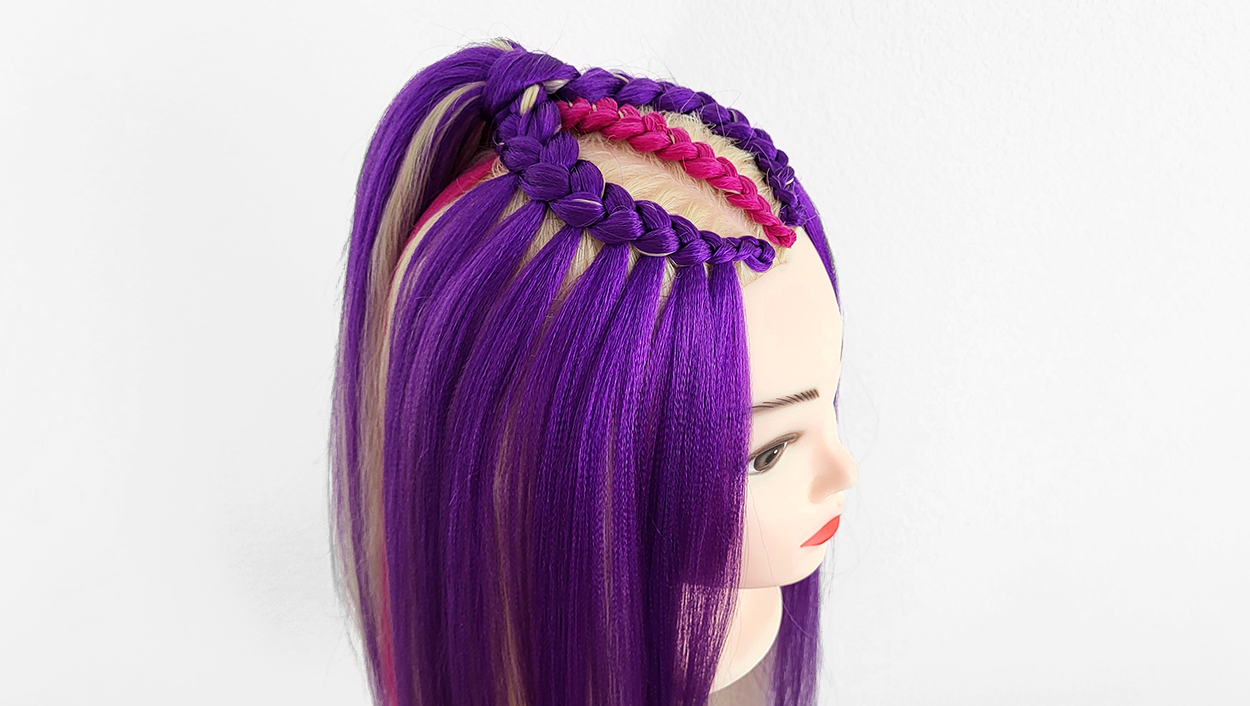
4-strand braids can be created with natural hair only or with extensions, ribbon, thread, or colored pieces for stronger contrast. The finished result can look sleek and polished, soft and romantic, playful and decorative, or bold and editorial depending on placement, texture, tension, and finishing.
What Are 4-Strand Braids?
4-strand braids are braids made with four working sections of hair. Instead of moving three strands around a center section, the stylist works with four separate strands in a repeated weaving sequence. This creates a braid with more visible lines and a wider surface than a basic braid.
There are several ways to create a 4-strand braid. Some versions look flat and woven, while others create a rounder rope-like effect. One popular version uses an over-and-under pattern, where the strands move across each other in a consistent rhythm. Another version uses a ribbon or accent strand as one of the four sections.
The defining feature is the use of four sections. The braid should show a clear, intentional pattern that looks different from a classic three-strand braid. When done well, a 4-strand braid looks balanced, structured, and visually interesting without feeling overly complicated.
Why 4-Strand Braids Stand Out
4-strand braids stand out because they add visible detail without becoming too heavy or complex. One extra strand changes the entire look of the braid. The pattern becomes wider, more dimensional, and more decorative.
The style also photographs well because the additional woven line catches light and creates texture. On highlighted, balayage, ombré, or multi-tone hair, the braid can look especially detailed because each strand reveals a different part of the color.
4-strand braids are also useful in education. They help braiders move beyond the basic three-strand foundation while still staying manageable. The technique teaches section control, pattern rhythm, tension balance, and hand coordination.
For clients, the style feels special. It is not as common as a regular braid, but it is still wearable for everyday looks, events, kids’ styling, and creative braid designs.
4-Strand Braids vs. Three-Strand Braids
A three-strand braid uses three sections that cross over or under the center in a repeated pattern. It is the most common braid foundation and is usually faster to create.
A 4-strand braid uses four sections. The additional section creates a wider and more detailed woven effect. The pattern can look flatter, more ribbon-like, or more dimensional depending on technique.
Three-strand braids are easier for beginners and practical for quick styling. 4-strand braids require more attention because the stylist must keep four sections separated and organized.
Both styles are important. Three-strand braids build the foundation of braiding. 4-strand braids add a more decorative level of control and design.
4-Strand Braids vs. 5-Strand Braids
4-strand braids and 5-strand braids are both advanced woven braids, but they have different levels of complexity. A 4-strand braid is usually easier to learn and faster to complete than a 5-strand braid.
A 5-strand braid creates a wider and more intricate pattern because it uses one additional section. It often looks more like a woven fabric or basketweave. A 4-strand braid is slightly simpler, cleaner, and more compact.
For stylists learning advanced braiding, 4-strand braids are a strong step between classic braids and more complex multi-strand patterns. They offer enough detail to look impressive while still being practical for real salon and content work.
The choice depends on the desired finish. 4-strand braids feel detailed and wearable. 5-strand braids feel more technical and dramatic.
Common Types of 4-Strand Braids
A classic 4-strand braid is created through the length of loose hair or a gathered section. It shows the woven pattern clearly and works well on medium to long hair.
A 4-strand ponytail braid begins from a ponytail and continues through the length. This creates a clean, controlled, modern finish.
A 4-strand side braid is worn over one shoulder for a softer, romantic look.
A 4-strand accent braid uses a smaller section of hair as a decorative detail inside loose hair, buns, ponytails, or half-up styles.
A 4-strand ribbon braid uses ribbon as one of the four strands, making the pattern more colorful and visible.
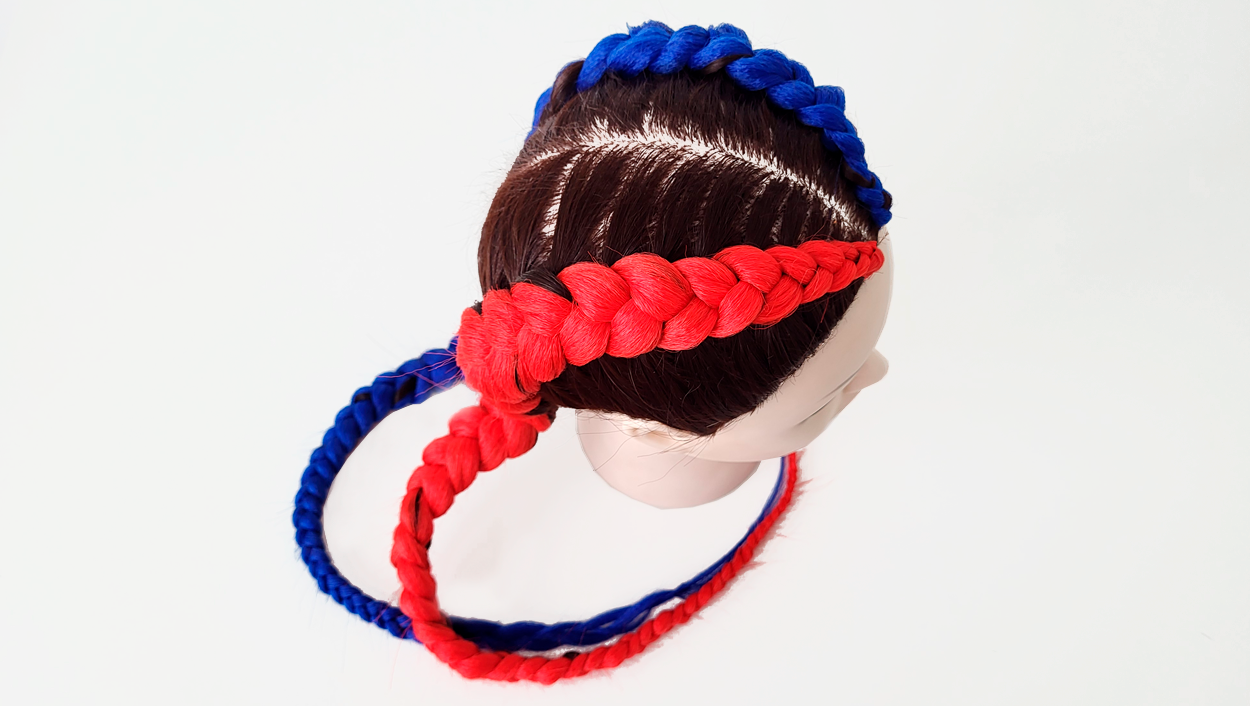
A double 4-strand braid uses two matching braids, usually one on each side of the head.
A 4-strand braid with extensions adds length, thickness, color, or contrast.
Classic 4-Strand Braids
Classic 4-strand braids are usually created from gathered hair. The hair is divided into four sections, then woven in a repeated pattern until the braid reaches the ends. The result is a wider braid with a more detailed texture than a simple three-strand braid.
This style can be worn down the back, over the shoulder, through a ponytail, or as part of a half-up design. A tight version looks clean and defined. A loosened version looks softer and more romantic.
Classic 4-strand braids work best when the hair is detangled and smooth enough to keep the four sections separate. Long hair may need to be separated repeatedly during braiding to prevent tangles near the ends.
The braid can be finished with a small elastic, wrapped hair, ribbon, bow, cuff, or decorative pin.
Flat 4-Strand Braids
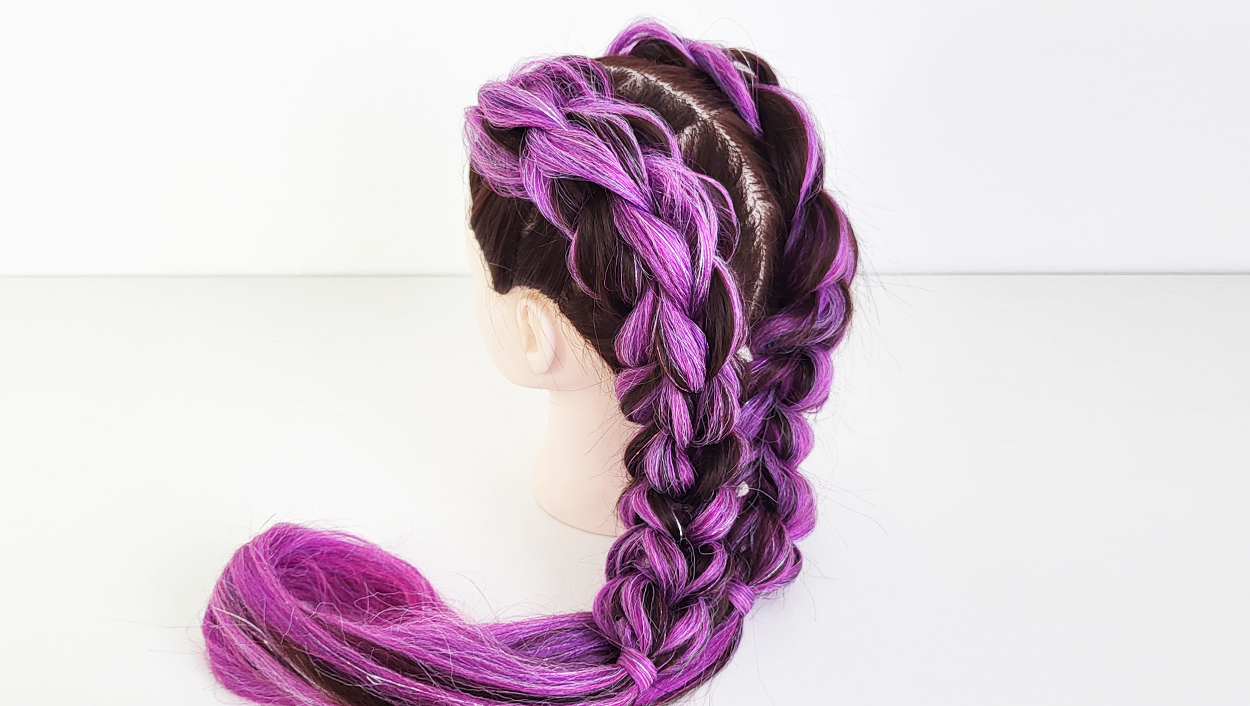
Flat 4-strand braids create a wider, more ribbon-like pattern. This version is often used when the stylist wants the braid to sit visibly across the hair surface. It is beautiful for ponytails, side braids, half-up styles, and formal looks.
The flat effect comes from consistent strand placement. Each section must move in the same rhythm so the braid spreads evenly. If one section is pulled too tight or allowed to twist, the braid may lose its clean shape.
Flat 4-strand braids are especially strong on hair with highlights or color dimension because the woven pattern reveals different tones.
This version is elegant, readable, and useful for clients who want a braid that feels polished but not overly complicated.
Round 4-Strand Braids
Round 4-strand braids create a more dimensional, rope-like shape. Instead of lying flat, the braid has a fuller cylindrical structure. This version can look strong, sculptural, and decorative.
Round 4-strand braids are often used in ponytails, fantasy styling, men’s long hair styling, and creative braid work. The shape gives the braid more volume and a different texture from the flat version.
This technique requires even tension on all four sections. If one strand becomes loose or uneven, the braid may twist irregularly or lose its rounded form.
A round 4-strand braid can look simple from a distance but highly detailed up close.
4-Strand Braids with Natural Hair
4-strand braids can be created with natural hair only when the hair has enough length and density to divide into four workable sections. The hair should be detangled before braiding because four sections can tangle more easily than three.
Straight hair shows the pattern sharply. Wavy hair creates a softer finish. Curly hair adds volume and texture. Coily or highly textured hair can be styled into 4-strand braids with stretching, smoothing, or texture-specific preparation when a defined pattern is desired.
Natural-hair 4-strand braids are usually short-term styles. They may be worn for one day, an event, a photoshoot, a tutorial, or a casual polished look.
The braid should feel secure without pulling. Clean technique should come from section control, not excessive tension.
4-Strand Braids with Extensions
Extensions can help create a longer, fuller, or more dramatic 4-strand braid. They are useful when the natural hair is short, fine, layered, or not dense enough to show the pattern clearly.
Synthetic braiding hair, clip-in extensions, ponytail extensions, or colored pieces can be used depending on the style. Extensions can also make the braid more visible by adding contrast.
A colored extension strand can function like a ribbon inside the braid. This makes the pattern easier to see and creates a custom visual effect. Natural-tone extensions can create fullness while keeping the style wearable.
The extension hair should be balanced with the natural hair. Too much added hair can make the braid bulky. Too little may not create enough impact. The goal is clean pattern visibility and comfortable weight.
4-Strand Braids with Ribbon
Ribbon 4-strand braids are one of the most decorative versions of this technique. A ribbon can be used as one of the four working sections, or it can be woven alongside a hair section to add color and contrast.
This style is popular for kids’ hairstyles, dance, holidays, birthdays, performances, festivals, and creative tutorials. The ribbon makes the braid pattern easier to understand visually because it highlights the path of one strand.
Ribbon choice matters. Satin ribbon creates a smooth, polished effect. Textured ribbon may hold better but can look less sleek. The ribbon should be soft and flexible so it does not pull or cut into the hair.
A clean ribbon 4-strand braid should show both the hair and ribbon clearly without twisting the ribbon into messy folds.
4-Strand Braids with Color
Color can make 4-strand braids more dimensional. Highlights, balayage, ombré, fashion color, or extension pieces can all make the woven pattern more visible.
Lighter pieces can reveal the path of each strand. Darker pieces can create depth. Two-tone braiding can make the style look graphic and modern. Pastel or neon pieces can make it feel festival-ready.
Color can be added naturally through the client’s existing highlights or temporarily through extensions, ribbons, or colored synthetic hair. This allows the client to experiment without dyeing their natural hair.
The color should support the pattern. If the placement is too random, the braid may look busy. If placed intentionally, the color can make the braid look sharper and more professional.
4-Strand Braids for Weddings and Formal Events
4-strand braids work well for weddings, engagement shoots, prom, bridesmaid styles, and formal events because they look elegant and detailed without being too heavy. The braid adds visual interest while still feeling soft and wearable.
A 4-strand braid can be placed through a half-up style, braided into a side look, wrapped into a bun, or used as a detail inside a low updo. It can be paired with waves, curls, pearls, flowers, pins, or delicate hair jewelry.
For bridal styling, the braid should be clean but not stiff. A gently expanded 4-strand braid can create softness and volume while still showing the woven pattern.
The style works especially well for clients who want something more unique than a basic braid but less complex than a full multi-braid design.
4-Strand Braids for Festivals and Creative Styling
4-strand braids are strong for festival and creative styling because they look unusual but are still practical. They can be paired with colored extensions, ribbon, glitter parts, metallic cuffs, beads, rings, chains, or fantasy-inspired accessories.
A 4-strand ponytail braid can create a sleek statement. A side 4-strand braid with waves can feel boho. A ribbon 4-strand braid can feel playful. A double 4-strand braid can create symmetry and movement.
Because the braid already has detail, accessories should be balanced. Too much decoration can hide the woven pattern. A few strong color or metallic accents can be more effective.
The braid should stay comfortable, especially if worn for long hours at an event.
4-Strand Braids for Kids
4-strand braids can be beautiful for kids when the style is kept comfortable and age-appropriate. They work well for birthdays, holidays, school events, dance, photoshoots, performances, and creative hairstyle days.
Kids’ versions may include ribbon, bows, colorful elastics, clips, lightweight beads, or small decorative pins. A ribbon 4-strand braid is especially popular because it feels playful and makes the braid more visible.
Because the technique takes more time than a basic braid, the child’s patience should be considered. A small accent braid may be easier than a full long 4-strand braid.
The braid should not pull at the scalp or hairline. Comfort, lightness, and easy removal are more important than perfect technical tension.
4-Strand Braids for Adults
For adults, 4-strand braids can look elegant, polished, creative, romantic, or editorial. A single side braid can feel soft and feminine. A ponytail braid can feel clean and modern. A small accent braid can add detail to loose waves or a half-up style.
Adults may choose 4-strand braids for weddings, date nights, vacations, formal events, festivals, content creation, or braid education. The style adds visible detail without needing a full protective braid installation.
A 4-strand braid can also be expanded gently for fullness. This makes the braid look softer and wider, especially on fine hair.
The best adult version depends on hair length, texture, occasion, and desired finish.
4-Strand Braids for Men
4-strand braids can also be used in men’s long hair styling. They can be worn as a single braid, ponytail braid, beard braid, fantasy-inspired braid, or part of a Viking-inspired look.
A 4-strand braid gives men’s long hair a more detailed texture than a basic braid. It can look clean, rugged, artistic, or editorial depending on finish and placement.
The style can work with undercuts, fades, long top sections, ponytails, or loose length. Hair usually needs enough length and density to divide into four workable sections.
The braid should be secure but not tight. A detailed braid should still protect the scalp, hairline, and ends.
Parting and Placement
Placement changes the mood of a 4-strand braid. A braid down the back feels classic and structured. A side braid feels soft and romantic. A ponytail braid feels sleek and controlled. A half-up braid feels decorative and wearable. A small accent braid feels creative and subtle.
The braid can be placed high, low, centered, side-swept, or integrated into an updo. It can be the main feature or one detail within a larger hairstyle.
Parting should support the final design. Clean parting makes the style look polished. Soft parting makes it feel romantic. Strong parting can make it more editorial.
Since a 4-strand braid is wider than a standard braid, it needs enough visual space to show the woven pattern.
Tension and Section Control
Tension and section control are essential in 4-strand braiding. With four sections, it is easy for one strand to become too thin, too thick, twisted, or lost inside the braid. The stylist must keep all sections organized and separated.
The braid should be firm enough to hold but not so tight that it feels stiff or uncomfortable. Uneven tension can make the braid twist, lean, or lose symmetry.
Long hair should be separated frequently near the ends while braiding. This prevents tangling and helps keep the pattern clean.
A strong 4-strand braid depends on rhythm. Once the hand movement becomes steady, the braid begins to form a clean woven design.
Professional Technique Details
A professional 4-strand braid starts with preparation. The hair should be detangled, controlled, and divided into four even sections. Product should be chosen based on hair texture and desired finish.
The stylist follows a repeated pattern, moving strands over and under in a consistent sequence. The exact method may vary depending on whether the braid is flat, round, or ribbon-based, but consistency is the key.
The sections should stay even from beginning to end. If one strand becomes too small, the braid may lose balance. If one strand is pulled harder than the others, the pattern may distort.
If ribbon or extensions are used, they should be anchored securely and blended into the design without sudden bulk. The braid should finish cleanly with an elastic, wrapped hair, ribbon tie, or accessory.
A polished 4-strand braid should look balanced, woven, secure, and intentional.
Maintenance and Wear
4-strand braids are usually short-term decorative styles. A tight version may last through the day, while a loose or romantic version may soften faster. Wear time depends on hair texture, product use, braid tension, and activity level.
To preserve the style, the wearer should avoid excessive touching, rough brushing, and pulling on the braid. A light finishing spray can help control flyaways.
At night, a satin or silk pillowcase can reduce friction, but the braid may still need refreshing the next day. A wide woven braid can loosen during sleep.
Removal should be gentle. The braid should be undone from the ends upward. If ribbon, elastics, pins, cuffs, or extensions are used, they should be removed carefully first.
The style should not cause discomfort. If it feels tight or heavy, it should be loosened.
Styling Options
4-strand braids can be styled in many ways. A classic single braid creates a clean woven statement. A side braid creates romance. A ponytail braid creates a sleek finish. A half-up braid adds decorative detail while leaving the rest of the hair loose.
The braid can be combined with curls, waves, buns, fishtails, Dutch braids, rope twists, crown braids, bubble braids, or festival accessories. It can also be woven with ribbon, thread, or colored extension hair.
For formal styling, pearls, flowers, pins, and soft waves work well. For festival looks, color, cuffs, rings, glitter, and metallic thread can make the braid more expressive. For kids, ribbons and bows can make the style playful.
The best styling choice depends on hair length, texture, comfort, and occasion.
4-Strand Braids in Modern Beauty Culture
4-strand braids remain important in braid education and creative hairstyling because they introduce multi-strand control without becoming too advanced. They are often used in tutorials, salon portfolios, kids’ creative hair, formal styling, festival looks, and editorial beauty.
The technique is visually satisfying because the pattern looks more complex than a traditional braid while still being realistic to learn. It is a strong bridge between beginner braiding and advanced multi-strand work.
In professional beauty work, 4-strand braids can elevate simple styles. A ponytail becomes more detailed. A half-up style becomes more polished. A formal look becomes more custom. A tutorial becomes more educational.
The style continues to stay relevant because it is decorative, wearable, and technically valuable.
Why 4-Strand Braids Matter
4-strand braids matter because they expand the basic braid structure into a more detailed woven design. They teach control, rhythm, section balance, and decorative styling without requiring an overly complicated setup.
For clients, 4-strand braids offer elegance, creativity, and a unique texture. For stylists, they build stronger hand coordination and prepare the foundation for more advanced braiding techniques.
When done well, a 4-strand braid looks clean, balanced, dimensional, and intentional. It proves that one extra strand can transform a simple braid into a polished, creative, and professional hairstyle.