
Double-Ended Braids: High-Volume Synthetic Braid Extensions With Fast Coverage and Creative Impact
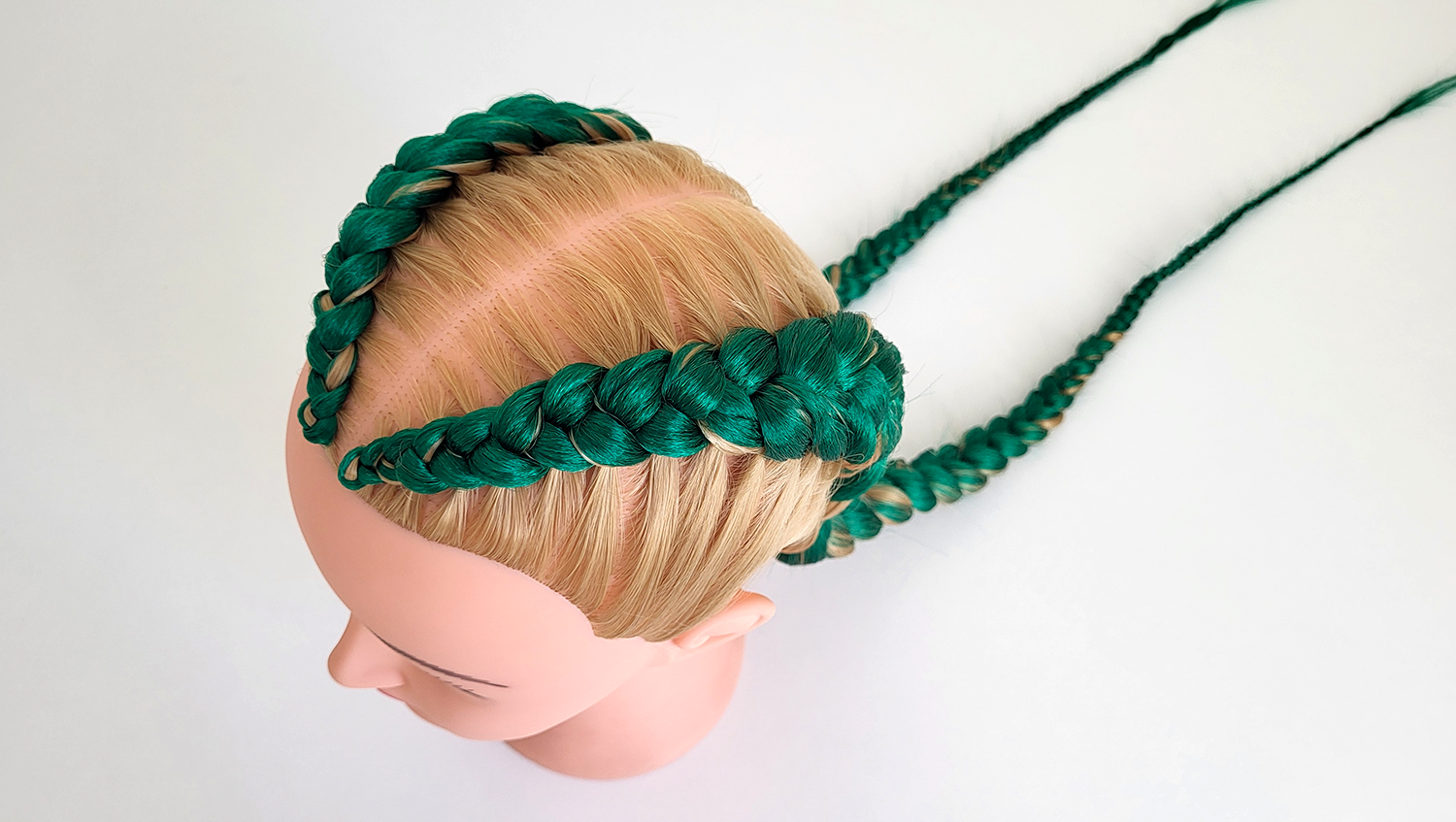
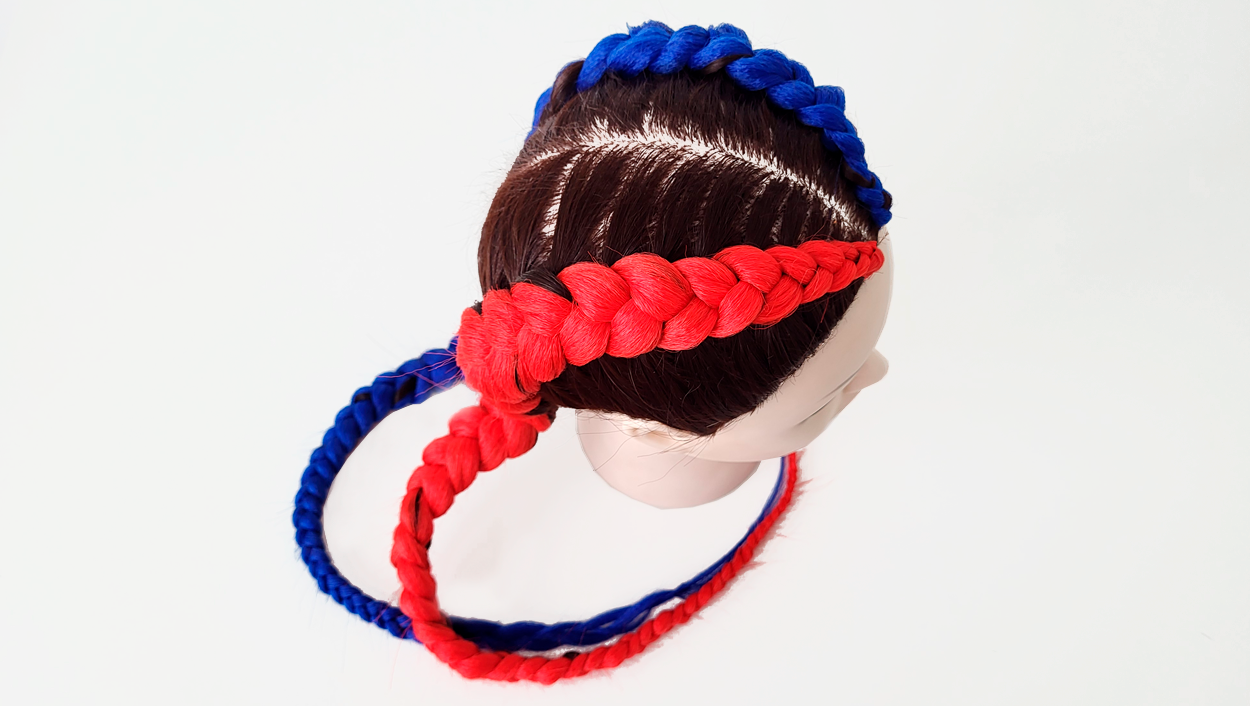
Double-ended braids, often called DE braids, are pre-made braid extensions designed with two hanging braid ends connected at one central attachment point. Instead of installing one braid extension at a time, a double-ended braid is folded or anchored at the middle so both ends hang down after attachment. This creates the visual effect of two braids from one installed piece.
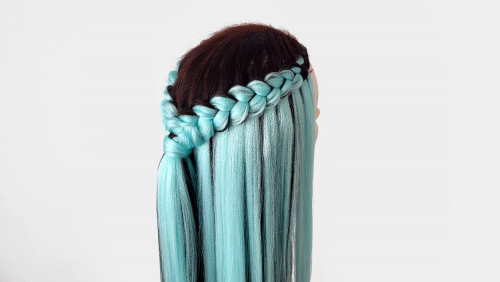
This format is widely used in synthetic braid styling, festival hair, cosplay, alternative fashion, cyber-inspired looks, creative braid sets, and temporary extension work. DE braids are especially useful when the goal is fast volume, dramatic length, bold color, or a full synthetic braid style with fewer attachment points than single-ended braids.
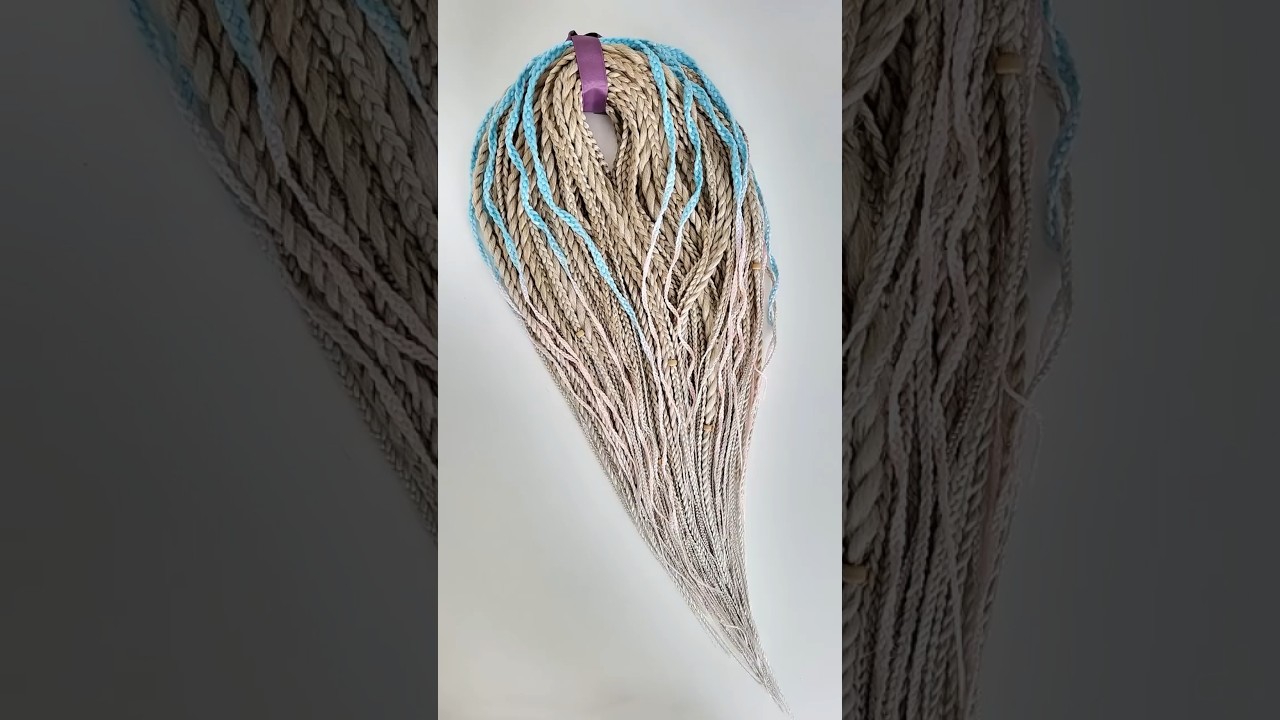
Double-ended braids can be smooth, textured, thin, jumbo, solid-colored, ombré, blended, striped, wrapped, decorated, or mixed with other extension pieces. They are not one single hairstyle; they are an extension format that can be used to build many different braid looks.
What Are Double-Ended Braids?
Double-ended braids are braid extensions with two finished braid lengths joined at one center point. When installed, the center of the braid is attached to the natural hair, and the two ends fall down on either side of that attachment. This gives the style more visible braid volume from each installed piece.
The braid itself is usually created before installation. It may be made from synthetic hair, kanekalon-style fiber, toyokalon, wool, yarn, or other creative extension materials. Some DE braids are sleek and natural-looking. Others are bright, oversized, fantasy-inspired, or heavily decorated.
The defining feature is the double-ended construction. One installed extension creates two hanging braid ends. This makes DE braids different from single-ended braids, which have one attachment end and one hanging braid length.
DE braids are often used when the wearer wants a fuller look in less installation time.
Double-Ended Braids vs. Single-Ended Braids
Double-ended braids and single-ended braids are both pre-made braid extensions, but they behave differently during installation and styling.
A single-ended braid has one prepared attachment end and one hanging braid. Each installed piece creates one visible braid. This gives the stylist more precise placement control and can look more natural in some styles.
A double-ended braid has two hanging braids connected at one center point. Each installed piece creates two visible braid ends. This can make the style fuller faster and can reduce the number of attachment points needed for a full-head look.
SE braids are often preferred for accent pieces, precise spacing, or smaller details. DE braids are often preferred for dramatic synthetic sets, full-volume installs, festival styles, and alternative braid looks.
The best choice depends on the desired density, installation method, weight, natural hair condition, and final style.
Why Double-Ended Braids Are Popular
Double-ended braids are popular because they create instant fullness. Since one extension gives two braid ends, the final style can look dense and dramatic without attaching as many individual pieces.
They are also efficient. A stylist can prepare the braids in advance, then install them during the appointment. This is useful for custom colors, themed looks, cosplay styling, festival hair, and repeat event designs.
Another reason for their popularity is color flexibility. DE braids are often made with synthetic hair, which comes in a wide range of shades. Natural black, brown, blonde, copper, burgundy, gray, white, neon, pastel, rainbow, and UV-reactive colors can all be used.
Double-ended braids also create strong movement. The two braid lengths swing naturally from one attachment point, giving the style volume and visual energy.
Common Types of Double-Ended Braids
Classic double-ended braids are standard three-strand synthetic braids with two hanging ends. They may be natural-looking or fashion-focused depending on the fiber and color.
Jumbo double-ended braids are larger and more dramatic. They create a bold silhouette, but weight must be managed carefully.
Thin double-ended braids create a more detailed look. They can be used for full-head styles with high movement and finer texture.
Color-blend double-ended braids mix two or more shades inside each braid. This can create striped, ombré, marbled, or custom fantasy effects.
Wool or yarn double-ended braids use non-hair fiber for a softer handmade texture. They are common in alternative, boho, and creative styling.
Decorated double-ended braids may include beads, cuffs, thread, wraps, charms, shells, rings, or metallic accents.
Festival double-ended braids often use bright synthetic colors, glitter strands, neon fiber, metallic thread, or high-contrast combinations.
How Double-Ended Braids Are Installed
Double-ended braids can be installed in several ways, depending on the natural hair, desired wear time, and final look. A common method is to section the natural hair, place the center fold of the DE braid against the section, and braid or wrap the natural hair around the attachment point to secure it.
Another method uses a loop or anchor technique. The center of the double-ended braid is attached to the natural hair section, then the wearer’s hair is braided around or through the fold to hold the extension in place.
For temporary styles, DE braids may be attached with elastics, thread, clips, or other removable systems. This is common for festivals, performances, photoshoots, and costume looks.
The key is secure attachment without painful tension. The braid should stay in place, but it should not pull on the scalp or create pressure at the root.
Full-Head Double-Ended Braid Installs
A full-head DE braid install uses many double-ended braids attached across the scalp. Because each installed piece creates two braid ends, the finished style can become full quickly.
Planning density is essential. Too many DE braids can make the style extremely heavy. Too few can make the style look sparse. The stylist must balance volume with comfort.
Section size matters. Each natural hair section must be strong enough to support the weight of the double-ended braid. If the section is too small, the extension may pull at the root. If the section is too large, the attachment may look bulky.
A good full-head DE braid install should look full, balanced, and intentional. The braids should fall naturally, the spacing should make sense, and the scalp should remain comfortable.
Double-Ended Braids as Accent Pieces
DE braids can also be used as accent pieces rather than a full-head installation. One or two double-ended braids can add color, length, and movement to an existing hairstyle.
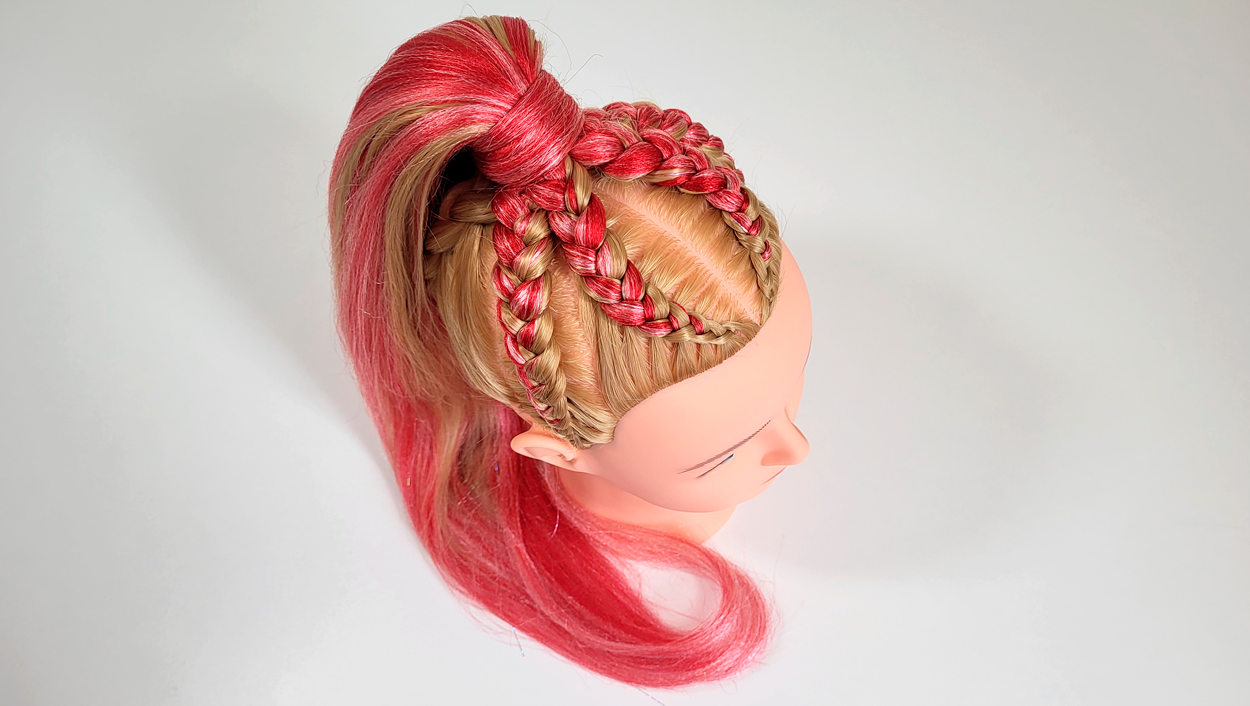
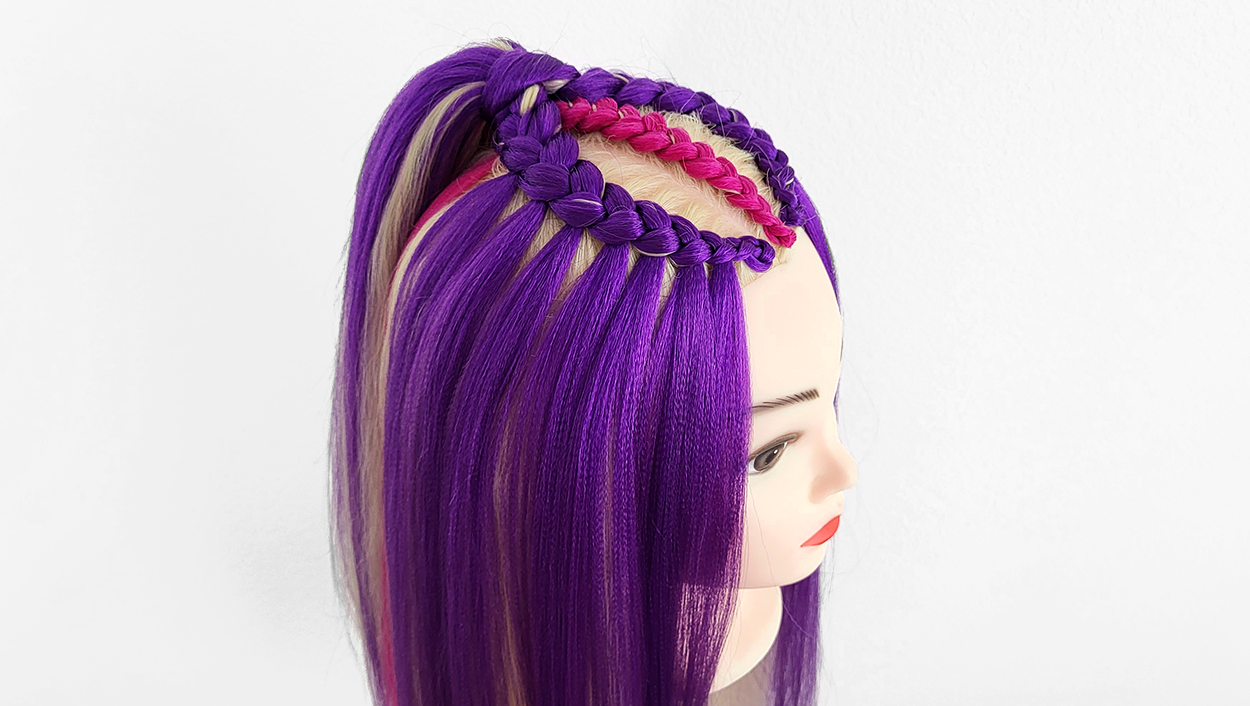
Accent DE braids can be placed near the face, behind the ear, inside a ponytail, around a bun, or under loose hair for a hidden color detail. Because each DE braid gives two hanging ends, even a small number of pieces can create visible impact.
This makes double-ended braids useful for temporary transformations. A client can add pink, purple, blonde, silver, neon, or mixed-color braids without dyeing the natural hair.
Accent placement should be intentional. A DE braid should look like part of the design, not like a random attachment.
Double-Ended Braids with Synthetic Hair
Synthetic hair is the most common material for double-ended braids because it is lightweight, affordable, color-rich, and easy to prepare in advance. Kanekalon-style fiber is especially common because it braids smoothly and comes in many shades.
Synthetic DE braids can look natural or bold depending on fiber finish. Matte fiber creates a softer, more realistic effect. Shinier fiber creates a more fashion-forward or costume-ready look.
The quality of the fiber affects comfort and durability. Good synthetic fiber should braid cleanly, feel smooth enough to wear, and hold its shape. Poor-quality fiber may feel scratchy, stiff, overly shiny, or heavy.
Heat safety depends on the fiber. Some synthetic hair can be dipped or heat-set, while other fibers can melt or deform. The stylist should understand the material before applying heat.
Double-Ended Braids with Color
Color is one of the biggest strengths of double-ended braids. Because they are usually pre-made from synthetic fiber, they can be customized before installation.
Natural colors such as black, brown, blonde, copper, and burgundy create wearable braid sets. Bright colors such as pink, purple, blue, green, red, orange, yellow, silver, and white create a stronger statement.
Blended DE braids can combine multiple colors in one braid. For example, black and purple can create depth, brown and blonde can create dimension, and rainbow blends can create a festival or fantasy effect.
Ombré double-ended braids create a color transition through the braid length. Striped braids create a bolder graphic look. Mixed-color sets can make the full style feel more custom.
Because the color is in the extension hair, clients can experiment without chemical dye.
Double-Ended Braids for Alternative Fashion
Double-ended braids are strongly connected to alternative fashion because they allow bold shapes, unusual colors, and high-volume synthetic styling. They are common in cyber, goth, punk, rave, fantasy, cosplay, festival, and performance looks.
In alternative styling, DE braids may be extra long, oversized, neon, striped, UV-reactive, wrapped with thread, or decorated with metal accessories. The style can feel futuristic, industrial, playful, dramatic, or theatrical.
This type of styling is often less about looking natural and more about creating a character or visual identity. The braids become part of the outfit, not just the hairstyle.
A strong alternative DE braid set should still be comfortable and well-balanced. Creative does not mean careless. Weight, sectioning, and safe attachment still matter.
Double-Ended Braids for Festivals and Events
DE braids work well for festivals and events because they create fast transformation. A wearer can add dramatic color, length, and movement for a short period without committing to permanent color or a long-term protective style.
Festival DE braids may include neon colors, glitter strands, metallic wraps, beads, rings, charms, or UV-reactive fiber. They can be installed as a full-head set, partial set, ponytail detail, or face-framing accent.
For events, comfort is important because the wearer may dance, move, sweat, and wear the style for many hours. Heavy braids or tight attachments can become uncomfortable quickly.
A good festival DE braid style should be secure, lightweight enough to enjoy, and easy to remove without damaging the natural hair.
Double-Ended Braids for Cosplay and Performance
Double-ended braids are useful in cosplay, theater, dance, music videos, and performance styling because they can create exaggerated hair quickly. The braids can match a character, costume, color palette, or stage concept.
Pre-made DE braids are practical because they can be prepared before the performance. This saves styling time and allows consistent results across multiple appearances.
They can also be reused if stored properly. A performer or stylist can keep custom braid sets for repeated events, shoots, or characters.
For stage work, attachment must be secure. The braids should survive movement without pulling or slipping. At the same time, the attachment should not cause pain or scalp stress.
Double-Ended Braids for Protective Styling
Double-ended braids can be used in protective styling, but they must be installed carefully. The natural hair should be properly sectioned, moisturized, and secured so it is not exposed to excessive friction or tension.
Because each DE braid creates two hanging ends, weight control is especially important. A double-ended braid can become heavier than a single-ended braid of the same visible size because the attachment point supports two braid lengths.
The style is protective only if it does not pull at the roots, stress the hairline, or create tangles during removal. Heavy DE braid sets can be risky for fragile edges, thinning areas, or sensitive scalps.
A lighter DE braid set, larger section support, and gentle installation can make the style safer. Protective styling should always prioritize hair health over maximum volume.
Who Are Double-Ended Braids Best For?
Double-ended braids are best for people who want volume, color, and creative braid styling with pre-made extensions. They are especially useful for clients who like synthetic braid sets, festival looks, cosplay hair, alternative fashion, or bold temporary transformations.
They are also useful for stylists who want to prepare custom braid pieces in advance. This can save time during appointments and allow more detailed color blending or decoration.
DE braids may not be ideal for clients with very fragile hair, damaged edges, scalp sensitivity, or a low tolerance for weight. In those cases, single-ended braids, lighter accent pieces, or smaller temporary installs may be better.
The best candidate is someone whose hair can safely support the attachment points and who understands the weight and maintenance of the style.
Professional Installation Details
A professional DE braid installation starts with planning. The stylist should determine the number of braids, braid size, length, color pattern, sectioning, attachment method, and expected wear time.
Sectioning should support the weight of each braid. The natural hair section should be large enough to anchor the DE braid without stress. The attachment should be secure but not tight.
The stylist should check balance as the install progresses. Because DE braids create strong volume, the style can become uneven if too many pieces are placed in one area.
Braid direction also matters. The center fold should sit in a way that allows both braid ends to fall naturally. If the fold is twisted or forced, the braid may stick out or pull.
A clean installation should look intentional, feel comfortable, and move naturally.
Maintenance and Wear
Wear time depends on the installation method, braid weight, hair texture, scalp comfort, and lifestyle. Some DE braid styles are made for one-day wear. Others can be worn for several days or longer if installed securely and gently.
At night, the braids should be protected with a satin or silk scarf, bonnet, or pillowcase. Long braids can be gathered loosely to reduce tangling and pulling.
The scalp should stay comfortable. If the braids feel heavy, tight, itchy, or painful, they should be loosened or removed. Temporary styles should not be forced to last longer than the hair can safely support.
Synthetic DE braids should be kept away from high heat unless the fiber is heat-safe. The braids should also be protected from rough handling so they can remain reusable.
If the braids are reusable, they should be stored neatly after removal. Hanging them or laying them flat can help prevent tangling and deformation.
Removal and Hair Health
Removal should be slow and careful. The attachment method should be undone without yanking the braid from the hair. Elastics, thread, wraps, clips, or anchor braids should be loosened gently.
If the natural hair was braided around the DE braid, that section should be taken down patiently from the ends upward. Pulling the braid out can cause breakage or tangling.
After removal, the natural hair should be detangled gently. If the style was worn for more than a day, shed hair and product may collect near the attachment points.
The hair should be cleansed and moisturized after longer wear. If the scalp feels tender, the hair should rest before another heavy extension style.
A DE braid style is only successful if removal protects the natural hair as much as installation does.
Styling Options
Double-ended braids can be styled in many ways. They can be worn loose, installed as a full synthetic braid set, gathered into ponytails, wrapped into buns, styled half-up, added around a braided mohawk, or used as face-framing accents.
They can be mixed with cornrows, loose waves, undercut effects, cyberlox, synthetic dreads, yarn falls, bubble braids, or festival hair pieces. The format is flexible because each installed braid creates immediate volume.
Accessories can change the mood. Beads add movement. Cuffs add shine. Thread adds color and texture. Rings add edge. Charms and shells add personality. Metallic or neon details make the style more festival-ready.
The best styling choice depends on comfort, hair strength, occasion, and desired level of drama.
Double-Ended Braids in Modern Beauty Culture
Double-ended braids occupy a special place in modern braiding because they connect beauty, fashion, performance, and synthetic hair artistry. They are not limited to traditional salon protective styling. They also belong to festivals, cosplay, alternative subcultures, stage work, editorial shoots, and creative content.
The format is popular because it allows fast transformation. A person can go from natural hair or a simple base style to a full, colorful braid look in a relatively short time.
For stylists, DE braids offer design control. The braids can be built, colored, decorated, and refined before installation. This turns the braid set into a custom accessory as much as a hairstyle.
In the beauty industry, double-ended braids show how extension construction can shape the entire styling process. The artistry begins before the install.
Why Double-Ended Braids Matter
Double-ended braids matter because they make high-volume braid styling faster, more flexible, and more creative. They allow clients to wear dramatic color, texture, and length without permanently changing their natural hair.
For clients, DE braids offer temporary transformation, movement, and personal expression. For stylists, they offer control over design, color, density, and installation speed.
When done well, double-ended braids look bold, balanced, comfortable, and intentional. They prove that pre-made braid extensions can be a powerful styling tool for both creative fashion and modern braid artistry.