
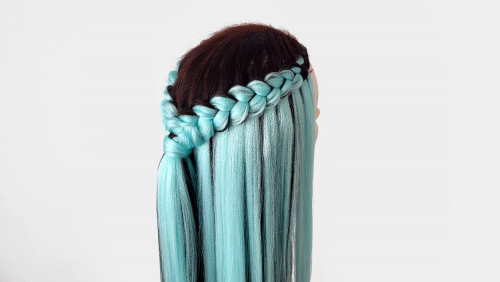
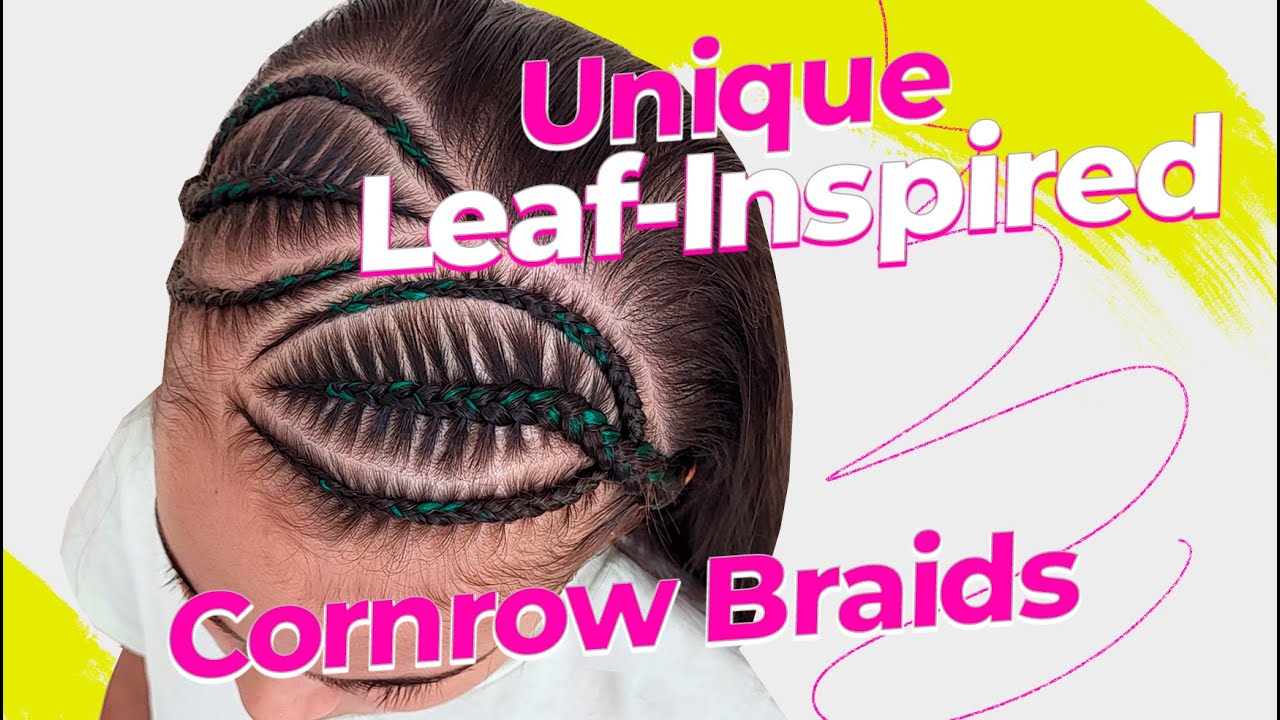
Feed-In Braids: Seamless Extension Braiding With Natural Starts, Clean Length, and Controlled Volume
Feed-in braids are extension-based braids created by gradually adding small pieces of braiding hair into the natural hair as the braid develops. Instead of attaching a large amount of extension hair at the beginning, the stylist “feeds in” hair little by little. This creates a smoother start, a cleaner root area, and a more natural transition from the client’s hair into the braid length.
This technique is widely used in modern braiding because it gives stylists control over size, shape, length, and density. Feed-in braids can be used for cornrows, straight-back braids, stitch braids, ponytail braids, tribal braids, Ghana-inspired braids, lemonade braids, braided buns, kids’ styles, festival looks, and protective styling.
The main advantage of feed-in braids is the polished beginning. The braid starts small and gradually becomes fuller. This avoids the bulky knot that can happen when too much extension hair is added at the root. When done correctly, feed-in braids look sleek, balanced, and professional while still giving the client the length and volume of added hair.
What Are Feed-In Braids?
Feed-in braids are braids where extension hair is added gradually during the braiding process. The stylist begins with the client’s natural hair, creates the first few braid stitches, then adds small pieces of synthetic hair step by step. Each added piece blends into the braid and increases the length or thickness.
The technique can be used with scalp braids or individual braid styles, but it is most commonly associated with cornrows and straight-back braid designs. The braid is attached to the scalp while the extension hair is introduced in controlled amounts.
A good feed-in braid should not look like a heavy piece of synthetic hair was placed at the base. The start should appear smooth and natural. The braid should grow gradually in size, creating a clean visual flow from root to end.
Feed-in braids are both a technique and a styling category. The method can be used to create many different braid looks.
Why Feed-In Braids Are Popular
Feed-in braids are popular because they create a clean, modern finish. Clients often want braids that look sleek at the scalp without a bulky or heavy root. The feed-in method solves that by building the braid gradually.
The technique also gives stylists more control. The braider can decide exactly how much hair to add, where to add it, and how thick the braid should become. This makes the style highly customizable.
Feed-in braids are also versatile. They can be simple and minimal, such as two straight-back braids, or complex and detailed, such as stitch feed-ins with creative parting. They can be worn short, long, medium, jumbo, colorful, beaded, curly-ended, or styled into ponytails and buns.
The style works well for everyday wear, vacations, sports, events, kids’ hairstyles, protective styling, and salon looks because it combines structure with flexibility.
Feed-In Braids vs. Traditional Extension Braids
Traditional extension braids often begin by adding a larger amount of synthetic hair at the root. This can create a more obvious knot or thicker starting point. In some styles, that structure is intentional and useful.
Feed-in braids use a more gradual method. The stylist starts with natural hair and adds extension pieces in smaller amounts. This creates a softer and more natural-looking base.
Traditional extension starts can be faster in some cases, but they may look bulkier. Feed-in braids usually require more control and timing, but the result can look smoother and more polished.
The choice depends on the desired look. If the client wants a flat, seamless start, feed-in braids are often preferred. If the client wants a very firm grip or a more traditional extension base, another method may be chosen.
Feed-In Braids vs. Knotless Braids
Feed-in braids and knotless braids are related because both use gradual extension placement. The difference is the braid type and structure.
Knotless braids usually refer to individual braids where extension hair is added gradually into each section. The braid hangs freely from the scalp and does not follow a cornrow path.
Feed-in braids usually refer to scalp braids, especially cornrows, where added hair is fed into the braid as it moves along the head. The braid is attached to the scalp.
Both techniques create a smoother, lighter-looking start compared with traditional knot-based methods. Both require control and balanced tension. The difference is that knotless braids are individual hanging braids, while feed-in braids are most often scalp braid designs.
Feed-In Braids vs. Cornrows
Cornrows describe the scalp-braiding technique: the hair is braided close to the scalp while new hair is added as the braid moves forward. Feed-in describes how extension hair is added into that braid.
A cornrow can be created with natural hair only. It can also be created with extensions. When extensions are added gradually into the cornrow, it becomes a feed-in braid.
This means feed-in braids are often a type of cornrow style, but not all cornrows are feed-in braids.
The distinction matters in salon language. A client asking for cornrows may want natural-hair scalp braids. A client asking for feed-in braids usually wants extension hair added gradually for length, thickness, or color.
Common Types of Feed-In Braids
Straight-back feed-in braids move from the front hairline toward the back. They are clean, classic, and practical.
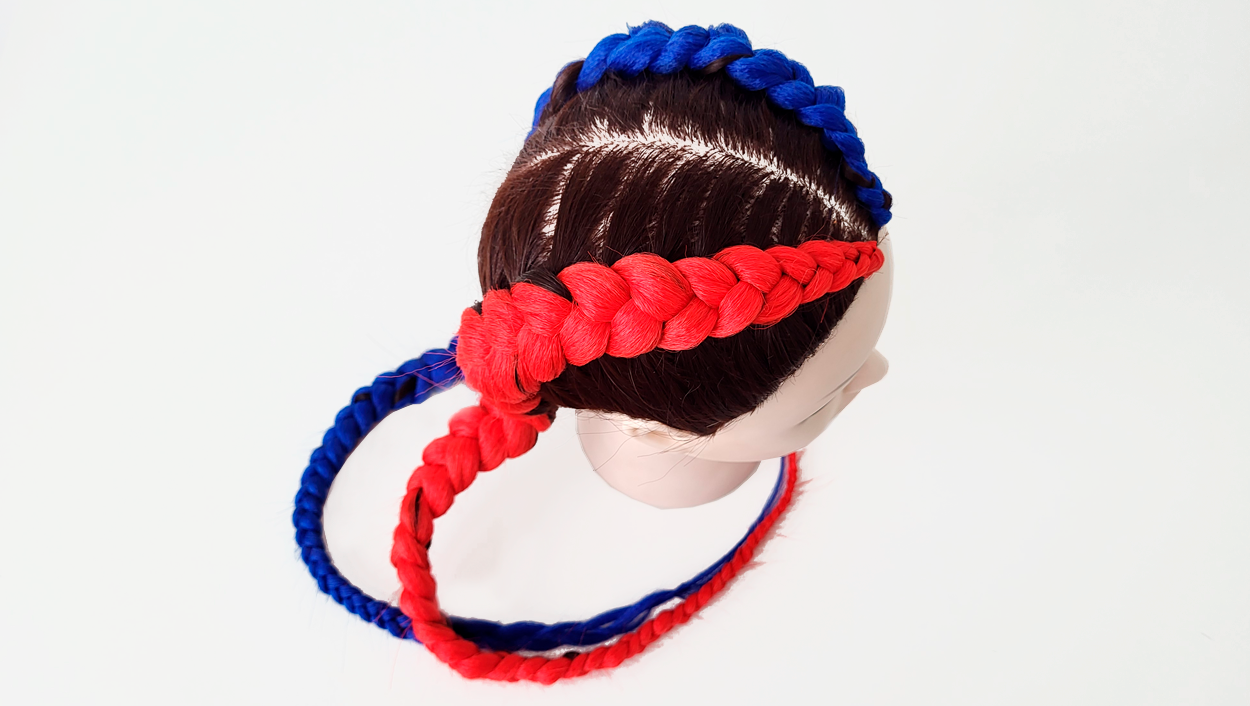
Two feed-in braids use one braid on each side, usually divided by a center part. This style is sporty, balanced, and popular for everyday wear.
Stitch feed-in braids use precise parting to create a sharp stitched effect along each braid. This version looks very polished and high-definition.
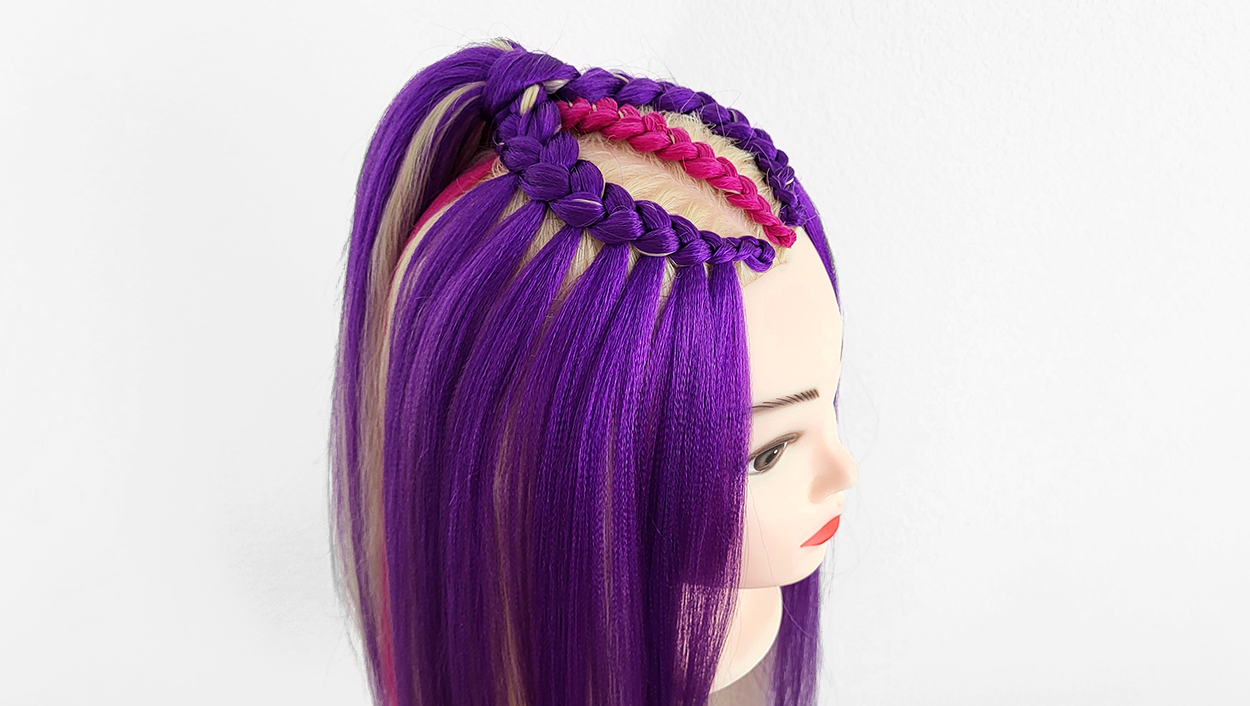
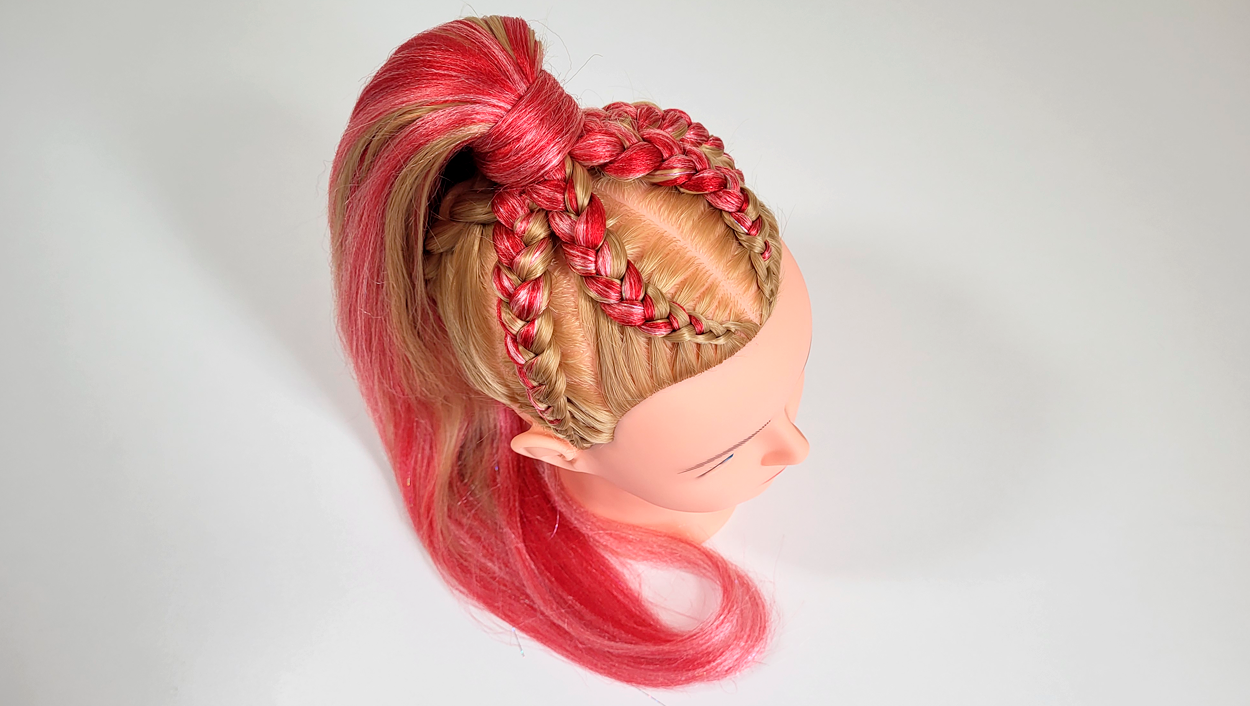
Feed-in ponytail braids direct the braids toward one ponytail point. The braids may gather into a high, mid, or low ponytail.
Lemonade feed-in braids move to one side, creating a side-swept pattern with long braid length.
Tribal feed-in braids combine front cornrow patterns with individual braids, beads, or decorative elements.
Jumbo feed-in braids use larger sections and thicker extension hair for a bold statement.
Small feed-in braids use finer sections for a more detailed and longer-lasting look.
Feed-In Straight-Back Braids
Straight-back feed-in braids are one of the most common versions of the style. The braids start near the front hairline and move toward the back in clean rows. Extension hair is added gradually so each braid begins small and becomes fuller through the length.
This style is popular because it is simple, neat, and functional. It works for school, work, sports, vacations, protective styling, and everyday wear. It can be done with a few large braids or many smaller braids.
Straight-back feed-ins can look minimal with natural colors or bold with bright synthetic hair. They can also be finished with beads, cuffs, curly ends, or long sealed lengths.
The style depends on clean parting and even tension. If the rows are uneven or the added hair is inconsistent, the final look can lose polish.
Feed-In Stitch Braids
Feed-in stitch braids are a modern salon favorite. They combine the gradual extension technique with sharp stitch parting. The stylist creates small, repeated section lines along each braid, giving the braid a clean segmented look.
This style is highly visual and photographs well because the lines are crisp and defined. Stitch feed-ins can be worn straight back, into a ponytail, in curved patterns, or as creative cornrow designs.
The technique requires precision. The stylist must control the parting, product, braid direction, and extension placement at the same time. Too much product can create buildup, while too little control can make the stitch lines unclear.
A strong stitch feed-in style should look sharp but still feel comfortable. The clean look should come from technique, not painful tightness.
Feed-In Braids with Natural Hair
Feed-in braids begin with natural hair, even when extension hair is added. The natural hair should be prepared properly before installation. It should be clean, detangled, moisturized, and sectioned according to the design.
Some clients prefer the hair stretched before braiding for a smoother finish. Others may braid from naturally textured hair, depending on the desired look and hair type.
The natural hair must be strong enough to support the added extension hair. The stylist should avoid attaching too much synthetic hair to small or fragile sections. The hairline, temples, and nape need special care.
A good feed-in braid should blend the natural hair smoothly into the extension hair without creating stress at the root.
Feed-In Braids with Synthetic Hair
Synthetic braiding hair is commonly used for feed-in braids because it provides length, volume, and color while remaining lightweight when used correctly. Pre-stretched braiding hair is especially popular because it helps create a smooth tapered finish.
The synthetic hair is usually prepared in small pieces before the braid begins. The stylist may separate the extension hair into different sizes so the braid can increase gradually. Smaller pieces are used at the beginning, and larger pieces may be added as the braid moves farther from the hairline.
The quality of the synthetic hair matters. Good braiding hair should be smooth, manageable, lightweight, and easy to feed into the braid. Hair that is too slippery, rough, stiff, or heavy can make the style harder to install and less comfortable to wear.
The extension hair should support the style without overpowering the client’s natural hair.
Feed-In Braids with Color
Feed-in braids are excellent for color because the extension hair can create a temporary color transformation. Clients can try blonde, copper, burgundy, pink, purple, blue, green, silver, ombré, or mixed shades without dyeing their natural hair.
Color can be added subtly or boldly. A few colored feed-in pieces can create highlights inside the braid. A full-color set can create a strong statement. Ombré braiding hair can create a gradual color transition through the braid length.
Color placement should be intentional. If the color is added unevenly, the braid may look patchy. If placed well, it can highlight the braid pattern and make the design more visible.
Feed-in technique allows the stylist to control where the color begins and how strongly it appears.
Feed-In Braids for Protective Styling
Feed-in braids can function as a protective style when they are installed with proper tension, balanced extension weight, and healthy sectioning. The natural hair is braided close to the scalp and the ends are usually tucked into the extension length, reducing daily manipulation.
However, feed-in braids are protective only when they do not create stress. Tight braids, heavy synthetic hair, small sections carrying too much weight, or repeated tension at the hairline can cause breakage.
A protective feed-in braid style should feel comfortable from the first day. Pain, bumps, headaches, pulling, or burning are warning signs that the style is too tight or too heavy.
The style should also be removed at the right time. Leaving braids in too long can lead to buildup, tangling, and breakage during takedown.
Feed-In Braids for Kids
Feed-in braids can be used for kids, but the style must be lightweight and gentle. Children’s scalps can be sensitive, and their hairlines should not be placed under heavy tension.
Kids’ feed-in braids can be simple straight-back styles, two braids, ponytail braids, heart designs, zigzag parts, star braids, or beaded styles. Colorful elastics, beads, bows, ribbons, and clips can make the style playful.
For children, smaller amounts of extension hair are usually better. The braids should not be too long or too heavy. The style should support school, play, sleep, and daily comfort.
A good kids’ feed-in style should look neat and fun while protecting the scalp and natural hair.
Feed-In Braids for Adults
For adults, feed-in braids can look sleek, sporty, elegant, bold, protective, or high-fashion. A simple two-braid feed-in style is practical and clean. A long stitch feed-in ponytail can look polished and powerful. Side-swept feed-ins can feel glamorous. Jumbo feed-ins can create a dramatic statement.
Adults often choose feed-in braids for vacations, workouts, events, protective styling, beauty content, and everyday low-maintenance wear. The style keeps hair controlled while still allowing length, color, and design.
Feed-in braids can also be customized with curls, cuffs, beads, creative parting, or mixed braid sizes. The final mood depends on braid direction, size, length, color, and finish.
The best adult version depends on scalp comfort, lifestyle, desired wear time, and personal style.
Feed-In Braids for Men
Feed-in braids can also be used in men’s hairstyling, especially when the client wants extra length, thickness, or a sharper braided design. They may be combined with straight-back braids, stitch braids, fades, undercuts, braided ponytails, or creative cornrow patterns.
Men’s feed-in braids can look clean, athletic, edgy, or editorial. The added hair should be balanced so the braid does not become too heavy or unnatural-looking unless a dramatic style is intended.
A fresh haircut can make feed-in braid patterns appear sharper because the contrast between the braids and clean edges increases definition.
As with all scalp braids, the style should not be painfully tight. Strong visual structure should come from skilled braiding, not excessive tension.
Feed-In Ponytail Braids
Feed-in ponytail braids direct multiple braids toward one gathering point. The ponytail can be high, mid-level, or low. This style creates a sleek scalp pattern with movement through the ponytail length.
The design may include straight parts, curved parts, stitch details, heart parts, zigzag lines, or creative patterns. Extension hair is added gradually into each braid so the braids become longer and fuller as they move toward the ponytail.
This style is popular because it looks polished and dramatic. It can be worn for events, vacations, birthdays, content creation, or everyday beauty.
The ponytail base must not be too tight. Since many braids gather into one point, tension can build quickly. A professional stylist should make sure the style feels secure but not painful.
Feed-In Braids with Curly Ends
Feed-in braids can be finished with curly ends for a softer and more feminine look. The braid may continue down most of the length, then release into curls or waves at the ends. This finish can make the style feel romantic, boho, or vacation-ready.
Curly ends can be created with synthetic curly hair, human hair pieces, pre-curled extensions, or water wave hair depending on the desired result. Human hair curls may look softer and last longer, while synthetic curls need more careful maintenance.
The curls should be balanced with the braid size. Too much loose curl can tangle or hide the braid structure. A controlled curly finish can add movement without making the style difficult to manage.
Feed-In Braids with Beads and Accessories
Beads, cuffs, shells, rings, thread, ribbons, and charms can all be added to feed-in braids. Accessories can make the style playful, cultural, elegant, festival-ready, or editorial.
Beads are especially common for kids’ feed-in braids and straight-back styles. Cuffs and rings can create a polished adult finish. Thread and ribbons can add color and texture. Shells can add natural or cultural detail.
Accessories should be placed with balance. Too many heavy pieces can pull on the braid or create discomfort. Smooth, lightweight accessories are safer and easier to wear.
The accessories should enhance the braid design rather than hide the clean feed-in technique.
Parting and Design Planning
Parting is one of the most important parts of feed-in braids. The braid path must be planned before installation. Straight-back styles need clean rows. Ponytail styles need parts that flow toward one point. Lemonade styles need side-swept direction. Creative designs need balanced shapes.
The parting should match the client’s head shape and hair density. Small sections can create detail but may not support heavy extension hair. Large sections can support more hair but may create fewer braids and less detail.
For stitch feed-ins, the parting must be especially precise because the design depends on visible section lines. For kids’ styles, parting should also prioritize comfort and easy removal.
A strong feed-in braid design starts before the first braid begins.
Professional Technique Details
A professional feed-in braid installation requires preparation and rhythm. The stylist should prepare extension pieces in advance so the braid can flow smoothly. The pieces should increase gradually in size when the goal is a natural build.
The braid begins with the client’s natural hair. The stylist creates a few secure stitches, then adds the first small piece of extension hair. Additional pieces are added as the braid progresses. Each piece should be placed cleanly so it disappears into the braid.
Tension must be controlled. The braid should be secure but not tight. The hairline should be handled gently, especially at the first few stitches.
Consistency matters. Each braid should have similar size, direction, and extension balance unless the design intentionally varies them.
A polished feed-in braid should look seamless at the start, smooth through the length, and comfortable at the scalp.
Maintenance and Wear
Feed-in braids can last from several days to several weeks depending on braid size, hair texture, extension weight, scalp care, product use, and lifestyle. Smaller feed-in braids may last longer than large jumbo feed-ins, while styles with curls may need more maintenance.
At night, the braids should be protected with a satin or silk scarf, bonnet, or pillowcase. This helps reduce frizz and preserve the parting.
The scalp should stay clean and comfortable. Lightweight scalp care can be used when needed, but heavy oils and thick products may create buildup.
The wearer should avoid pulling feed-in braids into tight ponytails or buns unless the style is designed for that. Repeated tension can stress the roots and hairline.
If the braids become painful, itchy, loose, matted, or overly frizzy, they should be refreshed or removed.
Takedown and Hair Health
Feed-in braids should be removed gently. The braid should be undone from the ends upward. If the extensions are long, the stylist or wearer may cut the extension length below the natural hair, but only after identifying where the real hair ends.
The natural hair should not be pulled out of the braid. If product buildup has formed at the roots, the braid may need extra patience during removal.
After the braids are removed, shed hair should be separated before washing. This helps prevent tangling and matting. The hair should then be cleansed, conditioned, detangled, and moisturized.
If the scalp feels sore or the hairline looks stressed, the hair should rest before another tight or extension-heavy style.
Safe takedown is part of a successful feed-in braid service.
Styling Options
Feed-in braids can be styled in many ways. They can be worn straight back, side-swept, into ponytails, buns, pigtails, braided crowns, updos, half-up styles, or creative scalp designs.
The style can be minimal with two braids or dramatic with long stitch braids. It can be sporty with clean straight backs or glamorous with a high feed-in ponytail. It can be playful with beads or editorial with sharp parting and metallic accessories.
Color can make the style more expressive. Curly ends can soften it. Stitch details can make it more graphic. Jumbo size can make it bold. Small braids can make it detailed.
The best styling choice depends on comfort, occasion, hair density, and desired visual impact.
Feed-In Braids in Modern Beauty Culture
Feed-in braids remain important because they changed the look of extension braiding. The gradual hair-addition method made braided styles look smoother, lighter at the root, and more polished.
The style appears in salons, protective styling, kids’ braiding, vacation hair, athletic hair, celebrity beauty, social media tutorials, and professional braid education. It is one of the key techniques modern braiders are expected to understand.
Feed-in braids are also popular on camera because the clean root and braid build are easy to see. Tutorials often focus on how the stylist adds small pieces of hair and controls the braid size.
In professional braiding, feed-in technique shows skill. It requires timing, sectioning, tension control, extension preparation, and a good eye for balance.
Why Feed-In Braids Matter
Feed-in braids matter because they make extension braiding look more seamless, controlled, and customizable. They give clients length and fullness without an overly bulky start.
For clients, feed-in braids offer protection, style flexibility, color options, and a polished finish. For stylists, they require technical precision, rhythm, planning, and professional control.
When done well, feed-in braids look smooth, balanced, comfortable, and intentional. They prove that the way extension hair is added can completely change the quality and beauty of a braid style.