
French Braids: Classic Scalp Braiding With Smooth Structure, Everyday Elegance, and Timeless Control
French braids are classic scalp braids created by weaving three sections of hair while gradually adding more hair from each side as the braid moves along the head. The braid lies close to the scalp and creates a smooth, integrated pattern that looks elegant, practical, and controlled.
This technique is one of the most widely recognized braid foundations in modern hairstyling. It is often one of the first advanced braids people learn after a simple three-strand braid because it teaches how to add hair into a moving braid pattern. Once mastered, it becomes the base for many other styles, including side braids, double braids, crown braids, braided buns, ponytail braids, wedding updos, and protective everyday looks.
French braids can be sleek and polished, soft and romantic, sporty and secure, or loose and casual. They can be created with natural hair only or combined with extensions, ribbons, accessories, curls, waves, and creative parting.
What Are French Braids?
French braids are three-strand braids attached to the scalp. The stylist begins with a section of hair, divides it into three strands, and crosses the outside strands over the center strand while adding new hair from the sides. This creates a braid that blends into the hair rather than sitting raised on top.
The braid can move straight back, diagonally, along one side, around the crown, or into a ponytail or bun. The direction depends on the parting and the design plan.
French braids are often described as smooth and classic because the braid pattern appears woven into the hair. This makes the style softer than Dutch braids, which sit more visibly on top of the head.
The defining feature is the overhand three-strand technique with added hair. If the braid is attached to the scalp and the strands cross over the center, it is usually a French braid or a French-braid-based variation.
Why French Braids Are Popular
French braids are popular because they combine beauty, control, and versatility. They keep the hair organized while still looking elegant. This makes them useful for school, work, sports, travel, formal events, weddings, kids’ hairstyles, and daily routines.
The style is also practical. A French braid keeps hair away from the face and neck, reduces tangling, and can hold the hair securely for hours. Depending on hair texture, product use, and braid tightness, it may last for a full day or longer.
French braids are also highly adaptable. A single braid can look classic and simple. Two French braids can feel sporty or youthful. A loose side French braid can look romantic. A crown French braid can look formal and elegant.
The technique works across many hair types and lengths, which is one reason it remains a core skill in hairstyling education.
French Braids vs. Dutch Braids
French braids and Dutch braids are closely related, but the strand direction is different. In a French braid, the outside strands cross over the center strand. This makes the braid appear blended into the hair.
In a Dutch braid, the outside strands cross under the center strand. This creates a raised braid that sits on top of the hair.
French braids usually look softer, smoother, and more classic. Dutch braids usually look bolder, more raised, and more graphic. Both techniques can be used for everyday styling, formal looks, kids’ styles, sports hair, and creative braiding, but the visual effect is different.
A simple way to explain the difference: French braids are woven into the hair; Dutch braids are lifted above the hair.
French Braids vs. Cornrows
French braids and cornrows are both scalp braid techniques, but they differ in size, structure, cultural context, and typical use.
French braids are often larger three-strand scalp braids created with an overhand method. They are commonly used in general hairstyling for long hair, sports hair, school looks, bridal styling, and casual everyday braids.
Cornrows are close-to-scalp braids traditionally associated with African and African diaspora hair culture. They are often smaller, tighter, more patterned, and can create straight, curved, zigzag, geometric, or highly detailed scalp designs.
Both styles require adding hair as the braid moves along the scalp. However, cornrows usually involve more detailed parting and tighter scalp placement, while French braids often have a softer, larger, more blended finish.
In professional beauty writing, it is important to describe both accurately and respectfully.
Common Types of French Braids
A classic French braid runs from the crown or front hairline toward the back of the head. It creates one smooth braid down the center.
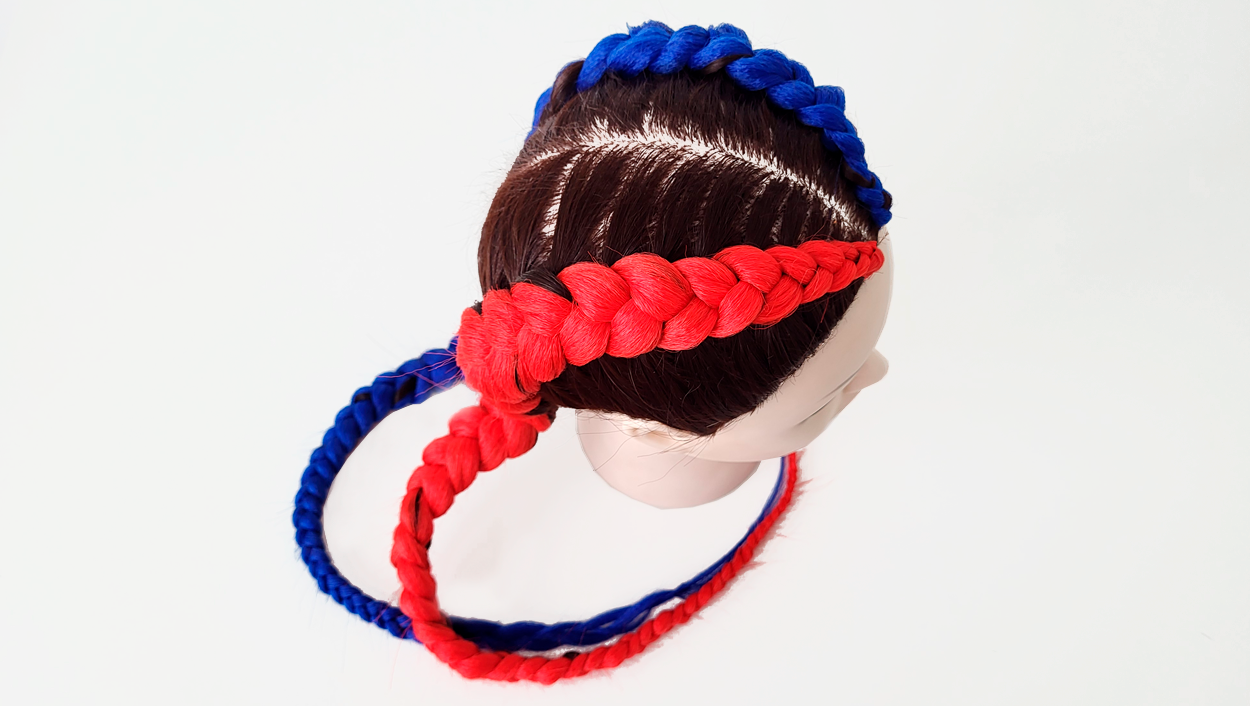
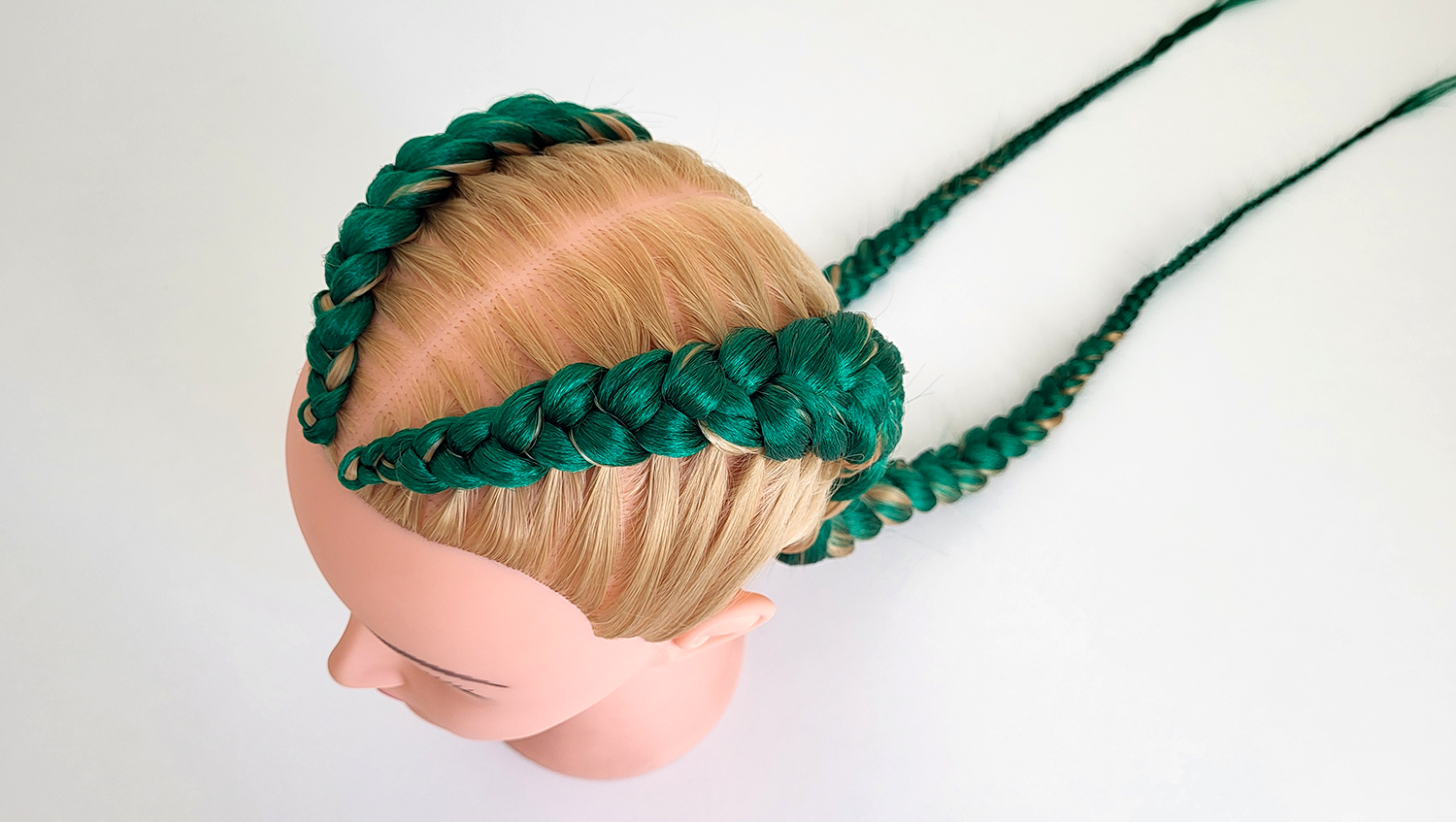
Double French braids divide the hair into two sections and braid each side from the front toward the nape or ends.
A side French braid moves along one side of the head and can be worn over the shoulder or pinned into an updo.
A French braid ponytail starts with a French braid at the scalp and finishes in a ponytail.
A French braid bun combines scalp braiding with a bun for a polished updo.
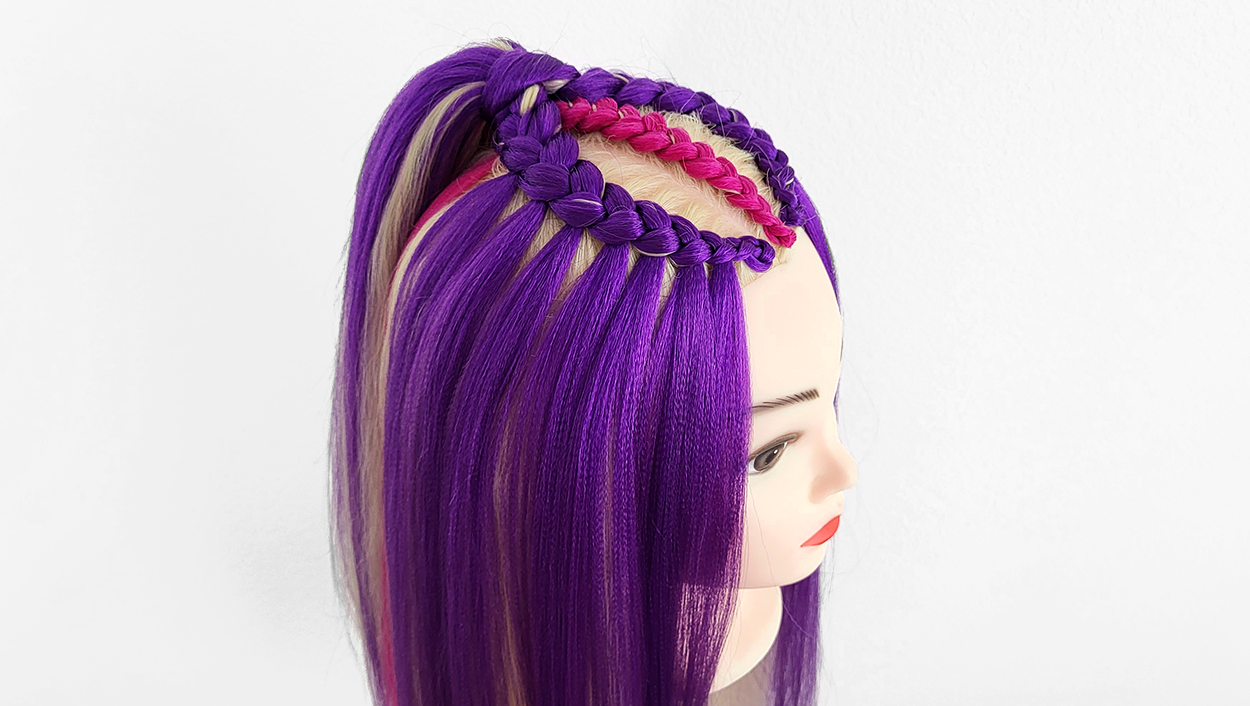
A French crown braid wraps around the head to create a halo effect.
A loose French braid is softened by gently pulling the braid edges for volume.
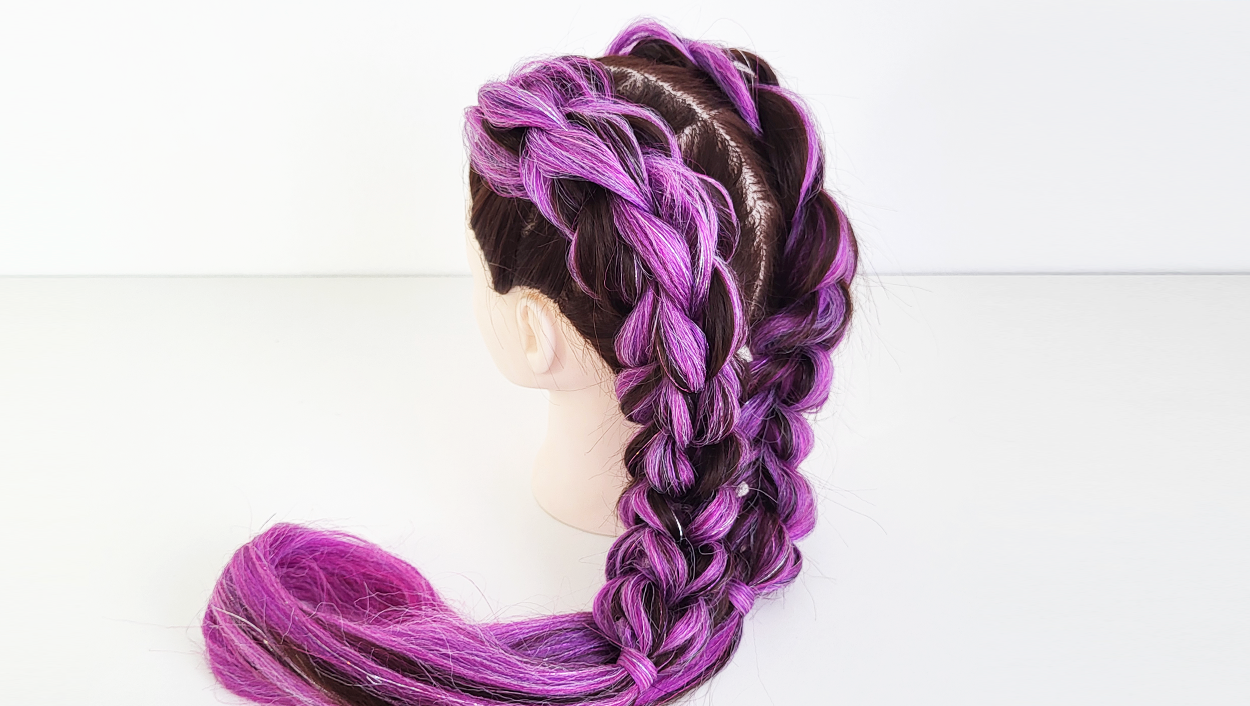
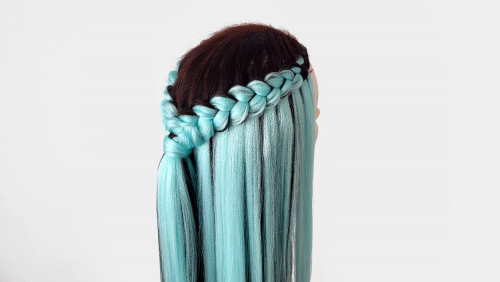
A French braid with extensions adds length, fullness, or color.
Classic French Braids
Classic French braids are usually created down the center of the head. The stylist begins near the front or crown, adds hair evenly from both sides, and continues braiding toward the nape. Once all hair is added, the braid continues as a regular three-strand braid through the length.
This style is clean, practical, and timeless. It can be worn for school, workouts, work, travel, casual days, or simple polished styling.
A classic French braid can look sleek when braided tightly and smoothed with product. It can look softer when the braid is gently loosened and face-framing pieces are left out.
The style works best when the sections are added evenly. Uneven sectioning can make the braid drift to one side or lose its balanced shape.
Double French Braids
Double French braids use two braids, usually separated by a center part. Each side is braided from the front hairline or crown toward the nape and then down the length.
This style is popular because it is secure, balanced, and practical. It works well for sports, dance, school, travel, kids’ hairstyles, gym routines, and casual everyday looks.
Double French braids can be tight and clean or loose and soft. They can also be expanded slightly for a fuller, more relaxed finish.
The center part should be clean and balanced. Both braids should have similar tension and size so the final look feels symmetrical.
French Braids with Natural Hair
French braids can be created with natural hair only. This version is lightweight, comfortable, and useful for many hair textures. Straight hair gives the braid a smooth and classic finish. Wavy hair creates softness. Curly hair adds volume. Coily or kinky hair can be braided into French-braid-inspired styles with proper preparation and section control.
Before braiding, the hair should be detangled. Depending on the texture and desired result, the stylist may use water, leave-in conditioner, cream, gel, mousse, or light oil to control frizz and improve hold.
Natural-hair French braids can be worn as a finished style or used to create heat-free waves after takedown. They can also be used as a low-manipulation style for short-term wear.
The braid should feel secure without pulling. Smoothness should come from technique and preparation, not painful tension.
French Braids with Extensions
Extensions can be added to French braids for more length, thickness, color, or drama. Synthetic braiding hair, clip-in extensions, ponytail extensions, or colored pieces may be used depending on the style.
Extensions are common when the client wants longer braids, fuller double braids, festival styling, or temporary color. Added hair can make the braid more visible and create a stronger silhouette.
The extension hair should be blended carefully. If the added hair is too bulky at the beginning, the braid may look heavy or uneven. If the texture does not match the styling goal, the braid may look disconnected.
A good French braid with extensions should look smooth at the scalp, balanced through the braid, and comfortable at the root.
French Braids with Color
Color can make French braids more dimensional. Highlights, balayage, ombré, fashion color, or extension pieces can all reveal movement through the braid pattern.
Because French braids gather hair from both sides, different tones can appear throughout the braid. This makes the style especially beautiful on highlighted or multi-tone hair.
Temporary color can also be added through synthetic extensions, ribbons, thread, or clip-in pieces. Pink, purple, blue, green, copper, blonde, silver, and pastel colors can turn a simple French braid into a festival or creative look.
Color placement should support the braid design. When placed intentionally, color can make the braid look more textured and polished.
French Braids for Protective Styling
French braids can function as a short-term protective or low-manipulation style when installed gently. They keep the hair organized, reduce daily brushing, and can help protect the ends when the braid is tucked or pinned.
However, French braids are usually not as long-lasting as smaller protective braid styles. Natural-hair French braids may last one day to several days, depending on hair texture, product use, and lifestyle.
The style is protective only when it does not pull on the scalp or hairline. Tight braiding can cause discomfort, breakage, or tension around the edges.
A healthy French braid should feel comfortable from the beginning. It should not cause headaches, scalp soreness, or bumps.
French Braids for Kids
French braids are very popular for kids because they are neat, practical, and age-appropriate. They can be worn as one braid, two braids, side braids, pigtail braids, ponytail braids, or braided buns.
Kids’ French braids can be decorated with bows, ribbons, colorful elastics, clips, beads, or small barrettes. They work well for school, dance, sports, birthdays, holidays, and everyday routines.
Comfort is the priority. Children’s scalps can be sensitive, so the braid should not be too tight. The style should hold without pulling around the temples, hairline, or nape.
A good kids’ French braid style should be secure, cute, gentle, and easy to remove.
French Braids for Adults
For adults, French braids can look classic, casual, elegant, romantic, sporty, or professional. A single French braid can feel clean and timeless. Double French braids can feel athletic or youthful. A loose side French braid can feel soft and feminine. A French braid bun can feel polished and formal.
Adults often choose French braids for workouts, errands, travel, work-from-home days, vacations, date nights, weddings, and event styling. The style keeps hair controlled while still looking intentional.
French braids can also be elevated with soft curls, accessories, extensions, or expanded braid sections. The same technique can create a simple everyday style or a formal hairstyle.
The best adult version depends on hair length, texture, face shape, occasion, and desired finish.
French Braids for Men
French braids can also be used in men’s hairstyling, especially for medium to long hair. They can be worn as a single braid, double braids, top-section braid, side braid, or braided ponytail.
Men’s French braids can look clean, athletic, rugged, or fashion-forward depending on placement and finish. They can also be combined with undercuts, fades, long top sections, or Viking-inspired styling.
The style is useful for keeping long hair controlled during sports, training, work, or daily wear.
As with any scalp braid, the braid should be secure but not tight. Strong styling should still protect the scalp and hairline.
French Braids for Sports and Active Styling
French braids are one of the most practical styles for active lifestyles. They keep the hair close to the head, reduce tangling, and help prevent hair from falling into the face.
They are commonly used for running, dance, gymnastics, boxing, yoga, school sports, workouts, and outdoor activities. Double French braids are especially effective because they distribute the hair evenly on both sides.
For sports, the braid should be secure but comfortable. Too much tension can cause scalp pain during movement. Too loose a braid may fall apart quickly.
A good athletic French braid should stay in place, feel light, and allow the wearer to move freely.
French Braids for Weddings and Formal Events
French braids can be elegant enough for weddings, prom, engagement photos, bridesmaid styling, and formal events. The technique can be softened and shaped into updos, crowns, side braids, and romantic half-up styles.
A French braid can lead into a low bun, wrap around the crown, or blend into curls. It can be decorated with pearls, flowers, pins, hair vines, ribbon, or delicate accessories.
For bridal and formal styling, the braid should look controlled but not stiff. A slightly loosened French braid can add softness and volume while keeping the style polished.
The result should feel elegant, secure, and balanced with the outfit and makeup.
French Braids with Ribbon and Accessories
French braids can be customized with ribbons, beads, cuffs, clips, flowers, pearls, thread, rings, or hair jewelry. Accessories can shift the style from simple to festive, romantic, playful, or editorial.
Ribbon can be woven into the braid for color and softness. Pearls and flowers work well for bridal styles. Beads and colorful elastics are popular for kids. Cuffs and rings can make the style more modern or festival-ready.
Accessories should be lightweight and smooth so they do not snag the hair. They should enhance the braid without hiding the woven structure.
A few well-placed details often look more polished than too many heavy decorations.
Parting and Placement
Parting affects the entire look of French braids. A center placement creates a classic braid down the back. A center part creates double French braids. A side part creates a softer side braid. Diagonal parting adds movement. Curved parting can create crown or halo designs.
The parting should match the client’s head shape, hair density, and style goal. Clean sectioning creates a polished finish. Softer parting creates a more romantic or casual look.
For double French braids, the two sides should be balanced in hair density. If one section has significantly more hair, the braids may look uneven.
A strong French braid design starts with planned direction and clean section control.
Tension and Braid Expansion
Tension control is important in French braiding. The braid should be firm enough to hold, but not tight enough to cause pain. A smooth braid does not need harsh pulling.
For a fuller or softer finish, the braid can be expanded after it is secured. The stylist gently pulls the outer edges to make the braid look wider and more relaxed. This technique is useful for romantic styling, bridal looks, and fine hair.
Expansion should be done gradually. Pulling too much can weaken the braid or make it look messy. The goal is softness without losing structure.
A professional French braid balances hold, comfort, and shape.
Professional Technique Details
A professional French braid starts with preparation. The hair should be detangled, sectioned, and controlled enough for smooth braiding. Product choice depends on hair type and desired finish.
The stylist begins with a starting section and divides it into three strands. One outside strand crosses over the center, then the other outside strand crosses over the center. As the braid moves, new hair is added from each side before crossing over.
The added sections should be consistent in size. The braid should stay centered or follow the planned direction. The stylist’s hands should keep even tension without pulling too tightly.
Once all loose hair is added, the braid continues as a regular three-strand braid through the length.
A polished French braid should look smooth, balanced, secure, and intentional.
Maintenance and Wear
French braids are usually short-term styles. A tight braid may last a full day or several days depending on hair texture and activity. A loose romantic braid may soften faster.
At night, the style can be protected with a satin or silk scarf, bonnet, or pillowcase. This helps reduce frizz and preserve the braid shape.
The wearer should avoid excessive touching, brushing, or pulling on the braid. If the braid includes accessories, they should be checked to make sure they are not snagging the hair.
If the braid becomes painful, itchy, too tight, or uncomfortable, it should be loosened or removed.
Removal should be gentle. The braid should be undone from the ends upward, and elastics or accessories should be removed carefully.
French Braids and Braid-Outs
French braids can be used to create heat-free waves. When the braid is worn for several hours or overnight and then taken down, the hair may hold a soft wave pattern.
The final braid-out depends on hair type, braid size, moisture level, product, and drying time. One large French braid creates softer waves. Two French braids create more even waves on both sides. Smaller French braids create more definition.
The hair should be dry before takedown if the goal is lasting texture. A small amount of oil or serum on the fingers can reduce frizz during removal.
This makes French braids useful both as a hairstyle and as a heat-free styling method.
Styling Options
French braids can be styled in many ways. A single braid creates a classic look. Double braids create balance and security. A side braid creates softness. A crown braid creates elegance. A ponytail braid feels sporty and modern. A French braid bun creates a polished updo.
The style can be combined with curls, waves, ribbons, beads, extensions, buns, ponytails, fishtails, twists, or loose face-framing pieces. It can be simple enough for daily wear or detailed enough for formal styling.
French braids can also act as a foundation for other looks. They can support updos, create texture, or hold hair in place under scarves, hats, or accessories.
The best styling choice depends on hair length, texture, comfort, and occasion.
French Braids in Modern Beauty Culture
French braids remain important because they are one of the foundational techniques in hairstyling. They appear in everyday beauty, sports hair, kids’ styling, bridal work, editorial looks, tutorials, natural hair routines, and salon education.
The technique is widely taught because it builds key skills: sectioning, adding hair, tension control, direction, hand coordination, and finishing. Once a stylist understands French braiding, many other braid techniques become easier to learn.
French braids also remain relevant because they adapt to trends. They can be sleek, loose, romantic, sporty, festival-ready, or formal depending on styling details.
The style continues to last because it is functional, elegant, and endlessly flexible.
Why French Braids Matter
French braids matter because they are one of the most essential braid techniques in modern hairstyling. They offer a smooth, secure, and versatile way to control the hair while creating a classic woven pattern.
For clients, French braids offer comfort, beauty, practicality, and styling flexibility. For stylists, they build foundational skill in scalp braiding, section control, and braid direction.
When done well, French braids look smooth, balanced, comfortable, and intentional. They prove that a classic technique can remain useful, beautiful, and relevant across generations of beauty styling.