
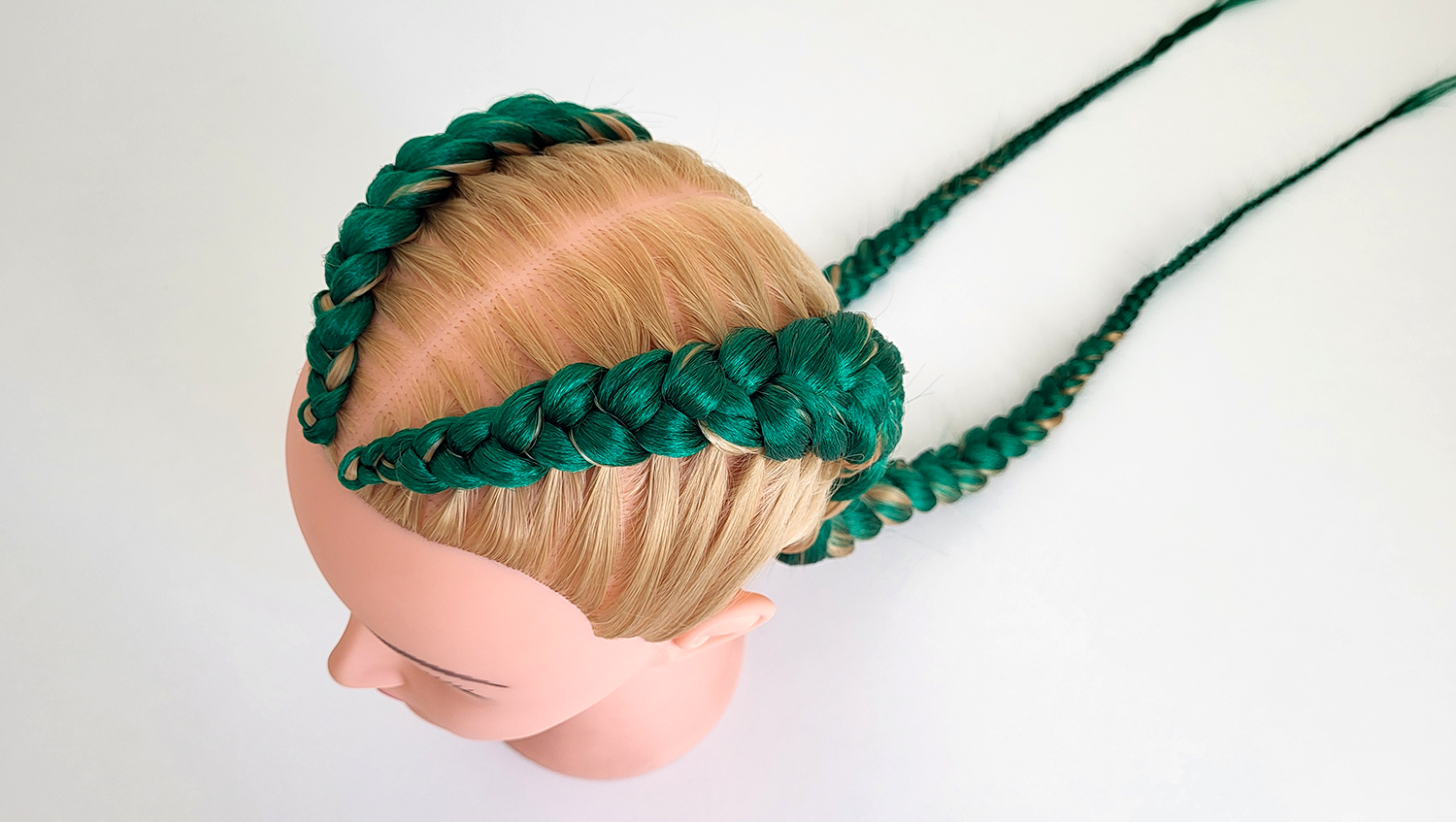
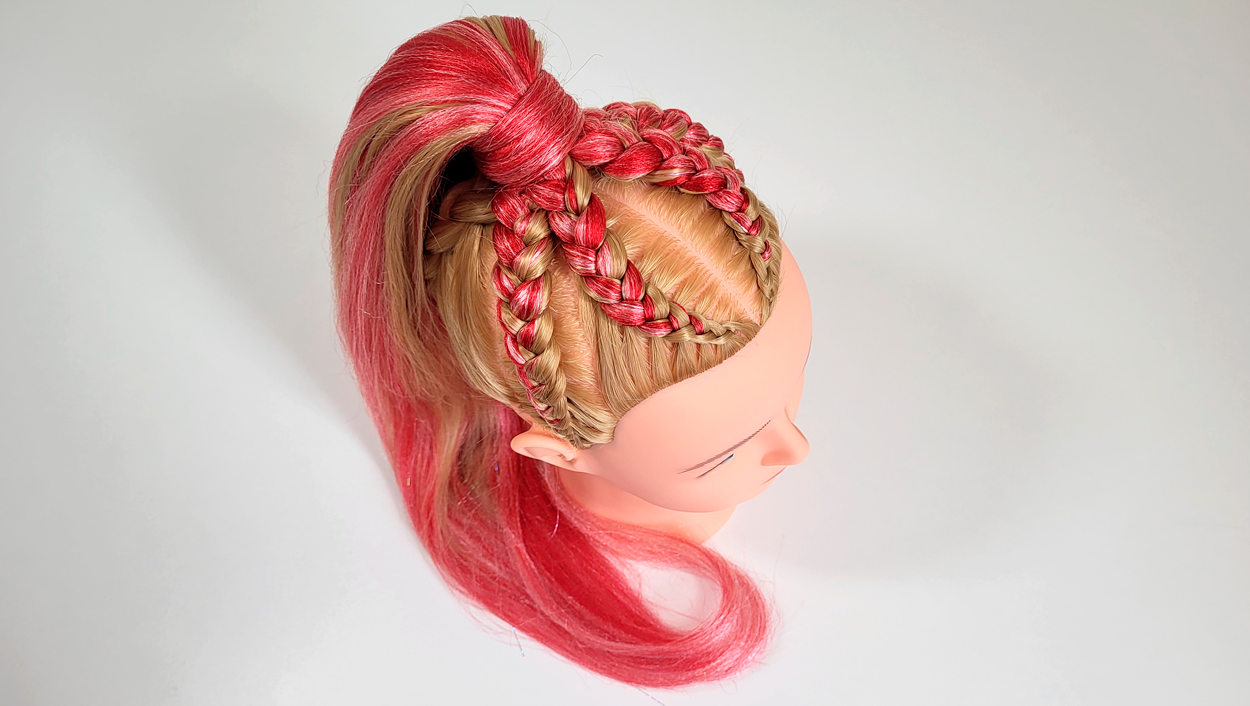
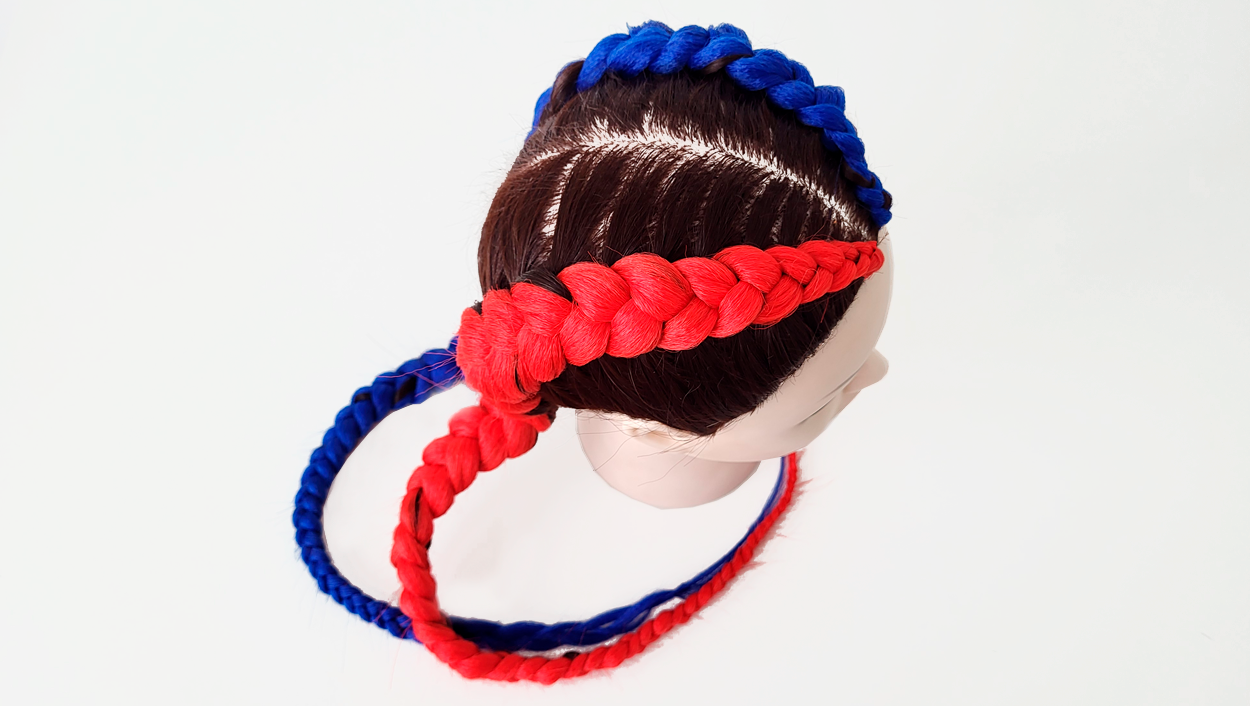
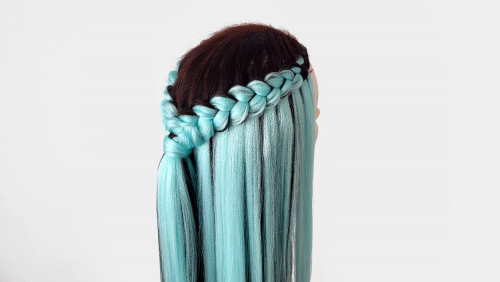
Skeleton Braids: Bold Braided Designs With Rib-Like Sections, Graphic Parts, and Creative Scalp Patterning
Skeleton braids are creative braided designs that use a central structure with smaller braid sections, parting lines, or side details branching away from it. The finished pattern can resemble a spine with ribs, a fishbone, or a skeletal framework, which is why the style is often called “skeleton braids.” The look is bold, graphic, and highly visual.
This style is not limited to one exact braid technique. Skeleton braids may include cornrows, stitch braids, Dutch braids, feed-in braids, small accent braids, zigzag parts, loop details, or extension-enhanced sections. The main idea is the design structure: a strong center line or main braid with smaller side elements arranged in a repeated, rib-like pattern.
Skeleton braids are popular in creative braiding because they turn the scalp and braid direction into a visible design. They can look sporty, edgy, playful, festival-ready, Halloween-inspired, futuristic, or artistic depending on the pattern, braid size, and accessories. A professional skeleton braid style should look clean, balanced, and comfortable without tight pulling at the hairline, temples, crown, or nape.
What Are Skeleton Braids?
Skeleton braids are braid designs that create a bone-like or framework-inspired pattern. Most versions include a central braid, center part, or main row that acts like the “spine,” while smaller braids or parted sections extend outward like “ribs.”
The style can be created close to the scalp with cornrows or stitch braids, or it can be created as a raised braid design using Dutch braids and accent braids. Some skeleton braid styles are simple and wearable, while others are more dramatic and artistic.
Skeleton braids can be done on natural hair only or with synthetic braiding hair for extra length, thickness, color, and stronger definition. Colored hair can make the pattern more visible, especially when contrast is used between the base hair and added braid sections.
The defining feature is the graphic layout. Skeleton braids are recognized by their structured center-and-side pattern, not by one single braiding method.
Why Skeleton Braids Stand Out
Skeleton braids stand out because they create a strong visual pattern. The design is not just about braiding the hair; it is about drawing shape across the scalp or through the hairstyle.
The style is especially eye-catching from the top and back because the parts, braid direction, and side details create a clear structure. This makes skeleton braids popular for photos, tutorials, kids’ creative styles, festivals, sports events, and themed looks.
Skeleton braids are also highly customizable. They can be small and neat for everyday wear, bold and wide for a statement look, colorful for festivals, or dark and dramatic for Halloween styling.
Another reason skeleton braids are popular is that they allow stylists to show technical control. Clean parting, symmetry, stitch detail, and tension management all matter in this style.
Skeleton Braids vs. Cornrows
Skeleton braids often use cornrow technique, but they are not the same as basic cornrows. Cornrows are scalp braids that can follow many patterns, including straight-back, curved, zigzag, or freestyle designs.
Skeleton braids are more specific in visual concept. They usually create a center-and-branch structure that resembles a spine and ribs.
A simple straight-back cornrow style may look classic and clean. A skeleton braid design looks more graphic and artistic because the braid directions are planned to create a visible framework.
Cornrows are the technique. Skeleton braids are the design concept.
Skeleton Braids vs. Stitch Braids
Skeleton braids can include stitch braid details, but not every skeleton braid is a stitch braid. Stitch braids use precise parted sections to create small “stitch” lines along the braid.
When stitch technique is added to skeleton braids, the result looks sharper and more graphic. The stitch lines can make the rib-like sections more visible and clean.
A non-stitch skeleton braid may look softer or more natural. A stitch skeleton braid looks more defined, modern, and salon-polished.
Stitch describes the detailing method. Skeleton braid describes the overall visual pattern.
Skeleton Braids vs. Fishbone Braids
Skeleton braids and fishbone braids can look similar because both may use a central braid with smaller side sections feeding into it. Fishbone braids often resemble a fish skeleton or fishbone pattern, with small side braids or sections directed toward a main braid.
Skeleton braids may look more dramatic, abstract, or creative. The pattern can resemble bones, ribs, a spine, or a graphic framework rather than only a fishbone.
Fishbone braids are often more traditional in their structure. Skeleton braids can be more freestyle, edgy, or themed.
The two terms may overlap in salon language, so reference photos are helpful.
Skeleton Braids vs. Spider Braids
Skeleton braids and spider braids are both creative scalp braid designs, but the visual inspiration is different. Spider braids often radiate from a center point or create web-like lines.
Skeleton braids usually have a spine-like structure with side sections branching out. The design looks more linear and rib-like.
Spider braids can feel circular, webbed, or radial. Skeleton braids feel more directional, structured, and bone-inspired.
Both styles require clean parting and careful pattern planning.
Common Types of Skeleton Braids
Classic skeleton braids use a central braid with smaller side sections feeding into or branching from it.
Skeleton cornrows create a close-to-scalp framework using cornrow technique.
Skeleton stitch braids add crisp stitch details for a sharp graphic finish.
Skeleton feed-in braids use added hair to build braid length, thickness, and definition.
Double skeleton braids create two mirrored skeleton patterns on each side of the head.
Skeleton braids with color use synthetic hair or dyed sections to highlight the pattern.
Skeleton braids with beads and accessories add decoration to selected braid ends or sections.
Kids’ skeleton braids use playful, gentle versions with bows, beads, color, or themed accents.
Festival skeleton braids use bright extensions, glitter, cuffs, or dramatic parting.
Classic Skeleton Braids
Classic skeleton braids usually include one main braid or center section with smaller side braids or parted sections arranged along it. The side sections may feed into the main braid or sit beside it as decorative details.
This version creates the signature skeleton effect. It can be placed down the center of the head, diagonally across the scalp, or along one side depending on the desired design.
Classic skeleton braids can look clean and sporty or bold and artistic. The final mood depends on braid size, parting sharpness, and whether extensions or accessories are used.
A strong classic skeleton braid should have a clear structure, balanced side sections, and comfortable tension.
Skeleton Cornrows
Skeleton cornrows are created close to the scalp using cornrow technique. The pattern may include a main cornrow with smaller cornrows feeding into it, or several cornrows arranged to create a rib-like effect.
This version is protective, clean, and highly graphic. It works well for natural hair, men’s braid styles, kids’ braids, festival looks, and creative salon designs.
The parts must be planned carefully before braiding begins. Uneven side sections can make the skeleton effect look unclear.
A professional skeleton cornrow style should have clean parts, smooth braid lines, and gentle tension.
Skeleton Stitch Braids
Skeleton stitch braids use stitch braid detailing to create a sharp, high-definition version of the style. The stitch parts make the braid pattern look more precise and modern.
This version is especially popular for social media content, salon portfolios, men’s braids, kids’ creative hairstyles, and performance looks. The stitch effect can make the “rib” sections look cleaner and more intentional.
The stylist must keep stitch spacing even and maintain symmetry throughout the design. The style should look sharp without being painfully tight.
A strong skeleton stitch braid style should look crisp, balanced, and comfortable.
Skeleton Feed-In Braids
Skeleton feed-in braids use extension hair added gradually to create length, fullness, or stronger braid definition. Feed-in technique can make the main braid more dramatic while keeping the start smooth.
This version works well when the client wants a longer braid tail, a thicker center braid, or added color. It can also help create contrast between the skeleton pattern and the natural hair.
Extension weight must be controlled carefully. Too much added hair can pull on the scalp, especially if the design includes small side sections.
A professional skeleton feed-in braid should look full and defined without feeling heavy or tight.
Double Skeleton Braids
Double skeleton braids create two skeleton-inspired braid patterns, usually one on each side of the head. The design may include two center lines, two Dutch-style raised braids, or two cornrow frameworks.
This version can look sporty, futuristic, playful, or festival-ready. It works well for kids, dance, sports, concerts, Halloween styling, and creative braid tutorials.
Symmetry is important. Both sides should have similar spacing, braid size, and direction unless the style is intentionally asymmetrical.
A clean double skeleton braid style should look balanced, secure, and comfortable.
Skeleton Braids with Color
Color can make skeleton braids more dramatic and easier to read. Because the design depends on visible lines and sections, contrast can help the pattern stand out.
Bright synthetic hair such as white, silver, red, blue, green, pink, purple, orange, or neon shades can make the style feel festival-ready or fantasy-inspired. White or silver extensions can create a stronger “bone” effect for themed looks.
Natural shades such as blonde, copper, honey brown, auburn, or burgundy can create softer dimension while still highlighting the braid structure.
The best color placement supports the skeleton pattern and makes the central and side sections clear.
Skeleton Braids with Synthetic Hair
Synthetic braiding hair can add length, thickness, structure, and color to skeleton braids. It is especially useful when the natural hair is not long enough to create a dramatic design or when the stylist wants high contrast.
Pre-stretched braiding hair can create smooth feed-in skeleton braids. Colored synthetic hair can highlight selected ribs, braid tails, or the central braid.
The hair should be added in balanced amounts so the style does not become too heavy. Small side sections should never carry more extension hair than they can safely support.
A good synthetic skeleton braid style should look bold and structured while still feeling comfortable.
Skeleton Braids with Beads and Accessories
Accessories can make skeleton braids more decorative. Beads, cuffs, rings, thread, charms, ribbons, clips, glitter, shells, and hair jewelry can all be added carefully.
For kids, colorful beads, bows, and elastics can make the style playful. For festivals, cuffs, glitter, and bright thread can make it more expressive. For Halloween or themed styling, metallic cuffs, white beads, or dark accessories can support the skeleton effect.
Accessories should not hide the pattern. They should highlight the braid ends, central braid, or selected side details.
Lightweight accessories are best so the style remains comfortable.
Skeleton Braids for Protective Styling
Skeleton braids can be protective when installed correctly, especially when they are built with cornrow or feed-in techniques. The hair is braided close to the scalp and organized into a structured pattern, which can reduce daily manipulation.
However, the style is protective only when tension is controlled. Tight side sections, heavy extensions, or overly small parts can stress the scalp and hairline.
The hairline, temples, crown, and nape should be handled gently. The design should never cause pain, bumps, burning, or headaches.
A healthy skeleton braid style should feel secure, light, and easy to remove.
Skeleton Braids for Kids
Skeleton braids are popular for kids because the pattern looks fun, creative, and bold. They can be adapted for school events, birthdays, dance, holidays, Halloween, photoshoots, and playful everyday styling.
Kids’ versions may include colorful elastics, beads, bows, glitter, ribbons, or bright synthetic accents. The design can be simple with one central braid or more detailed with multiple rib-like sections.
Comfort is the priority. Children’s scalps can be sensitive, so the braids should not be tight. Heavy extensions and heavy accessories should usually be avoided.
A good kids’ skeleton braid style should be cute, secure, gentle, and easy to remove.
Skeleton Braids for Adults
For adults, skeleton braids can look edgy, artistic, sporty, festival-ready, futuristic, or editorial. The style can be subtle with natural hair or dramatic with colored extensions and bold parting.
Adults may choose skeleton braids for concerts, festivals, photo shoots, Halloween looks, dance, performance styling, gym-friendly braids, or creative everyday wear.
The best adult version depends on hair length, hair density, scalp comfort, occasion, and desired visual impact.
A polished adult skeleton braid should look intentional, clean, and balanced from every angle.
Skeleton Braids for Men
Skeleton braids can work beautifully in men’s braid styling, especially when combined with cornrows, stitch braids, fades, tapers, or lineups. The design creates a sharp, graphic look that feels modern and bold.
Men may choose a center skeleton pattern, side skeleton cornrows, double skeleton braids, or a design that connects with a fade. Stitch detail can make the pattern look especially crisp.
The style should match the haircut and head shape. A fresh lineup or taper can make the braid design look cleaner.
A professional men’s skeleton braid style should look sharp without pulling too tightly at the hairline or temples.
Skeleton Braids for Short Hair
Skeleton braids can work on short hair if the hair is long enough to grip safely. The design may need to be smaller, tighter in layout, or simplified to match the available length.
Short hair should not be forced into the pattern. If the hair is too short, the braid may slip or create too much tension. A stylist may use product control, smaller sections, or a partial skeleton design instead.
Extensions may be added if the natural hair can safely support them, but lightweight hair is essential.
A safe short-hair skeleton braid should prioritize comfort, grip, and scalp health.
Skeleton Braids for Long Hair
Long hair gives skeleton braids more design options. The central braid can continue into a long braid tail, the side sections can be more detailed, and the full pattern can travel farther across the scalp.
Long hair may be styled into one main skeleton braid, double skeleton braids, side skeleton braids, or feed-in designs with extended tails.
The main challenge with long hair is control. The stylist should detangle well and keep sectioning clean so the pattern remains readable.
A strong long-hair skeleton braid should look structured, smooth, and balanced without feeling heavy.
Parting and Pattern Planning
Parting is one of the most important parts of skeleton braids. The stylist should decide where the central line or main braid will sit and how the side sections will branch from it.
The side sections should be evenly spaced if the goal is a clean rib-like look. For a more freestyle design, the pattern can be asymmetrical, but it should still feel intentional.
The design should match the client’s head shape, hairline, hair density, and comfort level. Not every skeleton braid pattern works on every head of hair.
A professional skeleton braid begins with a clear pattern map before braiding starts.
Tension and Scalp Comfort
Tension control is essential in skeleton braids because the design often includes small side sections and sharp parts. The braids should look clean because of technique, not because of excessive pulling.
The hairline and temples need special care. Tight braids in these areas can cause soreness, bumps, or breakage. The crown and nape should also be protected.
If extensions are used, the added hair should be lightweight and balanced. If elastics or accessories are used, they should not snag or pull.
A professional skeleton braid should feel comfortable from the first day.
Professional Technique Details
A professional skeleton braid service begins with consultation. The stylist should discuss the desired pattern, braid count, central braid placement, side-section spacing, stitch detail, extension use, color, accessories, scalp sensitivity, and wear time.
The hair should be clean, detangled, moisturized, and sectioned carefully. The pattern should be mapped before braiding begins.
The stylist creates the central braid or main section first, then builds the side sections in a balanced way. If stitch or feed-in technique is used, spacing and extension amounts should remain consistent.
A polished skeleton braid style should have clean parting, visible structure, balanced detail, secure hold, and comfortable tension.
Maintenance and Wear
Skeleton braids can last several days to several weeks depending on braid size, hair texture, product use, extension use, activity level, and maintenance. Cornrow-based and stitch-based versions usually last longer than loose decorative versions.
At night, the style should be protected with a satin or silk scarf, bonnet, durag, or pillowcase. This helps reduce frizz and preserve the parting pattern.
The scalp should stay clean and comfortable. Lightweight scalp mist or light oil may be used when needed. Heavy product can create buildup around the parts.
If the braids become painful, itchy, too loose, frizzy, or matted at the roots, they should be refreshed or removed.
Washing Skeleton Braids
Skeleton braids can be cleansed carefully, especially if the style is worn for more than a few days. The focus should be on the scalp.
A diluted shampoo or gentle scalp cleanser can help remove sweat, oil, and buildup. The scalp should be massaged gently between the braids and rinsed thoroughly.
The braids should not be rubbed aggressively because friction can create frizz and loosen the design. After washing, the hair should dry fully to avoid odor or scalp discomfort.
A light mousse or braid spray can help refresh the braid finish after cleansing.
Takedown and Hair Health
Takedown should be gentle. The braids should be undone from the ends upward. If elastics, beads, cuffs, or pins are used, they should be removed carefully first.
Product buildup near the roots should be softened before combing. Shed hair should be separated gently before washing to prevent tangling.
If extensions are used and the braids are long, the wearer may cut below the natural hair length, but only after clearly identifying where the real hair ends.
After removal, the hair should be cleansed, conditioned, detangled, and moisturized. If the scalp feels tender or the hairline looks stressed, the hair should rest before another tight braid design.
Styling Options
Skeleton braids can be styled in many ways. They can be created as center skeleton braids, side skeleton braids, double skeleton braids, stitch skeleton braids, feed-in skeleton braids, skeleton cornrows, Halloween braids, festival braids, men’s braid designs, or kids’ creative styles.
They can be paired with synthetic hair, colored extensions, glitter, beads, cuffs, rings, ribbons, bows, shells, charms, or hair jewelry.
The braid tails may hang loose, be gathered into a ponytail, tied into buns, or combined with curls and waves depending on the design.
The best styling choice depends on hair length, scalp comfort, occasion, and desired visual impact.
Skeleton Braids in Modern Beauty Culture
Skeleton braids remain popular because they combine braid technique with graphic design. They appear in kids’ creative hairstyles, men’s cornrows, stitch braid portfolios, Halloween styling, festival looks, social media tutorials, dance hair, and editorial braid work.
The style continues to evolve through stitch details, feed-in extensions, colored synthetic hair, zigzag parts, double patterns, glitter accents, and sculptural braid layouts.
For stylists, skeleton braids require more than basic braiding. They require parting precision, pattern planning, symmetry, tension control, and creative design awareness.
The style stays relevant because it is bold, photogenic, customizable, and visually memorable.
Why Skeleton Braids Matter
Skeleton braids matter because they show how braid design can become graphic art. The style uses hair, parts, and braid direction to create structure, rhythm, and visual storytelling.
For clients, skeleton braids offer creativity, protection, edge, and a memorable finished look. For stylists, they build skill in sectioning, design mapping, stitch control, and balanced braid construction.
When done well, skeleton braids look sharp, secure, comfortable, and intentional. They prove that scalp braid design can be protective, artistic, playful, and technically refined at the same time.