
Men’s Cornrows: Clean Scalp Braids With Sharp Parts, Protective Structure, and Masculine Style Versatility
Men’s cornrows are close-to-scalp braids created by braiding the hair in continuous rows along the head. The braids can move straight back, curve around the head, form geometric patterns, connect into a ponytail, or combine with fades, lineups, parts, and creative designs. The result can be clean, masculine, protective, athletic, artistic, or highly polished depending on the pattern and finish.
Cornrows have deep roots in African and African diasporic hair traditions, and they remain one of the most recognizable protective braid styles today. In men’s styling, cornrows are often chosen because they keep the hair controlled, reduce daily manipulation, and create a sharp look that works with natural texture, longer hair, undercuts, tapers, fades, and full-head braid patterns.
Men’s cornrows can be simple with two to six straight-back braids, detailed with stitch parts, bold with zigzags or curved designs, or longer with feed-in extensions. They can be worn by boys, teens, athletes, performers, professionals, and anyone who wants a clean braided style with strong shape and practical wear. A professional men’s cornrow style should look neat, balanced, and comfortable without pulling too tightly at the hairline, temples, crown, or nape.
What Are Men’s Cornrows?
Men’s cornrows are scalp braids braided close to the head. The stylist takes small sections of hair and adds hair into the braid as it moves along the scalp, creating a raised braid line that follows a planned path.
The pattern may be straight, curved, diagonal, zigzag, freestyle, or symmetrical. Some styles cover the full head, while others are combined with a fade, taper, undercut, or shaved sides. The braids may stop at the nape, continue into hanging braid tails, or gather into a ponytail or bun.
Men’s cornrows can be created with natural hair only or with added braiding hair for length, fullness, or design emphasis. However, many men’s cornrow styles are done with the client’s natural hair to create a clean, low-profile look.
The defining feature is the close-to-scalp braid structure. The braids sit on the head in rows or patterns and keep the hair organized from root to end.
Why Men’s Cornrows Stand Out
Men’s cornrows stand out because they combine style, control, and protection. They keep textured hair neat while creating a strong visual design. The braid pattern becomes part of the haircut or overall look, especially when paired with a fresh lineup or fade.
The style is also practical. Cornrows can help reduce daily styling time, keep hair out of the face, and protect the ends from constant manipulation. For athletes and active clients, cornrows can be a functional way to keep longer hair controlled during movement.
Men’s cornrows are also highly customizable. A simple straight-back set can look clean and classic. Curved cornrows can look more artistic. Stitch cornrows can look sharp and modern. Cornrows with a fade can look fresh and barber-style. Cornrows into a bun can look sleek and mature.
This flexibility makes men’s cornrows one of the most adaptable braid categories in modern grooming.
Men’s Cornrows vs. Regular Cornrows
Men’s cornrows use the same basic cornrow technique as regular cornrows. The difference is usually in styling choices, head shape planning, haircut integration, and design language.
Men’s cornrows often work with shorter hair, fades, tapers, lineups, undercuts, or masculine parting patterns. The braid design may be simpler, sharper, or more geometric. Many men prefer clean straight-back braids, stitch braids, two braids, four braids, or designs that connect with a barbered finish.
Regular cornrows can refer to any cornrow style on any client. Men’s cornrows are a styling category focused on male grooming, masculine silhouettes, and braid patterns that complement men’s haircuts.
The technique is the same foundation, but the final shape and styling intention may be different.
Men’s Cornrows vs. Box Braids
Men’s cornrows and men’s box braids are both protective braid styles, but their structures are different. Cornrows are braided close to the scalp in rows or patterns. Box braids are individual hanging braids created from separate parted sections.
Cornrows usually lie flatter and keep the hair closer to the head. Box braids create more movement because each braid hangs freely. Cornrows often feel more athletic and controlled, while box braids can feel more flexible and loose.
Cornrows may be better for clients who want a neat, low-profile style. Box braids may be better for clients who want more length, swing, and styling options like ponytails or half-up looks.
Both styles can be masculine, protective, and stylish when installed with healthy tension.
Men’s Cornrows vs. Stitch Braids
Stitch braids are a type of cornrow style with precise, visible section lines that create a “stitched” effect along the braid. Men’s cornrows can be simple regular cornrows or stitch cornrows depending on the desired finish.
Regular cornrows may have softer parting and a more natural look. Stitch cornrows look sharper, cleaner, and more graphic. The stitch effect is often created with clean sectioning, product control, and consistent pickup rhythm.
Men’s stitch cornrows are popular because they look modern and highly defined, especially when paired with a fresh fade or lineup.
The difference is detail. Cornrows describe the braid structure. Stitch braids describe a refined parting technique within cornrow styling.
Men’s Cornrows vs. Feed-In Braids
Feed-in braids use a technique where extension hair is added gradually into the braid. Men’s cornrows may be done with natural hair only or with feed-in technique.
Feed-in cornrows can make men’s braids longer, fuller, or more dramatic. They can also create a smooth start without bulky extension attachment at the root. This is useful for longer straight-back braids, ponytail styles, or creative braid designs.
Natural-hair cornrows usually look more understated and low-profile. Feed-in cornrows can look more polished, extended, or statement-making.
Feed-in is the method. Men’s cornrows are the style category.
Common Types of Men’s Cornrows
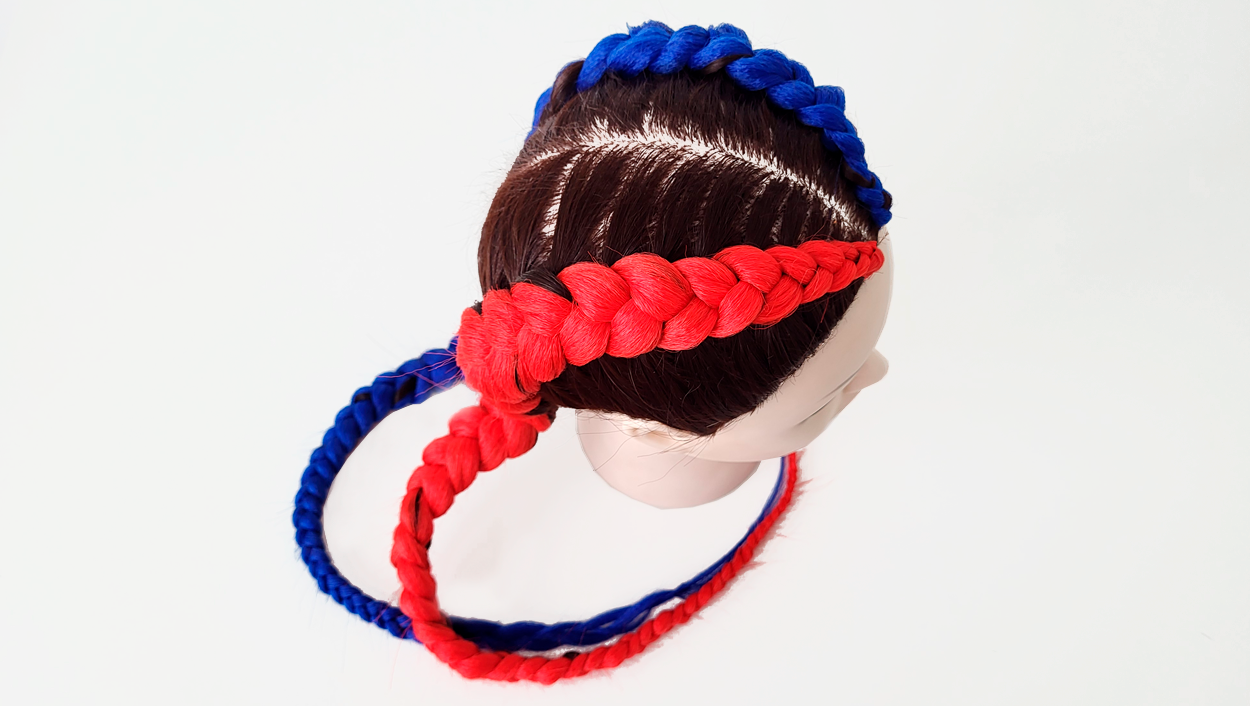
Straight-back men’s cornrows use clean rows braided from the front hairline toward the nape.
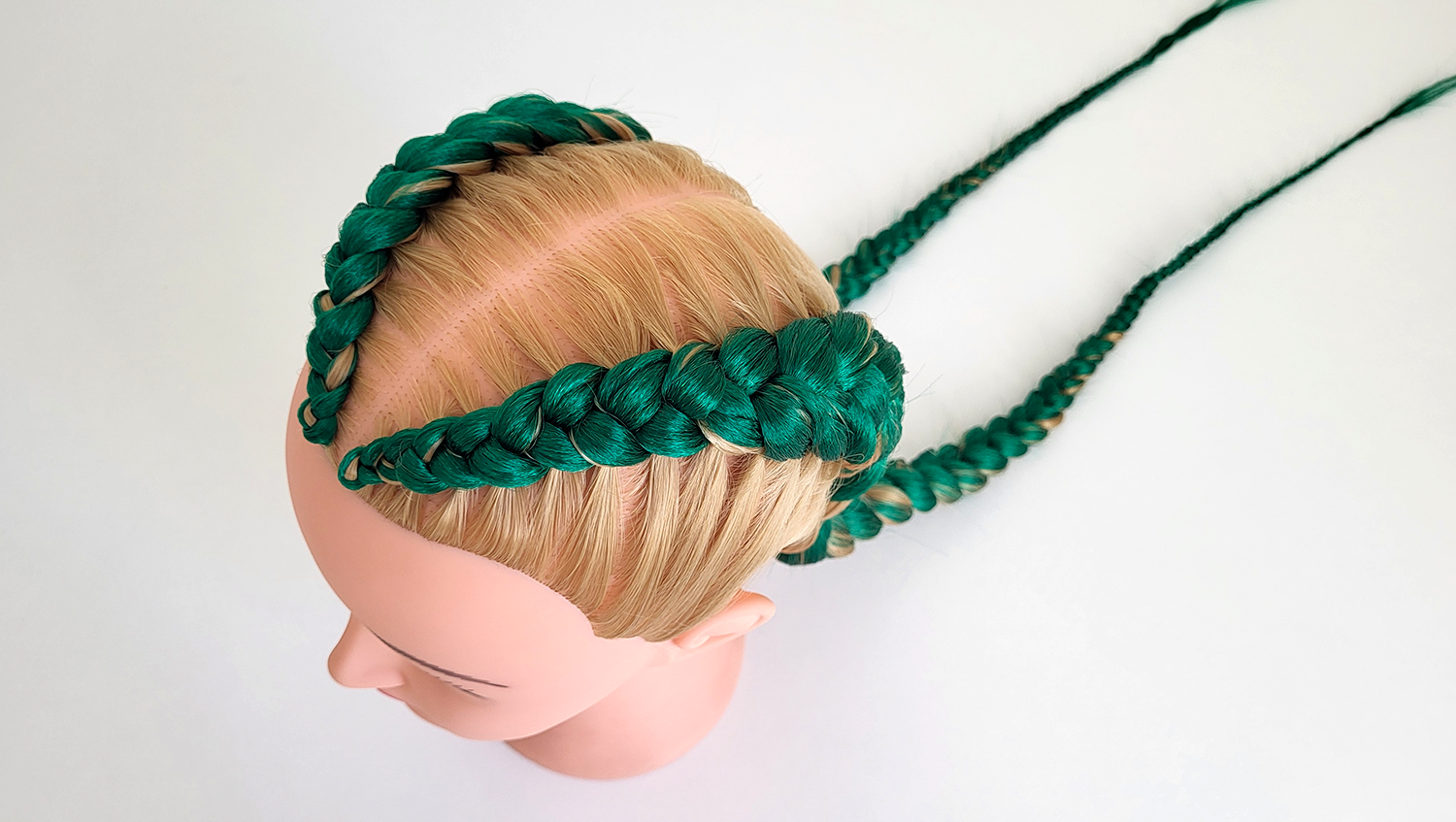
Two cornrows create a simple, bold, and classic look.
Four to six cornrows create a balanced everyday style with clean structure.
Stitch cornrows for men use sharp section lines for a modern, high-definition finish.
Zigzag men’s cornrows use angled or broken parting lines for a creative effect.
Curved men’s cornrows follow rounded or wave-like braid paths.
Men’s cornrows with fade combine scalp braids with a taper, fade, or undercut.
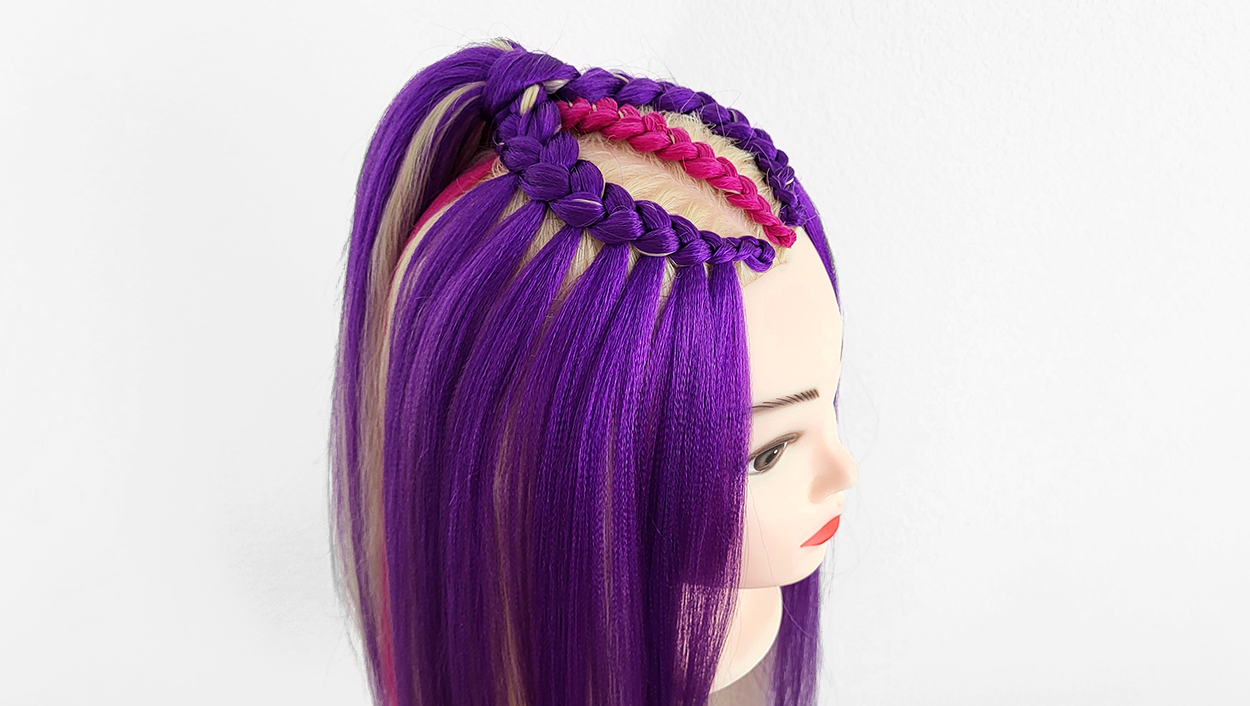
Men’s cornrows into a bun or ponytail gather longer braids at the back.
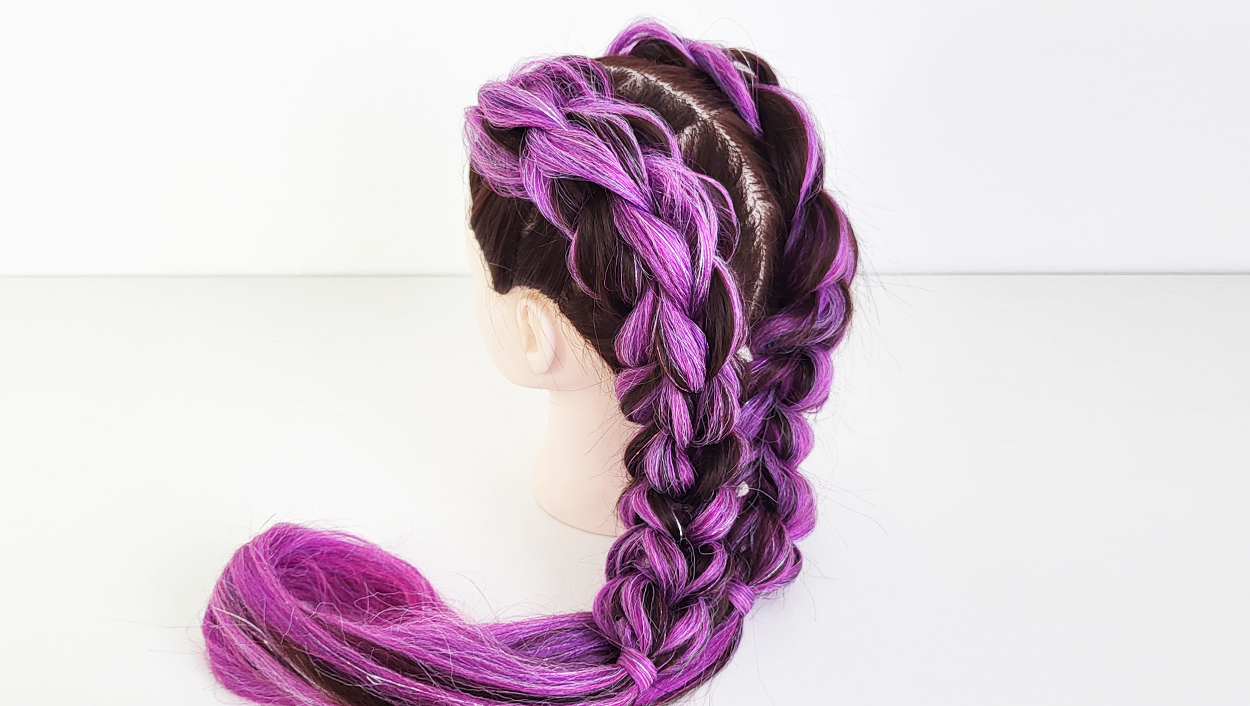
Men’s cornrows with extensions add length, thickness, or color.
Straight-Back Men’s Cornrows
Straight-back cornrows are one of the most classic men’s braid styles. The braids move from the front hairline straight toward the back of the head.
This version is clean, masculine, and easy to recognize. It works well for everyday wear, sports, work, school, and low-maintenance styling. The number of braids can vary from two large braids to many smaller rows.
Straight-back cornrows can be worn on a full head of hair or combined with shaved sides, a taper, or a fade. The style looks especially polished when the parts are clean and the hairline is shaped neatly.
A strong straight-back men’s cornrow style should look even, smooth, and comfortable without excessive tension.
Two Cornrows for Men
Two cornrows create a bold and simple style. The hair is usually parted down the center, then braided into one cornrow on each side.
This look works well for medium to long hair and can be worn with or without a fade. It can look athletic, classic, casual, or sharp depending on the finish.
Two cornrows are often faster to install than more detailed patterns, but they still require clean parting and controlled tension. Because each braid carries a larger section of hair, the stylist should avoid pulling too tightly near the hairline and temples.
A good two-cornrow style should look symmetrical, clean, and secure while still feeling comfortable.
Four to Six Cornrows for Men
Four to six cornrows are a popular everyday option for men. This braid count creates more detail than two braids while still keeping the style simple and manageable.
The braids can move straight back, slightly curved, or into a low point at the nape. This version works well with natural hair, longer top sections, fades, and tapers.
Four to six cornrows offer a balanced look: not too minimal, not too busy. They are practical for active lifestyles and can keep hair neat for several days or longer depending on hair texture and care.
A professional set should have consistent braid size, clean parts, and even spacing.
Men’s Stitch Cornrows
Men’s stitch cornrows are cornrows with sharp, defined stitch-like parting details. The sections along each braid are separated in a clean rhythm, creating a crisp and modern look.
This style is popular because it looks precise and polished. It pairs well with fades, lineups, beard grooming, and fresh haircut details. The stitch effect makes the braids stand out more clearly.
Stitch cornrows can be straight-back, curved, zigzag, or freestyle. They may be natural-hair braids or feed-in braids depending on the desired length and fullness.
The style should look sharp without being painful. Clean product control and sectioning should create the definition, not excessive pulling.
Men’s Zigzag Cornrows
Zigzag cornrows use angled parting lines that create a broken or lightning-like pattern. This style adds movement and creativity to the scalp design.
Zigzag cornrows can be subtle with only one or two zigzag parts, or bold with the entire braid pattern built around sharp angles. They work well for clients who want something more creative than straight-back braids.
This version requires careful planning before braiding begins. The zigzag should be readable and balanced from the front, sides, and top of the head.
A good zigzag men’s cornrow style should look intentional, clean, and comfortable at every angle.
Men’s Curved Cornrows
Curved cornrows follow rounded or wave-like braid paths instead of straight lines. They can curve around the head, sweep to one side, or create flowing patterns from the hairline to the nape.
This style feels more artistic and custom than straight-back cornrows. Curved braids can soften the look while still keeping a clean masculine structure.
Curved cornrows work well with full-head braid designs, fades, and longer hair on top. They can also be combined with stitch detail for a sharper finish.
The stylist must control tension carefully around curves. The braid should follow the parting naturally without pulling the scalp.
Men’s Cornrows with Fade
Men’s cornrows with a fade combine braiding and barbering. The top section is braided, while the sides or back may be faded, tapered, or undercut.
This style is very popular because it creates a clean contrast between the braided top and the faded sides. It can look modern, athletic, sharp, and easy to maintain.
The fade can be low, mid, high, skin, burst, temple, or taper depending on the haircut. The cornrows may be straight-back, stitch, curved, zigzag, or freestyle.
Timing matters. Some clients prefer to get the fade before braiding, while others refresh the lineup after the braids are finished. The goal is a clean connection between the braids and the haircut.
Men’s Cornrows into a Bun
Men’s cornrows into a bun work well for longer hair. The braids move toward the back or crown and gather into a bun.
This style keeps the hair controlled while showing length. It can look sleek, mature, athletic, or artistic depending on the braid pattern. The bun may be small, full, high, low, or centered at the back.
Cornrows into a bun are useful for men who want their hair away from the face and neck without cutting the length. The style can be worn for daily life, workouts, events, or protective styling.
The bun should not be pulled too tightly. Long hair and braids can create weight, so the base must feel comfortable.
Men’s Cornrows into a Ponytail
Men’s cornrows into a ponytail gather the braid ends into one point at the back, nape, or crown. This version is useful for medium to long hair.
The braids can be straight, curved, stitch-detailed, or freestyle. The ponytail may be short, long, braided, loose, or extended with added hair.
This style gives a clean scalp design with movement at the back. It works well for clients who want a practical style that still shows hair length.
The ponytail base should not be tight or heavy. If extensions are added, the stylist should balance the weight carefully.
Men’s Cornrows with Extensions
Extensions can be added to men’s cornrows for extra length, fullness, color, or stronger shape. Feed-in technique is often used because it creates a smooth start and gradual braid thickness.
Some men choose extensions for long straight-back braids, ponytail braids, creative designs, or color accents. Others prefer natural-hair cornrows for a more understated look.
Extension hair should be lightweight and balanced with the natural hair section. Too much added hair can create tension, especially near the hairline and temples.
A professional men’s cornrow style with extensions should look clean and masculine while still protecting scalp comfort.
Men’s Cornrows with Color
Color can make men’s cornrows more expressive. The color may come from dyed natural hair, temporary color, extension hair, or colored accessories.
Blonde, copper, burgundy, brown, silver, and white can create strong contrast in the braid pattern. Bright colors such as blue, green, red, purple, orange, or pink can create a more creative or performance-inspired look.
Color can be used throughout the full head, only in a few braids, or as a subtle accent. Highlighted or bleached hair can make the braid pattern more visible.
Color should be supported with proper hair care because lightened or colored hair can be more fragile during braiding.
Men’s Cornrows with Accessories
Accessories can personalize men’s cornrows. Cuffs, rings, beads, thread, shells, charms, and hair jewelry can be added in subtle or bold ways.
For a minimal masculine finish, small metal cuffs or a few rings can highlight selected braids. For a cultural, boho, or festival look, beads, shells, or thread can add detail. For performance or photoshoot styling, accessories can be more dramatic.
Accessories should be smooth and lightweight. Heavy pieces can pull on the braids or irritate the scalp.
The best accessory styling supports the braid pattern without making the style uncomfortable.
Men’s Cornrows for Protective Styling
Men’s cornrows can function as a protective style when installed correctly. The hair is braided close to the scalp, which reduces daily manipulation and helps keep the ends organized.
However, cornrows are protective only when tension is controlled. Braids that are too tight can cause pain, bumps, headaches, scalp irritation, or hairline stress.
The hairline, temples, crown, and nape should be handled carefully. Shorter hair should not be forced into tight braids. Extension hair should not overload small sections.
A healthy men’s cornrow style should feel secure but comfortable from the first day.
Men’s Cornrows for Short Hair
Men’s cornrows can be installed on short hair if the hair is long enough to grip safely. The required length depends on hair texture, braid size, and stylist technique, but very short hair may be difficult to braid without tension.
Short hair may work best with smaller cornrows, simple straight-back patterns, or designs on the longer top section when the sides are faded. Product can help control shorter pieces, but it should not replace safe tension.
If the hair is too short, the style may slip or pull. It is better to wait for more length than force a braid that can damage the scalp.
A safe cornrow style on short hair should feel secure without painful pulling.
Men’s Cornrows for Long Hair
Long hair gives men’s cornrows more styling options. The braids can continue into long tails, gather into a bun, form a ponytail, or be styled into detailed patterns.
Long hair should be detangled and prepared before braiding. The stylist must keep the strands smooth as the braid moves so the cornrows do not become bulky or uneven.
Long cornrows can become heavy if gathered tightly into a bun or ponytail. The weight should be distributed carefully to avoid pulling at the roots.
A strong long-hair cornrow style should look clean, balanced, and comfortable.
Men’s Cornrows for Boys
Cornrows can be a great style for boys when the braids are gentle, age-appropriate, and not too tight. Boys’ cornrows may include straight-back braids, curved patterns, zigzags, stitch details, or cornrows with a fade.
The style can work for school, sports, holidays, photoshoots, and everyday grooming. It keeps hair controlled and can reduce daily styling time.
Children’s scalps can be sensitive, so the braids should not be tight around the hairline, temples, crown, or nape. Heavy extensions are usually unnecessary for boys’ cornrow styles.
A good boys’ cornrow style should be clean, comfortable, playful, and easy to remove.
Men’s Cornrows for Adults
For adult men, cornrows can look clean, professional, athletic, artistic, casual, or bold. A simple straight-back set can feel classic and low-maintenance. Stitch braids can feel modern and sharp. Cornrows with a fade can create a fresh barbered finish. Curved or zigzag designs can show more personality.
Adult clients may choose cornrows for protective styling, work, workouts, travel, events, performances, photoshoots, or daily grooming.
The best version depends on hair length, hair density, scalp comfort, lifestyle, profession, and personal style.
A professional men’s cornrow style should match the client’s face shape, haircut, and maintenance routine.
Parting and Pattern Planning
Parting and pattern planning are essential in men’s cornrows. The stylist should decide the braid direction, number of braids, parting shape, fade connection, and final finish before braiding begins.
Straight parts create a classic look. Curved parts create movement. Zigzag parts create creativity. Stitch parts create sharp definition. Freestyle designs can create a more custom salon result.
The pattern should complement the head shape and haircut. A good braid pattern should look balanced from the front, top, sides, and back.
Clean parting is especially important in men’s cornrows because the scalp pattern is usually highly visible.
Tension and Scalp Comfort
Tension control is one of the most important parts of men’s cornrows. The braids should be secure but not painful. A clean style does not require excessive pulling.
The hairline and temples are especially important because men’s cornrows often start near the front hairline. Braiding too tightly in this area can cause bumps, soreness, or breakage.
The crown and nape should also be protected, especially when the braids gather into a bun or ponytail. The client should not feel headaches, burning, or sharp pulling after the appointment.
A professional men’s cornrow style should feel comfortable from the first day.
Professional Technique Details
A professional men’s cornrow service begins with consultation. The stylist should discuss hair length, braid count, pattern, fade or haircut connection, natural hair or extensions, product preference, scalp sensitivity, and desired wear time.
The hair should be clean, detangled, moisturized, and sectioned. The parting pattern should be planned before braiding begins. If the client has a fade, the braid section should connect cleanly with the haircut.
The stylist braids close to the scalp using even tension and consistent section pickups. The braid ends may be secured with small elastics, braided to the end, tucked, or gathered into a ponytail or bun.
The finished style should have clean parts, smooth braid lines, neat ends, and comfortable roots.
Maintenance and Wear
Men’s cornrows can last several days to several weeks depending on hair texture, braid size, activity level, scalp oil, product use, and maintenance. Smaller braids may last longer, while larger braids may loosen sooner.
At night, the style should be protected with a durag, satin scarf, bonnet, or satin pillowcase. This helps reduce frizz and preserve the braid pattern.
The scalp should stay clean and comfortable. Lightweight scalp mist or light oil can be used when needed, but heavy product should be avoided because it can create buildup.
Clients who sweat heavily or train often may need more frequent cleansing or shorter wear time.
If the braids become painful, itchy, loose, frizzy, or matted at the roots, they should be refreshed or removed.
Washing Men’s Cornrows
Men’s cornrows can be washed carefully, especially if the client works out or has scalp buildup. The focus should be on the scalp rather than rough scrubbing of the braids.
A diluted shampoo or gentle scalp cleanser can help remove sweat and oil. The scalp should be massaged gently between the rows, then rinsed thoroughly.
The braids should not be rubbed aggressively because friction can create frizz and loosen the style. After washing, the hair should dry fully to avoid odor or scalp discomfort.
A light mousse or braid spray can help refresh the braids after cleansing.
Takedown and Hair Health
Takedown should be gentle. The braids should be undone from the ends upward. If small elastics are used, they should be removed carefully instead of ripped out.
Product buildup near the roots should be softened before combing. Shed hair should be separated gently before washing to prevent tangling.
After removal, the hair should be cleansed, conditioned, detangled, and moisturized. If the scalp feels tender or the hairline looks stressed, the hair should rest before another tight braid style.
Healthy cornrow care includes safe installation, reasonable wear time, and careful takedown.
Styling Options
Men’s cornrows can be styled in many ways. They can be worn straight back, curved, zigzag, stitch-detailed, side-swept, braided into a bun, gathered into a ponytail, combined with a fade, or decorated with subtle accessories.
Simple straight-back cornrows create a classic look. Two cornrows create a bold minimal style. Stitch cornrows create a sharp modern finish. Curved designs create movement. Cornrows with a fade create a clean barbered appearance.
The best styling choice depends on hair length, haircut, scalp comfort, lifestyle, and desired visual impact.
Men’s Cornrows in Modern Beauty Culture
Men’s cornrows remain important because they combine cultural history, protective styling, grooming, and personal expression. The style appears in barbershop culture, braid salons, sports, music, fashion, social media, performance styling, and everyday natural hair care.
Modern men’s cornrows continue to evolve through stitch techniques, fade combinations, creative parts, feed-in extensions, color accents, bun finishes, and freestyle designs.
For stylists, men’s cornrows require more than basic braiding. They require clean parting, head-shape awareness, tension control, haircut integration, product control, and respect for scalp health.
The style stays relevant because it is practical, protective, expressive, and visually strong.
Why Men’s Cornrows Matter
Men’s cornrows matter because they offer a clean, protective, and culturally meaningful way to style textured hair. They can be simple, sharp, athletic, artistic, professional, or bold depending on the design.
For clients, men’s cornrows offer control, convenience, protection, and style identity. For stylists, they require precision, pattern planning, tension awareness, and technical discipline.
When done well, men’s cornrows look clean, balanced, comfortable, and intentional. They prove that men’s braided styling can be practical, expressive, protective, and highly refined at the same time.