
Micro Braids: Tiny Protective Braids With Lightweight Movement, Detailed Texture, and High Styling Flexibility
Micro braids are very small individual braids created in tiny sections throughout the hair. They are known for their fine detail, soft movement, and flexible styling options. Because each braid is small, the finished style can move almost like loose hair while still keeping the natural hair organized inside a braided structure.
The beauty of micro braids is their versatility. They can be worn long, short, layered, straight, curled, wavy, half-braided, fully braided, with loose ends, with color, with beads, or styled into ponytails, buns, updos, side parts, middle parts, and half-up looks. Micro braids can look natural, elegant, bohemian, polished, or creative depending on the braid size, length, parting, and finish.
Micro braids require patience and careful technique. Because the sections are very small, installation can take many hours, and takedown must be gentle to avoid breakage. When done correctly, micro braids can be a beautiful protective or low-manipulation style. When done too tightly or left in too long, they can stress the hairline and fragile sections. A professional micro braid installation should be lightweight, comfortable, and balanced from root to end.
What Are Micro Braids?
Micro braids are tiny individual braids installed in very small parted sections. The braids may be created with natural hair only or with added extension hair for length, fullness, and styling flexibility.
Unlike medium or large box braids, micro braids are much smaller and more delicate. The braid size allows the style to have more movement and a softer loose-hair effect. Some micro braid styles are braided all the way to the ends, while others are braided only a few inches from the root and left loose at the bottom.
Micro braids are temporary. They do not permanently change the natural hair, and they should be removed carefully after the wear period.
The defining feature is size. Micro braids are intentionally tiny, detailed, and flexible.
Why Micro Braids Stand Out
Micro braids stand out because they offer movement that larger braids cannot always create. Since the braids are small, they can swing, part, and style more like loose hair. This gives the wearer many styling options while still enjoying a braided look.
The style also creates a very detailed texture. From a distance, micro braids may look soft and flowing. Up close, the fine braid pattern becomes visible and intricate.
Micro braids are also highly customizable. They can be sleek and polished, curly and bohemian, long and dramatic, short and lightweight, or colorful and expressive. They can blend with loose ends for a more natural finish or stay fully braided for a more structured look.
Another reason micro braids remain popular is longevity, but only when maintained safely. Because the braids are small, they can hold a neat appearance for a while, though the wearer must avoid keeping them in too long.
Micro Braids vs. Box Braids
Micro braids and box braids are both individual braid styles, but they differ mainly in size and movement. Box braids are usually small, medium, large, or jumbo. Micro braids are much smaller than standard box braids.
Box braids create a stronger braid shape and are easier to install and remove than micro braids. Micro braids create more movement and a finer texture, but they require more time and patience.
Box braids are often more practical for clients who want a classic protective style with manageable takedown. Micro braids are better for clients who want a very detailed, lightweight, loose-hair-like effect.
Both styles can be protective when installed with proper tension and removed carefully.
Micro Braids vs. Small Box Braids
Small box braids and micro braids are sometimes confused, but micro braids are typically smaller and finer. Small box braids still have visible individual braid bodies and defined parts. Micro braids are tiny enough to create a more flowing texture.
Small box braids usually take less time to install and remove than micro braids. They may also be easier to maintain because the sections are not as tiny.
Micro braids offer more styling flexibility and a softer appearance, but they can create more stress if installed too tightly because each section carries less natural hair.
The safest choice depends on the client’s hair density, hairline condition, patience for takedown, and desired look.
Micro Braids vs. Knotless Braids
Micro braids can be installed with a traditional start or a knotless-style start. Knotless braids describe a feed-in root technique, while micro braids describe the braid size.
A knotless micro braid begins with the client’s natural hair and gradually adds extension hair. This can create a flatter and softer root. Traditional micro braids may use extension hair attached at the root, which can create a firmer base.
Knotless micro braids may feel more natural at the scalp, but the technique still requires careful tension control. Because the braids are tiny, even a soft root can become stressful if the section is too small or overloaded.
The key is balance: small braid size, lightweight extension hair, and gentle installation.
Micro Braids vs. Tree Braids
Micro braids and tree braids can look similar when the ends are left loose, but the techniques are different. Micro braids are individual tiny braids that may be braided fully or partially.
Tree braids are cornrow-based or braid-based styles where loose extension hair is gradually released from the braid, creating a loose-hair effect. The braid structure may be hidden while the loose hair becomes the main visual focus.
Micro braids show many tiny individual braids. Tree braids often look more like loose hair with hidden braid support.
Both can create soft movement, but micro braids are more detailed and individually sectioned.
Common Types of Micro Braids
Classic micro braids are tiny individual braids installed throughout the head.
Partial micro braids are braided near the roots and left loose at the ends.
Full micro braids are braided from root to tip for a more structured finish.
Micro braids with human hair create a softer, more natural loose-end effect.
Micro braids with synthetic hair add length, color, and braid consistency.
Curly micro braids include curls or waves at the ends for movement.
Wet and wavy micro braids use textured extension hair for a loose wave finish.
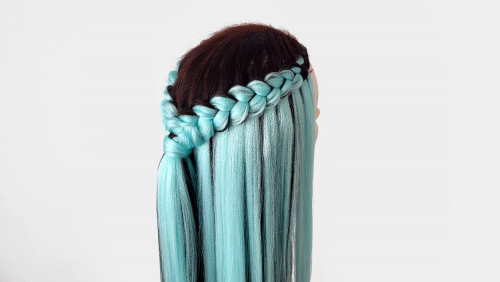
Micro braids with color use extension shades for highlights, ombré, or fashion-color effects.
Micro braid updos gather the tiny braids into buns, ponytails, or formal styles.
Classic Micro Braids
Classic micro braids are tiny individual braids installed throughout the head in small sections. They may be braided all the way down or left loose at the ends depending on the desired finish.
This version is detailed, flexible, and elegant. It can be worn with a center part, side part, half-up style, ponytail, bun, or loose flowing finish.
Classic micro braids are often chosen by clients who want a style that looks lightweight and moves naturally. The tiny braid size gives the hair a soft texture and makes the style easy to shape.
A strong classic micro braid style should look even, lightweight, and comfortable without tight roots.
Partial Micro Braids
Partial micro braids are braided only through part of the length, often from the root to a few inches down, while the remaining hair is left loose. This creates a style that has braided root control with loose-hair movement through the ends.
This version is popular because it can look very natural and flexible. The loose ends can be straight, curled, waved, or wet-and-wavy depending on the extension hair used.
Partial micro braids may require more maintenance than fully braided micro braids because the loose ends can tangle or frizz. The wearer must care for the loose hair gently.
A good partial micro braid style should have secure roots and soft, blended ends.
Full Micro Braids
Full micro braids are braided from the root all the way to the ends. This version gives more structure and may be easier to manage than loose-end micro braids because the hair is fully contained.
The style can look detailed and polished while still offering movement. Because the braids are tiny, they can be styled in many ways without looking bulky.
Full micro braids can take a long time to install and remove, so patience is important. The braid ends should be finished neatly so they do not unravel.
A polished full micro braid style should look consistent, lightweight, and smooth from root to tip.
Curly Micro Braids
Curly micro braids combine tiny braids with curls at the ends or throughout the style. The curls add softness, volume, and movement.
This version can look romantic, bohemian, or vacation-ready. It works well with human hair, synthetic curly hair, wet-and-wavy hair, or pre-curled extension hair.
Curly micro braids require gentle maintenance because the loose curls can tangle. The wearer may need mousse, curl spray, finger detangling, and night protection to keep the curls defined.
A strong curly micro braid style should look soft and full without becoming overly tangled or heavy.
Wet and Wavy Micro Braids
Wet and wavy micro braids use extension hair that can hold a wave or curl pattern when dampened or styled. The braids are often done partially, leaving the wavy hair loose at the ends.
This style creates a flowing, beachy, soft look. It is popular for vacations, summer styling, and clients who want micro braids with loose movement.
The loose wave texture should be cared for like curly extension hair. Heavy brushing can cause frizz, while gentle finger detangling helps preserve the pattern.
Wet and wavy micro braids should look natural, soft, and blended.
Micro Braids with Human Hair
Micro braids with human hair are often chosen when the client wants the loose ends to look more natural and easier to style with heat or curl tools. Human hair can create a softer finish than some synthetic options.
This version may cost more, but it can offer a more realistic loose-hair effect. It is especially useful for partial micro braids where the ends are left out.
Human hair still needs maintenance. It should be detangled gently, moisturized appropriately, and protected at night.
A professional human-hair micro braid style should look seamless, lightweight, and natural.
Micro Braids with Synthetic Hair
Synthetic hair is commonly used for micro braids because it is available in many lengths, colors, and textures. It can create consistent braid size and dramatic length.
Synthetic micro braids may be fully braided or partially braided depending on the desired look. Pre-stretched or smooth synthetic hair can create sleek braids, while curly synthetic hair can create softer ends.
The stylist should choose lightweight hair because micro sections should not carry heavy extensions. Too much synthetic hair can create tension and scalp stress.
A good synthetic micro braid style should balance fullness with comfort.
Micro Braids with Natural Hair
Micro braids can be created with natural hair only, especially when the client wants a lightweight short-term style. This version works best when the natural hair is healthy, detangled, and long enough to braid safely.
Natural-hair micro braids can show beautiful texture and movement, but they may shrink or frizz depending on the hair type. Product choice and sectioning are important.
Because the sections are tiny, the stylist should avoid tight braiding. Natural hair can break if micro sections are pulled too hard.
A natural-hair micro braid style should feel soft, flexible, and gentle on the scalp.
Micro Braids with Extensions
Extensions can add length, fullness, color, and styling flexibility to micro braids. The extension hair should be lightweight and carefully measured because the sections are very small.
The goal is to create a braid that is tiny but not overloaded. If too much hair is added, the natural section may not be strong enough to support it.
Extensions can be added traditionally or with a knotless-style feed-in method. The technique should match the client’s hair texture, scalp sensitivity, and desired finish.
A professional micro braid installation with extensions should look full but never feel heavy or painful.
Micro Braids with Color
Color can make micro braids more expressive. Since color often comes from extension hair, clients can try highlights, ombré, balayage effects, or bold shades without permanently coloring the natural hair.
Natural black, brown, honey blonde, caramel, copper, burgundy, and auburn create classic dimension. Platinum, gray, silver, white, pink, purple, blue, green, red, or pastel shades create stronger fashion effects.
Because micro braids are tiny, color can look very blended and dimensional. A few accent braids can create a subtle highlight effect, while full-color extensions can create a dramatic look.
The color should be planned so the finished style looks intentional and balanced.
Micro Braids with Beads and Accessories
Accessories can be added to micro braids, but they should be lightweight because the braids are small. Tiny cuffs, beads, rings, thread, charms, shells, and hair jewelry can all be used carefully.
Small beads can decorate the ends. Cuffs can highlight selected braids. Thread can add color accents without overwhelming the style.
Heavy accessories should be avoided because they can pull on delicate sections. The goal is decoration without tension.
A good accessory look for micro braids should enhance the detail without making the style uncomfortable.
Micro Braids for Protective Styling
Micro braids can function as a protective or low-manipulation style when installed correctly. The natural hair is braided and organized, reducing daily combing and styling.
However, micro braids require extra caution because the sections are very small. Tiny sections can become fragile if the braids are tight, heavy, or worn too long.
The hairline, temples, crown, and nape should be handled gently. Extension weight should be minimal. Takedown must be patient and careful to avoid breakage.
A healthy micro braid style should protect the hair while respecting the limits of each small section.
Micro Braids for Kids
Micro braids can be done for kids, but they are not always the best choice because installation and takedown can take a long time. Children may become uncomfortable sitting for many hours, and their scalps can be sensitive.
When adapted for kids, micro braids should be lightweight, not too long, and not too tight. Larger small braids may be a safer and more practical alternative than true micro braids.
Kids’ versions may include beads, bows, colorful elastics, or shorter lengths. The style should allow the child to sleep, play, and move comfortably.
A good kids’ micro braid style should prioritize comfort over extreme detail.
Micro Braids for Adults
For adults, micro braids can look elegant, natural, bohemian, professional, glamorous, or vacation-ready. They are especially useful for clients who want a braided style with loose-hair movement.
Adults may choose full micro braids for structure, partial micro braids for a softer loose-end look, curly micro braids for volume, or human-hair micro braids for a more natural finish.
The best adult version depends on hair density, scalp sensitivity, desired length, maintenance habits, and patience for installation and takedown.
A professional adult micro braid style should feel lightweight, flexible, and comfortable.
Micro Braids for Short Hair
Micro braids can be installed on short hair if the hair is long enough to grip safely. Because the sections are tiny, the stylist must avoid pulling short hair too tightly.
Extensions can create length, but they must be lightweight. Short natural hair should not be overloaded with long or heavy extension hair.
If the hair is too short, fragile, or thinning, micro braids may not be the safest option. A larger braid size or different protective style may be better.
A safe micro braid installation on short hair should feel secure without painful tension.
Micro Braids for Long Hair
Long natural hair can support micro braids, but installation and takedown may take much longer. The stylist must keep the natural hair smooth and controlled inside each tiny braid.
Long hair can create beautiful movement in micro braids, especially when the braids are fully completed or blended with loose ends. However, extra extension hair should be used carefully because long natural hair already adds weight.
The wearer should be prepared for a slow removal process. Rushing takedown on long micro braids can cause tangling and breakage.
A strong micro braid style on long hair should look seamless, soft, and balanced.
Parting and Size Planning
Parting is critical in micro braids because the sections are very small. The stylist must create clean, consistent parts without making sections too tiny for the natural hair to support.
The parting pattern may be square, rectangular, brick-layered, triangle-shaped, or free-flowing depending on the desired finish. Brick-layered parts can help the braids fall more naturally and reduce visible scalp gaps.
Size planning should consider hair density, hairline strength, extension weight, and desired wear time. Not every client’s hair can safely support true micro braids.
A professional micro braid style begins with realistic planning and scalp-safe sectioning.
Tension and Scalp Comfort
Tension control is essential in micro braids. Because each section is small, even slight over-tightening can create stress. The braid should feel secure but never painful.
The hairline and temples need special care because tiny braids in these areas can pull on delicate hair. The crown and nape should also be protected.
The client should not feel headaches, burning, bumps, or sharp pulling after installation. These are warning signs that the braids may be too tight or too heavy.
A beautiful micro braid style should feel lightweight and comfortable from the first day.
Professional Technique Details
A professional micro braid service begins with consultation. The stylist should discuss hair health, hair density, scalp sensitivity, desired braid size, extension type, length, loose-end finish, color, maintenance, and takedown expectations.
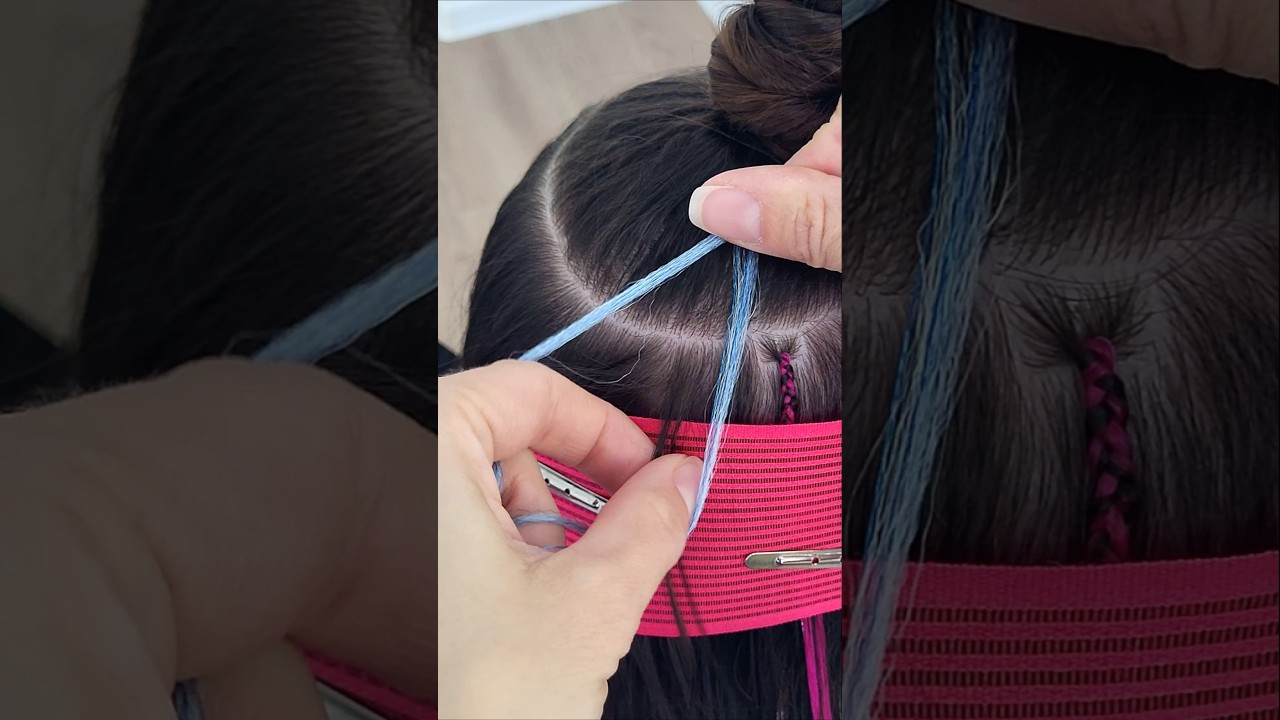
The natural hair should be clean, detangled, moisturized, and sectioned carefully. Extension hair should be prepared in very small, consistent amounts.
Each braid should be installed with gentle tension and clean control. If the style is partial, the transition from braid to loose hair should be smooth. If the style is fully braided, the ends should be finished neatly.
A polished micro braid installation should look detailed, even, lightweight, and comfortable.
Maintenance and Wear
Micro braids can last several weeks depending on installation, hair texture, extension type, lifestyle, and maintenance. However, they should not be left in too long because tiny sections can begin to mat, tangle, or stress the roots.
At night, the braids should be protected with a satin or silk scarf, bonnet, or pillowcase. Loose ends may need extra care to prevent tangling.
The scalp should stay clean and comfortable. Lightweight scalp mist or light oil may be used when needed. Heavy products should be avoided because buildup can be difficult to remove from tiny braids.
The wearer should avoid tight ponytails and buns. Repeated tension can stress small sections.
If the braids become painful, itchy, too loose, matted, or heavy, they should be refreshed or removed.
Washing Micro Braids
Micro braids can be washed carefully, but the process must be gentle. The focus should be on cleansing the scalp without rough rubbing.
A diluted shampoo or gentle scalp cleanser can help remove sweat, oil, and buildup. The scalp should be rinsed thoroughly so product does not stay trapped near the roots.
The braids should not be scrubbed aggressively because friction can cause frizz and loosen the style. Loose ends should be detangled gently if needed.
Drying is important. The roots and braid lengths should dry fully to avoid odor or scalp discomfort.
Takedown and Hair Health
Takedown is one of the most important parts of micro braids. Because the braids are tiny, removal can take a long time. It should never be rushed.
The braids should be unraveled from the ends upward. If the braids are long and extensions are used, the wearer may cut below the natural hair length, but only after clearly identifying where the real hair ends.
Product buildup near the roots should be softened before combing. Shed hair should be separated carefully before washing to prevent matting.
After removal, the hair should be cleansed, conditioned, detangled, and moisturized. A deep conditioning treatment may be helpful. If the scalp feels tender or the hairline looks stressed, the hair should rest before another extension style.
Styling Options
Micro braids can be styled in many ways because they are small and flexible. They can be worn loose, side-parted, middle-parted, half-up, in ponytails, low buns, high buns, braided crowns, updos, side-swept styles, or curled looks.
Partial micro braids can be styled similarly to loose hair, depending on the extension type. Full micro braids can be gathered, twisted, braided together, or accessorized.
Accessories can include small beads, cuffs, thread, clips, shells, and hair jewelry. Because the braids are tiny, accessories should be lightweight.
The best styling choice depends on braid length, extension type, scalp comfort, and occasion.
Micro Braids in Modern Beauty Culture
Micro braids remain popular because they offer a unique mix of braid detail and loose-hair movement. They appear in natural hair communities, salon braid services, vacation beauty, editorial styling, social media tutorials, and protective styling routines.
The style has evolved through knotless starts, human-hair loose ends, wet-and-wavy textures, color blends, layered lengths, and softer installation methods.
For stylists, micro braids require patience, precision, clean sectioning, light tension, extension control, and careful client education. The installation may look delicate, but it requires strong technical discipline.
The style stays relevant because it is detailed, flexible, beautiful, and highly customizable.
Why Micro Braids Matter
Micro braids matter because they offer a braided style with exceptional movement and detail. They give clients a way to wear protective or low-manipulation braids that feel light, flexible, and close to loose hair.
For clients, micro braids offer beauty, length, movement, styling freedom, and detailed texture. For stylists, they require patience, precision, tension control, and respect for hair health.
When done well, micro braids look soft, balanced, lightweight, and intentional. They prove that tiny braid work can be elegant, protective, and highly versatile at the same time.