
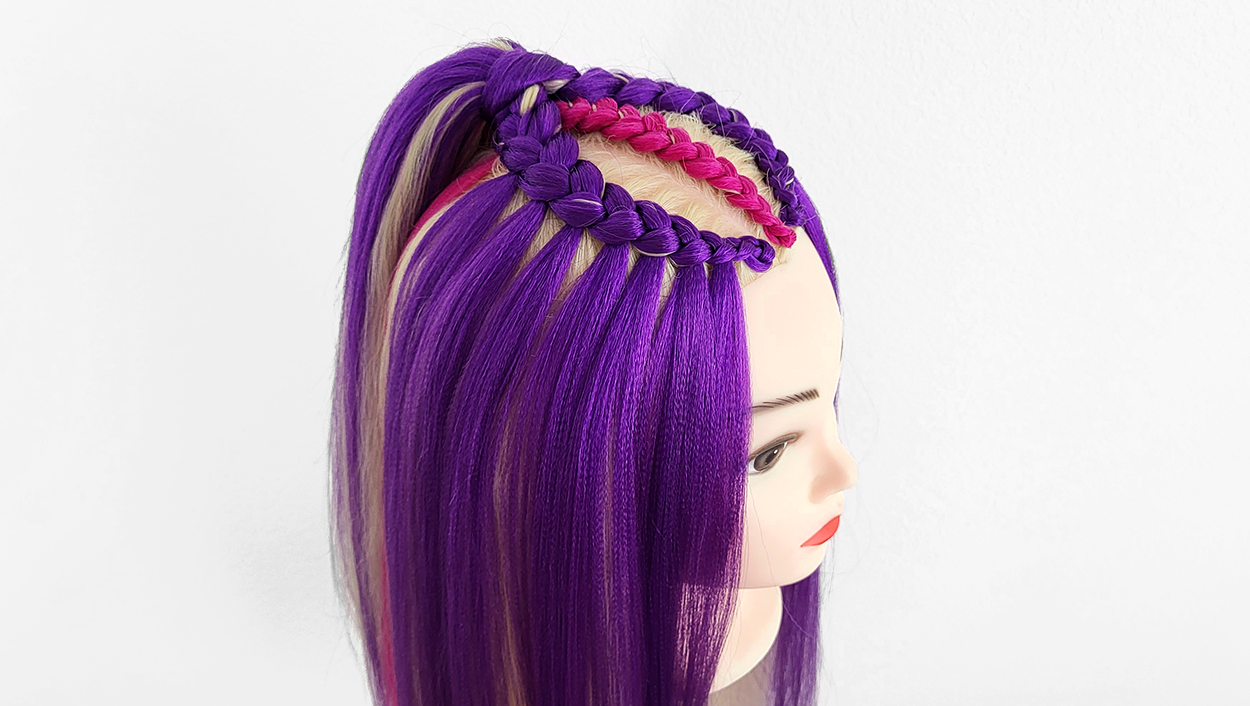
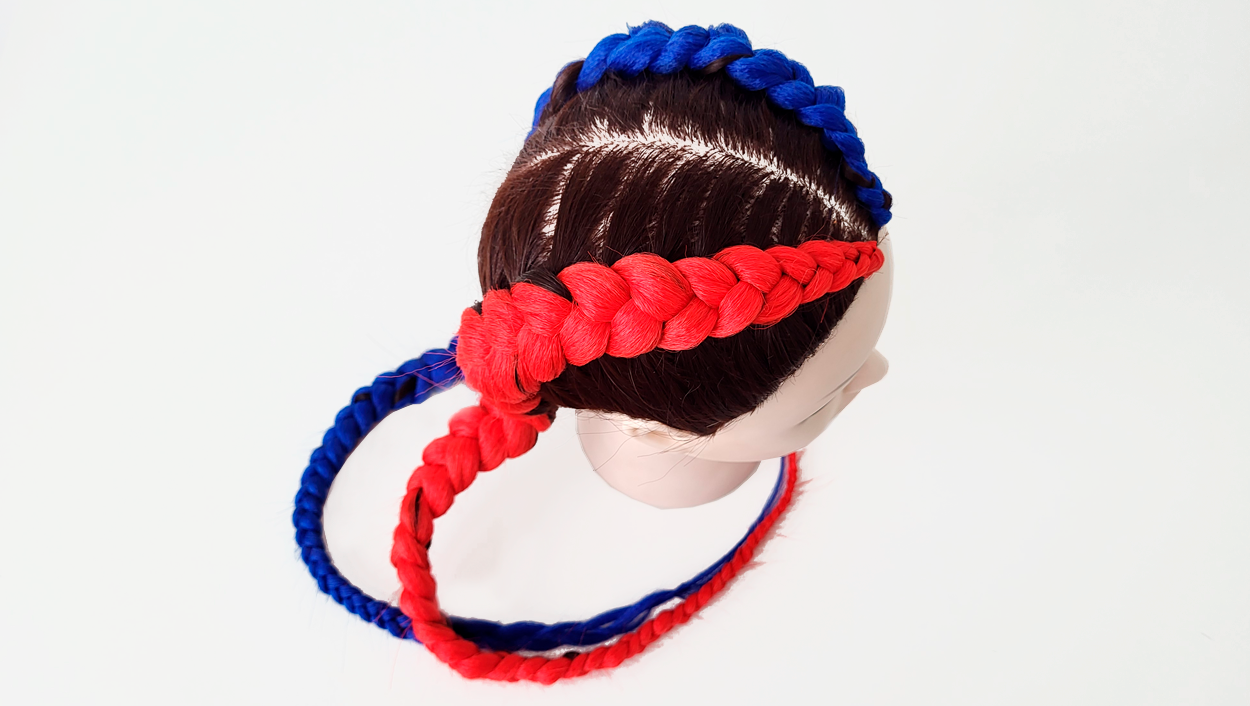
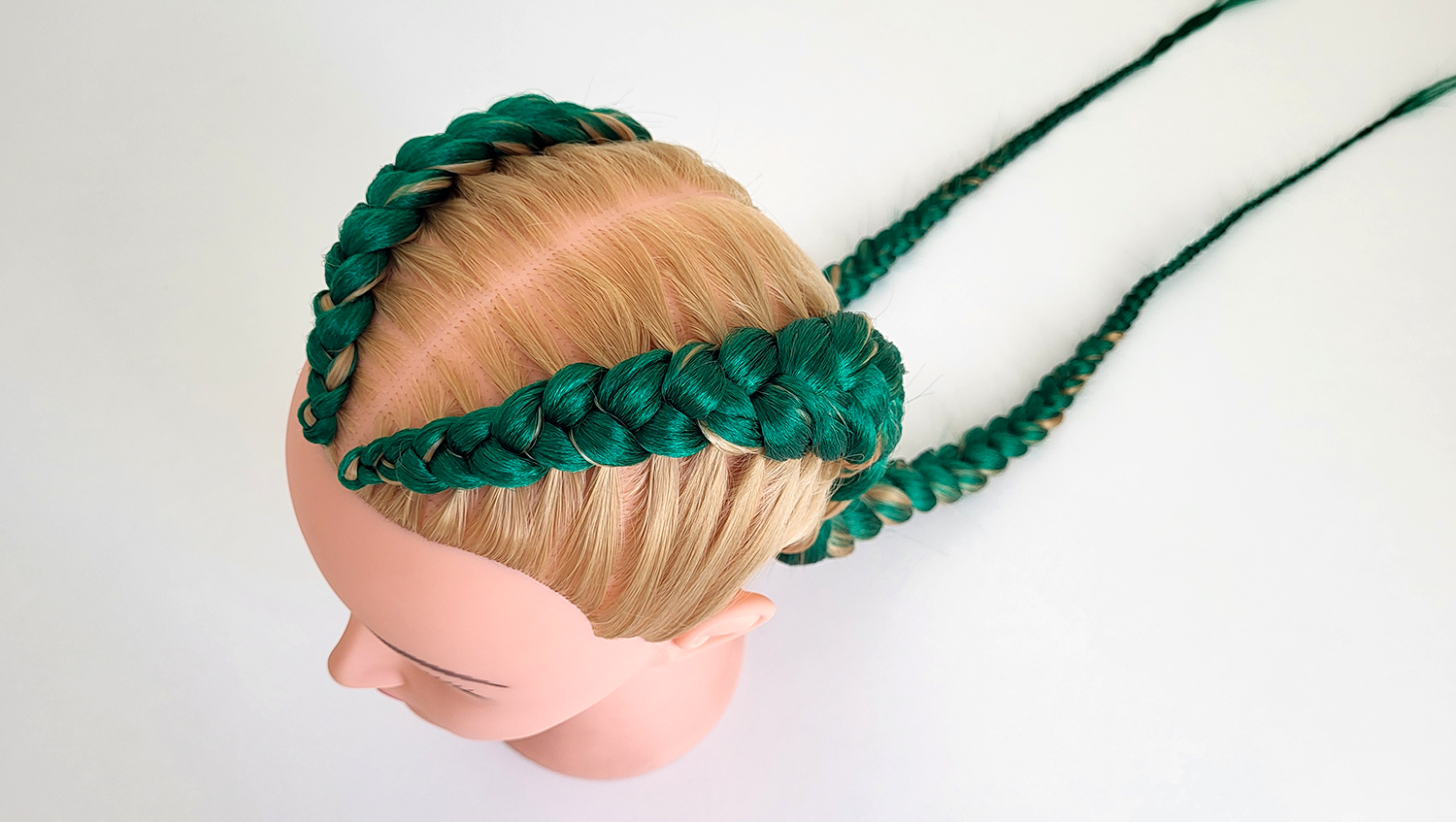
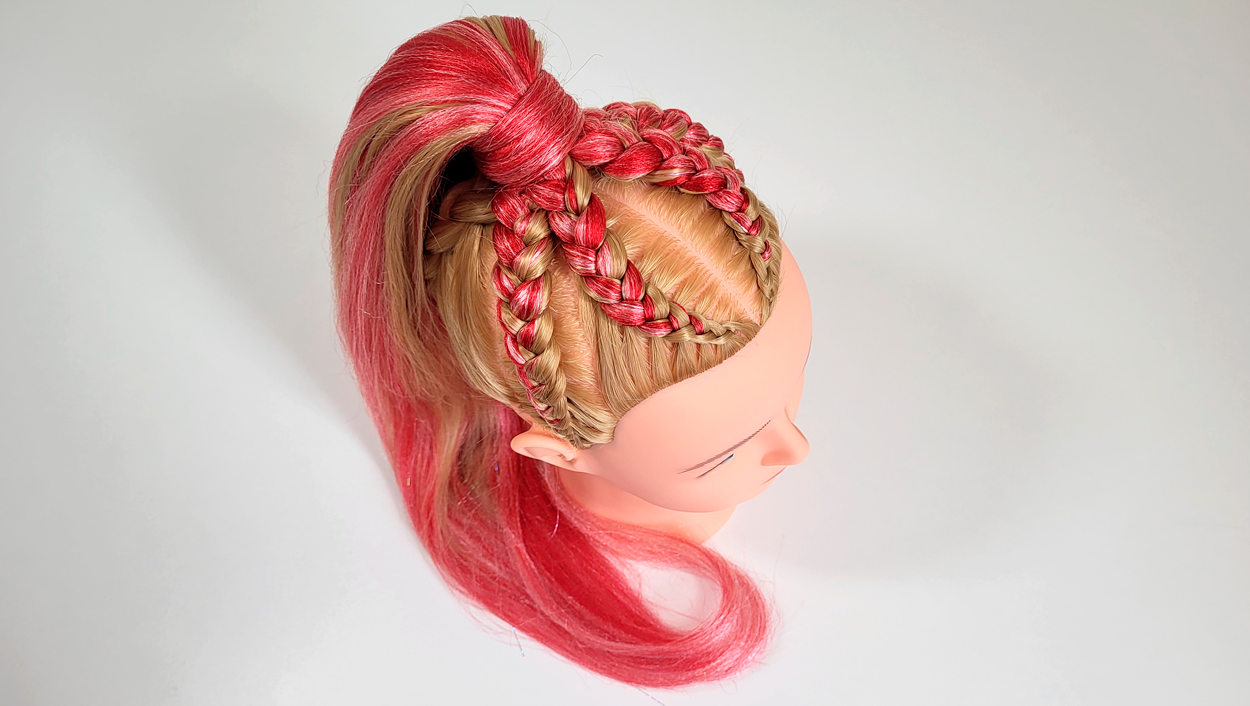
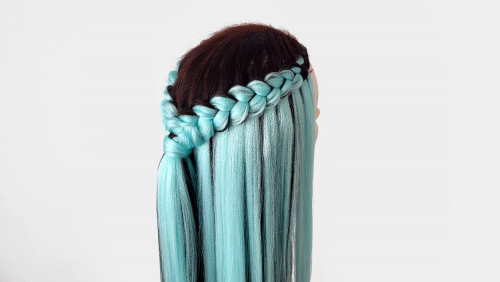
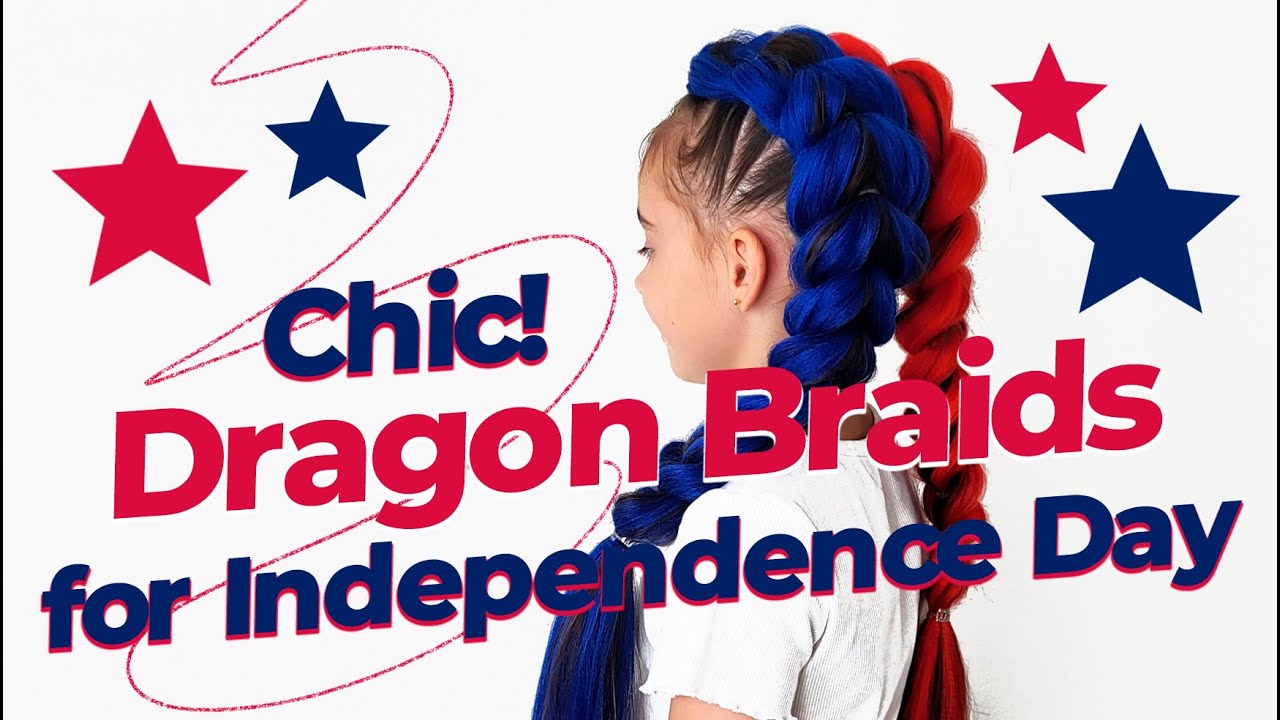
Pull-Through Braids: Voluminous Faux Braids With Soft Sections, Big Texture, and Beginner-Friendly Styling
Pull-through braids are braid-inspired hairstyles created by sectioning the hair into ponytails and pulling one section through another to build a full, braided effect. Even though they are called braids, they do not require traditional three-strand braiding. This makes them popular for beginners, parents, stylists, and anyone who wants a bold braided look without complex hand technique.
The beauty of pull-through braids is volume. Because the sections are secured with elastics and then gently expanded, the finished style can look fuller than many regular braids. Pull-through braids can be sleek, sporty, romantic, festival-ready, dramatic, playful, or soft depending on how the sections are shaped and finished.
Pull-through braids work well on long hair, medium-length hair, extension-enhanced hair, ponytails, half-up styles, pigtails, kids’ hairstyles, bridal looks, and creative content. They can be worn tight and clean or loosened for a wide, soft, mermaid-inspired effect. A professional pull-through braid should look balanced, secure, and comfortable without pulling tightly at the scalp or relying on harsh elastics.
What Are Pull-Through Braids?
Pull-through braids are faux braids made from connected ponytail sections. The stylist creates a sequence of ponytails, splits one section, pulls another section through it, and repeats the process down the length of the hair. The result looks like a large dimensional braid.
This technique is different from traditional braiding because the hair is not woven in the standard over-under pattern. Instead, elastics hold the structure while the pulled-through sections create the braided illusion.
Pull-through braids can be created on natural hair only or with extensions for extra length, thickness, and color. They can be placed down the center of the head, to the side, in a ponytail, in half-up styling, or as two pull-through pigtails.
The defining feature is the segmented structure. The braid effect is built through ponytails, splitting, pulling, and expanding.
Why Pull-Through Braids Stand Out
Pull-through braids stand out because they create big volume with a relatively simple method. Traditional braids can look flat on fine hair or shorter layers, but pull-through braids can be expanded to create a fuller silhouette.
They are also beginner-friendly. Many people who struggle with French braids, Dutch braids, or fishtail braids can still create a pull-through braid because the technique is based on ponytails and elastics.
Pull-through braids are also highly visible in photos and videos. The sections create bold texture, which makes the style popular for social media tutorials, festivals, kids’ styling, bridal hair, and creative salon looks.
Another reason pull-through braids remain popular is control. Because each section is secured, the style can hold well for active days, events, dance, school, sports, and long wear when installed gently.
Pull-Through Braids vs. Regular Braids
Regular braids are created by weaving strands together. Pull-through braids are created by connecting ponytail sections and pulling hair through them.
Regular braids require hand control and a consistent weaving pattern. Pull-through braids require clean sectioning, elastic placement, and controlled expansion.
Regular braids can look sleek, classic, and compact. Pull-through braids usually look fuller, rounder, and more dimensional.
Both styles can be beautiful, but pull-through braids are especially useful when the goal is volume, dramatic shape, or a beginner-friendly braid effect.
Pull-Through Braids vs. Dutch Braids
Dutch braids use an underhand braiding technique that makes the braid sit raised on top of the hair. Pull-through braids can look similar from a distance because they also create a raised braid effect.
The difference is the technique. Dutch braids are true braids. Pull-through braids are faux braids built with ponytails and elastics.
Dutch braids usually look more woven and continuous. Pull-through braids often look more rounded and segmented. When expanded, pull-through braids can appear very large and soft.
Clients who want a true braid may prefer Dutch braids. Clients who want volume and easier technique may prefer pull-through braids.
Pull-Through Braids vs. Bubble Braids
Pull-through braids and bubble braids both use elastics, but they create different effects. Bubble braids use ponytail sections puffed into rounded bubbles. Pull-through braids create a more braided illusion by splitting and pulling sections through each other.
Bubble braids are usually simpler and more segmented. Pull-through braids look more woven and braid-like.
Bubble braids feel playful, trendy, and graphic. Pull-through braids can feel more romantic, full, and braided.
Both styles can be combined. A pull-through braid can include bubble sections, or a bubble ponytail can be decorated with pull-through details.
Pull-Through Braids vs. Mermaid Braids
Pull-through braids and mermaid braids often overlap. Pull-through braid technique can be used to create a mermaid braid effect because it creates wide, soft, flowing volume.
Mermaid braids are a visual style inspired by soft ocean-like hair. Pull-through braids are a technique. A pull-through braid can become a mermaid braid when it is loosened, expanded, paired with waves, or decorated with pearls, shells, or pastel colors.
Pull-through braids focus on structure and method. Mermaid braids focus on mood and final finish.
The two work beautifully together for fantasy styling, kids’ looks, festivals, and photoshoots.
Common Types of Pull-Through Braids
Classic pull-through braids run down the back in one full braid effect.
Half-up pull-through braids combine a braided top section with loose hair underneath.
Pull-through ponytail braids use the technique through a high, mid, or low ponytail.
Side pull-through braids fall over one shoulder for a romantic look.
Double pull-through braids create two pigtail-style faux braids.
Pull-through braids with curls combine braid structure with soft waves or curly ends.
Pull-through braids with extensions add length, thickness, color, and drama.
Pull-through braids with beads, ribbons, bows, pearls, or accessories create a decorative finish.
Pull-through braids for kids use gentle sections and playful accessories for cute everyday or event styles.
Classic Pull-Through Braids
Classic pull-through braids are created down the center of the head or along the length of the hair. The stylist builds ponytail sections one after another, pulling each section through to create a large braid-like structure.
This version is clean, bold, and easy to recognize. It works well for long hair, medium-length hair with enough density, or extension-enhanced hair.
The braid can be left sleek or gently pulled apart for more volume. The expanded version creates a dramatic, full look that is popular for photos and tutorials.
A strong classic pull-through braid should have even sections, hidden elastics, balanced volume, and comfortable tension.
Half-Up Pull-Through Braids
Half-up pull-through braids use the pull-through technique on the top section of the hair while the lower hair remains loose. The loose hair may be straight, curled, waved, crimped, or natural.
This version is popular because it combines structure with softness. The braid adds detail at the crown, while the loose hair keeps the look romantic and flowing.
Half-up pull-through braids work well for weddings, birthdays, festivals, kids’ hairstyles, school events, and everyday styling. They can be simple or decorated with bows, flowers, pearls, shells, or glitter.
A good half-up pull-through braid should look balanced, with the braid and loose hair working together.
Pull-Through Ponytail Braids
Pull-through ponytail braids are created by placing the hair into a ponytail and then using the pull-through method down the ponytail length. The ponytail may be high, mid, low, or side-positioned.
This style is especially useful for active wear because the base is controlled and the braid length is secured. It can look sporty, dramatic, sleek, or glamorous depending on placement.
High pull-through ponytails look bold and youthful. Low pull-through ponytails look softer and more elegant. Side pull-through ponytails look romantic and photo-friendly.
The ponytail base should not be too tight. A professional pull-through ponytail should feel secure without scalp discomfort.
Side Pull-Through Braids
Side pull-through braids fall over one shoulder, making the braid visible from the front. This placement is romantic, soft, and flattering for photos.
The braid can be created from a side part, diagonal section, or low side ponytail. It may be sleek or loosened for a fuller boho effect.
Side pull-through braids work well for weddings, date nights, vacations, festivals, kids’ hairstyles, and content creation. They pair beautifully with face-framing pieces, curls, ribbons, flowers, pearls, and soft waves.
The side placement should feel balanced and should not pull the scalp to one side.
Double Pull-Through Braids
Double pull-through braids create two faux braids, usually one on each side of the head. This version can look playful, sporty, youthful, or festival-ready.
Double pull-through braids are popular for kids, dance, sports, school, concerts, and creative styling. They can be worn as pigtails, low braids, high braids, or connected into buns.
The sections should be even on both sides so the finished style looks balanced. Because there are two braids, elastic comfort is important.
A clean double pull-through braid style should look symmetrical, secure, and comfortable.
Pull-Through Braids with Curls and Waves
Curls and waves can soften pull-through braids and make them feel more romantic. The braid creates the structure, while the loose texture adds movement.
Curls may be added to the loose hair in a half-up style, to the ends of a pull-through ponytail, or around the face. Waves can make the braid blend naturally into the rest of the hair.
This version is popular for bridal styling, prom, birthdays, photoshoots, festivals, and soft glam looks.
The curls should not hide the pull-through structure. A strong style should show both the braid texture and the soft movement.
Pull-Through Braids with Extensions
Extensions can help pull-through braids look longer, thicker, and more dramatic. Clip-ins, ponytail extensions, wefts, synthetic braiding hair, or colored strands may be used depending on the style.
Extensions are especially useful for fine hair, short hair, or clients who want a very full braid. They can also add color without permanent dye.
The extension placement should be hidden inside the ponytail sections or blended into the braid. Heavy extensions should be avoided if they create pulling.
A professional pull-through braid with extensions should look seamless, full, and comfortable.
Pull-Through Braids with Color
Color can make pull-through braids more dimensional. Because the sections are large and expanded, highlights, balayage, ombré, vivid colors, or pastel extensions can show beautifully.
Natural shades such as blonde, caramel, copper, auburn, and brown can create soft dimension. Bright colors like pink, purple, blue, green, red, orange, or rainbow blends can create a festival or fantasy look.
Color can be added through extensions, ribbons, thread, temporary color, or pre-colored hair. Accent colors can be placed inside the braid to highlight the pull-through structure.
The best color placement supports the sectioned shape and makes the braid look intentional.
Pull-Through Braids with Beads and Accessories
Accessories can personalize pull-through braids. Bows, ribbons, pearls, cuffs, beads, flowers, clips, shells, glitter, charms, and hair jewelry can all be used.
For kids, bows, colorful elastics, beads, and ribbons can make the style playful. For bridal looks, pearls, flowers, and crystal pins can make it elegant. For festivals, glitter, colored extensions, shells, and bright accessories can make the braid bold.
Accessories should not hide the pull-through pattern. They should highlight the sections, braid base, or braid ends.
Lightweight accessories are best so the style remains comfortable.
Pull-Through Braids for Protective Styling
Pull-through braids can be low-manipulation for short-term wear because the hair is sectioned and controlled. They can keep hair away from the face and reduce brushing during the day.
However, pull-through braids are usually decorative styles rather than long-term protective styles. The elastics can create stress if placed too tightly or removed carelessly.
The hair should not be pulled tightly into the ponytails. Soft elastics or snag-free bands are best. Removal should be gentle to avoid breakage.
A healthy pull-through braid should feel comfortable, secure, and easy to take down.
Pull-Through Braids for Kids
Pull-through braids are especially popular for kids because they are cute, secure, and easier for many parents than traditional braiding. They can be created as one braid, two braids, ponytails, half-up styles, or pigtails.
Kids’ pull-through braids may include colorful elastics, bows, beads, ribbons, clips, glitter, or themed accessories. They work well for school, birthdays, dance, sports, holidays, photoshoots, and everyday styling.
Comfort is the priority. Children’s scalps can be sensitive, so the ponytail sections should not be tight. Elastics should be removed gently, not pulled out.
A good kids’ pull-through braid should be cute, secure, gentle, and easy to remove.
Pull-Through Braids for Adults
For adults, pull-through braids can look romantic, elegant, sporty, festival-ready, bridal, bohemian, or dramatic. A low side pull-through braid can feel soft and feminine. A high ponytail version can feel bold and modern. A half-up version can feel romantic and event-ready.
Adults often choose pull-through braids for weddings, proms, birthdays, concerts, festivals, vacations, workouts, content creation, and special events.
The best adult version depends on hair length, density, desired volume, outfit, occasion, and comfort.
A polished adult pull-through braid should look full and intentional, not bulky or overly elastic-heavy.
Pull-Through Braids for Short Hair
Pull-through braids can work on short hair when the hair is long enough to be sectioned into ponytails. Shorter hair may support a half-up pull-through braid, small crown section, or pull-through accent braid.
Extensions can help create a longer finished style. Clip-ins or ponytail extensions are often useful when the client wants a dramatic braid but does not have enough natural length.
Short layers may need product, pins, or small elastics to stay secure. The stylist should avoid making sections too tight to force the hair into place.
A short-hair pull-through braid should focus on secure sectioning, comfort, and balanced volume.
Pull-Through Braids for Long Hair
Long hair is ideal for pull-through braids because the length allows the sectioned pattern to continue down the braid. The style can become very full and dramatic.
Long hair may be worn in a classic pull-through braid, side braid, ponytail braid, half-up braid, or double braid style. The sections can be expanded for a soft oversized effect.
The main challenge with long hair is control. The stylist should detangle well and use elastics that hold without snagging. Heavy expansion should still preserve structure.
A long-hair pull-through braid should look full, smooth, secure, and comfortable.
Parting and Section Planning
Parting and section planning are essential for pull-through braids. The stylist should decide where the braid will begin, how large each ponytail section will be, and how the braid will travel.
Even sections create a clean, professional look. Larger sections create a bold, dramatic effect. Smaller sections create more detail and hold.
For half-up styles, the top section should be balanced with the loose hair underneath. For side styles, the sections should follow the head shape without pulling unevenly.
A strong pull-through braid begins with clean sectioning and a clear shape plan.
Elastic Placement and Comfort
Elastic placement is one of the most important parts of pull-through braids. The elastics hold the entire structure, so they must be secure but not painful.
Snag-free elastics are best. They should be placed with enough hold to keep the sections together but not so tight that they pull the scalp or create headaches.
The elastics can be hidden with hair wraps, expanded braid sections, ribbons, or accessories. In kids’ styles, colorful elastics can become part of the design.
A professional pull-through braid should feel secure without tight elastic pressure.
Tension and Scalp Comfort
Tension control matters in pull-through braids because each ponytail section can create pulling if it is too tight. The style should look clean without stretching the scalp.
The hairline, temples, crown, and nape should be handled gently. Pull-through ponytails near the front should not be tight, especially on kids or clients with sensitive scalps.
When expanding the sections, the stylist should pull gently and evenly. Over-pulling can weaken the structure or create frizz.
A comfortable pull-through braid should feel light, secure, and wearable from the beginning.
Professional Technique Details
A professional pull-through braid service begins with choosing the style placement: classic, side, half-up, ponytail, double, bridal, sporty, or festival. The stylist should also decide whether extensions, curls, color, or accessories will be used.
The hair should be detangled and prepared according to texture. Smooth styles may need light gel, cream, or serum. Voluminous styles may need texture spray, mousse, or light backcombing.
The stylist creates ponytail sections, splits and pulls the sections through one another, secures each step, and gently expands the braid for volume. Elastics may be hidden or left visible as part of the design.
A polished pull-through braid should have clean sections, balanced volume, secure hold, and comfortable tension.
Maintenance and Wear
Pull-through braids are usually short-term styles, often worn for one day or for a special event. Some tighter or sportier versions may last longer, but the expanded sections can loosen with sleep, humidity, or activity.
To maintain the style, the wearer should avoid pulling on the sections or brushing through the braid. A light finishing spray can help control flyaways.
At night, a satin or silk pillowcase can reduce friction, but the shape may need refreshing the next day.
Removal should be gentle. Elastics should be cut carefully or slipped out without pulling the hair. The braid should be separated slowly to avoid tangles.
If the style feels tight or uncomfortable, it should be loosened or removed.
Styling Options
Pull-through braids can be styled in many ways. They can be worn as a classic center braid, side braid, high ponytail braid, low ponytail braid, half-up braid, double pigtail braids, crown accent, mermaid braid, festival braid, or bridal braid.
They can be paired with curls, waves, colored extensions, ribbons, bows, pearls, shells, flowers, beads, cuffs, glitter, and hair jewelry.
For kids, pull-through braids can be playful and colorful. For adults, they can be romantic, dramatic, sporty, bridal, or editorial.
The best styling choice depends on hair length, density, comfort, occasion, and desired volume.
Pull-Through Braids in Modern Beauty Culture
Pull-through braids remain popular because they create dramatic braid-like volume without requiring traditional braiding skill. They appear in kids’ hairstyles, bridal styling, festival looks, dance hair, sports styling, social media tutorials, and creative salon portfolios.
The style continues to evolve through mermaid-inspired volume, half-up waves, colorful elastics, bubble-braid combinations, extension-enhanced ponytails, and soft romantic finishes.
For stylists, pull-through braids require more than simple ponytails. They require section control, elastic placement, volume shaping, tension awareness, and clean finishing.
The style stays relevant because it is bold, beginner-friendly, photogenic, and easy to customize.
Why Pull-Through Braids Matter
Pull-through braids matter because they make dramatic braid styling more accessible. They allow clients and beginners to achieve a full braided look without needing advanced weaving technique.
For clients, pull-through braids offer volume, hold, creativity, and styling impact. For stylists, they build skill in sectioning, balance, expansion, and event styling.
When done well, pull-through braids look full, secure, comfortable, and intentional. They prove that braid-inspired styling can be playful, elegant, practical, and highly visual at the same time.