
Extensiones sin costuras: dónde añadir cabello para que tus trenzas se mantengan suaves.
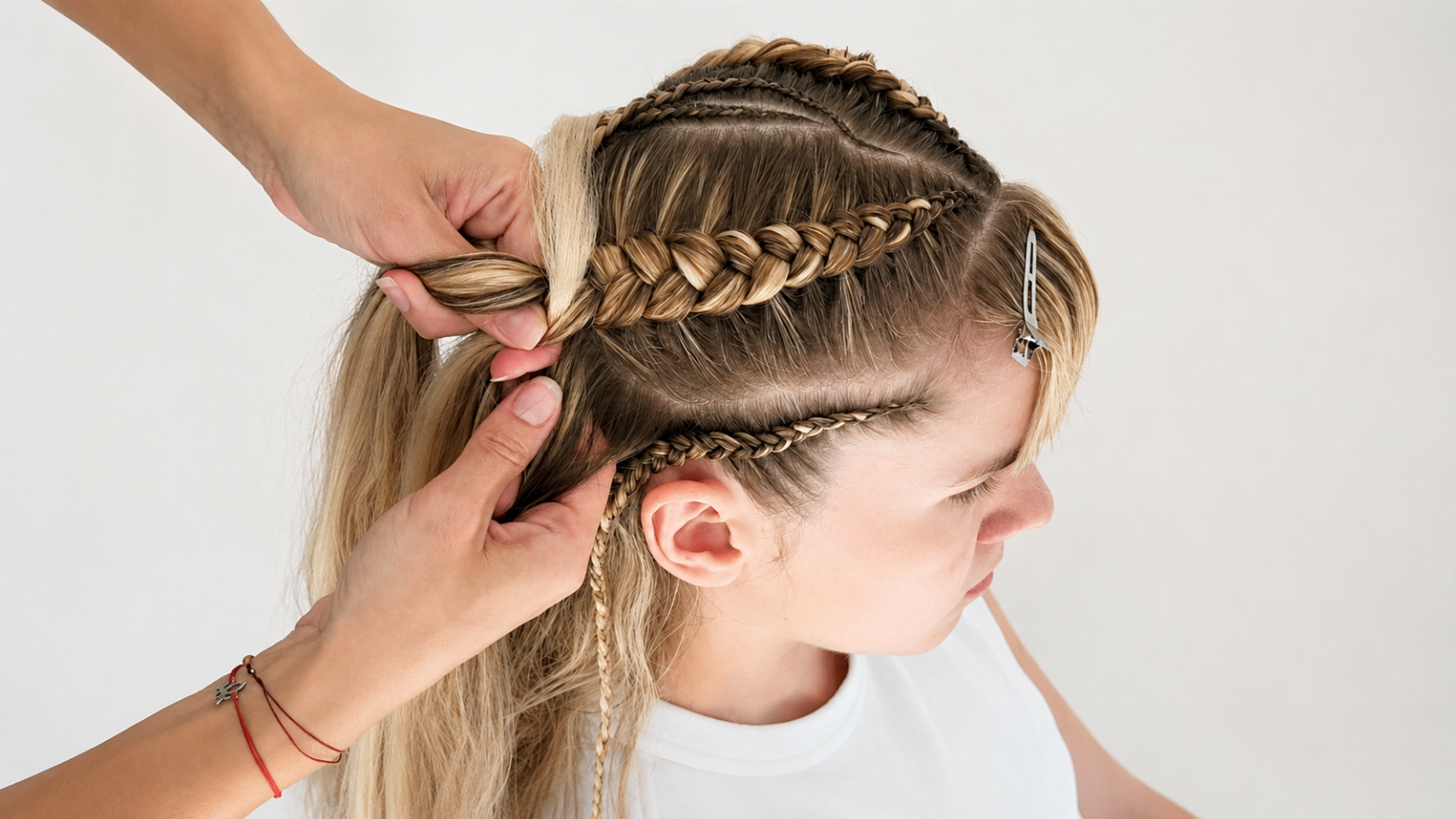
Las trenzas con extensiones sin costuras se basan en la sincronización, la colocación y el control. El objetivo es que la trenza crezca gradualmente, sin un bulto visible, una raíz voluminosa o un aumento repentino de grosor. Cuando la técnica de inserción se realiza correctamente, el cabello añadido parece pertenecer a la trenza desde el principio. La trenza comienza limpia, crece suavemente y mantiene un flujo natural desde la raíz hasta el final. Si el cabello añadido se coloca demasiado pronto, demasiado tarde o en mechones demasiado grandes, la trenza puede verse pesada, desigual o gruesa. Por eso, saber dónde añadir el cabello es tan importante como saber cómo trenzar el patrón.
Comience con una base de alimentación limpia
La primera parte de una trenza de inserción bien hecha es el inicio. La raíz debe controlarse, pero sin sobrecargarla. Muchos principiantes añaden demasiado cabello sintético en la parte delantera porque quieren que la trenza se vea voluminosa rápidamente. Esto suele crear un inicio abultado. Una trenza de inserción profesional comienza con el cabello natural de la clienta o con una cantidad muy pequeña de cabello añadido, según el estilo y el aspecto deseado. Las primeras puntadas deben establecer la dirección, la tensión y la posición antes de que la trenza comience a crecer. Si la trenza no tiene una base limpia, cada pieza que se añada después solo hará que el problema sea más visible.
El mejor momento para añadir cabello es antes de que la trenza parezca necesitar ayuda. Esto puede parecer sencillo, pero es uno de los detalles más importantes en las trenzas con extensiones. Si la trenza ya es demasiado fina, la siguiente pieza añadida se notará mucho porque el cambio de tamaño será repentino. Si el cabello se añade gradualmente mientras la trenza aún está equilibrada, la transición será más suave. La trenza debe ganar volumen a lo largo de varias puntadas, no de golpe. Ese aumento gradual es lo que crea el efecto suave y natural que buscan las clientas cuando piden un trabajo de trenzas con extensiones impecable.
Controla el tamaño y la ubicación de cada pieza añadida.
El tamaño de las piezas es una de las principales razones por las que las trenzas feed-in pierden suavidad. Una pieza grande de cabello sintético puede ahorrar tiempo en el momento, pero suele generar volumen. El cabello añadido puede quedar sobre la trenza en lugar de integrarse con el cabello con el que se trabaja. También puede hacer que un lado de la trenza sea más grueso que el otro, lo que altera su forma y dirección. Las piezas más pequeñas ofrecen mayor control. Permiten que la trenzadora crezca lentamente, mantienen la raíz más plana y reducen la posibilidad de que se vean bultos. Es trenzadora considerar cada pieza añadida como parte de la estructura, no solo como cabello extra que se inserta para dar longitud.
El cabello añadido debe colocarse en el mechón de trabajo, no dejarse caer sobre la trenza. Esta es una diferencia clave. Si el cabello sintético queda por fuera, puede retorcerse, doblarse o crear un bulto. La trenzadora debe alinear el cabello añadido con el mechón que lo sostendrá y luego incorporarlo al patrón con tensión constante. La pieza debe sentirse como si se integrara a la trenza de inmediato. Si la persona que realiza la trenzadora tiene que detenerse constantemente para colocar el cabello añadido en su lugar, la pieza puede ser demasiado grande, el ángulo puede ser incorrecto o la posición de la mano puede no estar lo suficientemente cerca del cuero cabelludo.
La posición de las manos influye en la apariencia de la inserción del cabello. Si las manos se alejan demasiado de la cabeza, el cabello añadido puede estirarse hacia afuera antes de quedar bien sujeto. Esto puede provocar raíces sueltas, huecos o una tensión desigual. Mantener las manos cerca de la zona de trabajo facilita la inserción del cabello en la trenza con mayor control. El movimiento debe ser pequeño y constante. No se debe tensar la trenza para ocultar el cabello añadido. Una inserción impecable se logra mediante una colocación precisa y una construcción gradual, no aplicando tensión para aplanar el material.
Mantén la dirección y el equilibrio suaves.
La dirección del cabello añadido también es importante. Cada mechón debe seguir la dirección de la trenza. Si la trenza se extiende hacia atrás en línea recta, el cabello añadido debe colocarse de manera que siga esa dirección. Si la trenza es curva, diagonal o forma parte de un diseño, el cabello añadido debe seguir la misma dirección sin desviarla de su línea. Si el cabello añadido se coloca en un ángulo incorrecto, la trenza puede inclinarse, retorcerse o desarrollar un borde elevado. Esto es especialmente importante en trenzas africanas, trenzas rectas hacia atrás, trenzas curvas con extensiones y diseños decorativos donde la dirección de la trenza es parte del diseño.
Otro error común es añadir cabello solo a un lado con demasiada frecuencia. El trabajo de extensiones debe mantenerse equilibrado. Si la trenzadora añade más material al mismo mechón, un lado de la trenza se vuelve más pesado. La trenza puede continuar, pero la forma comenzará a verse desigual. La superficie puede volverse irregular y la trenza puede inclinarse hacia el lado más pesado. Una trenzadora de forma profesional observa los mechones mientras añade cabello. Si una sección se está volviendo demasiado densa, la siguiente pieza debe ser más pequeña o colocarse de manera diferente. Las extensiones suaves dependen tanto del equilibrio como del tiempo.
Prepara el cabello sintético antes de trenzarlo.
Preparar el cabello sintético antes de comenzar la trenza facilita todo el proceso. Las piezas deben separarse con anticipación y ordenarse por tamaño. Las piezas más pequeñas deben estar listas para el inicio, y las ligeramente más grandes se pueden usar a medida que la trenza crece. Cuando la persona que realiza la trenzadora intenta sacar piezas del paquete mientras trabaja, el tamaño suele ser inconsistente. Una pieza es demasiado delgada, la siguiente demasiado gruesa, y la trenza pierde su crecimiento gradual. Preparar el cabello con anticipación ahorra tiempo, pero, lo que es más importante, protege el ritmo de la trenza. Un ritmo suave crea un acabado más uniforme.
La textura del cabello sintético también puede afectar el resultado. Algunos cabello para trenzar tienen más agarre, mientras que otros son muy sedosos. El cabello preestirado puede ayudar a crear un desvanecimiento más limpio y reducir el tiempo de preparación, pero aún así necesita separarse correctamente. Si el cabello es demasiado resbaladizo, la trenzadora deberá ir más despacio y usar una colocación de manos más precisa. Si el cabello es demasiado grueso o está enredado, puede crear bultos al entrar en la trenza. Un buen trabajo de extensiones no se trata solo de la técnica de agregar cabello, sino también de elegir y preparar el material adecuado para el estilo.
Mantenga una tensión uniforme en cada adición.
La tensión debe ser uniforme desde la raíz hasta el final. Si la trenza comienza suave y luego se aprieta repentinamente al incorporar el cabello, la clienta puede sentir tirones y la trenza puede verse comprimida. Si comienza apretada y luego se afloja, el cabello añadido puede no estar bien sujeto. La presión debe ser constante. La trenza debe aumentar de tamaño sin que la comodidad disminuya. Esto es especialmente importante alrededor de la línea del cabello y las sienes, donde la trenza debe mantenerse ligera y controlada. Una incorporación de cabello suave nunca debe requerir una tensión dolorosa para lucir impecable.
Para practicar, ayuda trenzar lentamente una sola sección y concentrarse únicamente en la colocación de cada mechón añadido. Al principio, no te preocupes por la velocidad. Observa cómo cambia la trenza después de cada adición. Si el tamaño cambia repentinamente, el mechón era demasiado grande. Si aparece un bulto, es posible que el cabello se haya doblado o superpuesto al mechón. Si la trenza se tuerce, es posible que el cabello añadido esté tirando en la dirección incorrecta. Este tipo de práctica enseña a quien trenzadora a interpretar la trenza mientras se está formando. El objetivo es detectar el problema en el momento en que comienza, no cuando la trenza ya está terminada.
Crea trenzas con extensiones que crecen de forma natural.
Un trabajo de extensiones sin fisuras también mejora el resultado final del peinado. Una trenza más suave suele sentirse más ligera en la raíz, se ve mejor en las fotos y luce más pulida a medida que crece. Las extensiones voluminosas pueden llamar la atención de inmediato y sentirse más pesadas al usarlas. Las extensiones colocadas con precisión ayudan a que la trenza mantenga una forma más natural. Además, hacen que el peinado luzca más profesional desde el frente, los lados y desde arriba. Puede que las clientas no sepan exactamente por qué una trenza se ve más suave que otra, pero sí notan la diferencia.
La técnica de extensiones más efectiva no consiste en añadir la mayor cantidad de cabello, sino en añadir la cantidad justa en el momento preciso, en el lugar adecuado y con la tensión correcta. La trenza debe formarse gradualmente, la raíz debe permanecer cómoda y el cabello añadido debe integrarse a la estructura sin crear bultos. Cuando un trenzadora aprende a controlar la colocación de esta manera, las trenzas con extensiones se vuelven más limpias, suaves y profesionales. El resultado final luce intencional en lugar de forzado, y la clienta obtiene el volumen deseado sin un volumen innecesario en la raíz.